
Off-Camera Narration Technique: A Filmmaker’s Guide

2026-06-07T23:19:27-04:00

Off-camera narration technique is the practice of delivering voice-over narration from a speaker not shown on screen, guiding visual storytelling and giving audiences information, emotion, or context that images alone cannot provide. Known formally in the industry as voice-over narration, this method is one of the oldest and most trusted tools in film, documentary, and content production. Online video watchers spend over 7 hours weekly consuming content, which means the quality and clarity of your narration directly affects whether viewers stay or leave. Aspiring filmmakers, voiceover artists, and content creators who master this technique gain a measurable edge in storytelling impact.

What is off-camera narration technique, and how does it work?

Infographic comparing narration benefits and pitfalls

Off-camera narration is audio narration without a visible speaker, providing exposition from outside the story’s physical world. The narrator’s voice exists in a separate layer from the visual action, commenting on, contextualizing, or emotionally framing what the audience sees. Think of Morgan Freeman’s narration in The Shawshank Redemption or the opening monologue in Apocalypse Now. Neither narrator appears on screen during those moments, yet their voices carry the entire emotional weight of the scene.

The technique works because it separates two distinct storytelling channels: what you see and what you hear. When those channels carry complementary information rather than identical information, the audience receives a richer, more layered experience. A documentary about climate change can show melting glaciers while a narrator explains the science behind the melt rate. Neither channel duplicates the other. Both are necessary.

Voice-over narration also operates outside story time. A narrator can speak from the future, the past, or an omniscient position that no character within the film could logically occupy. This flexibility makes it one of the few storytelling tools that can compress decades of story into minutes without losing coherence.

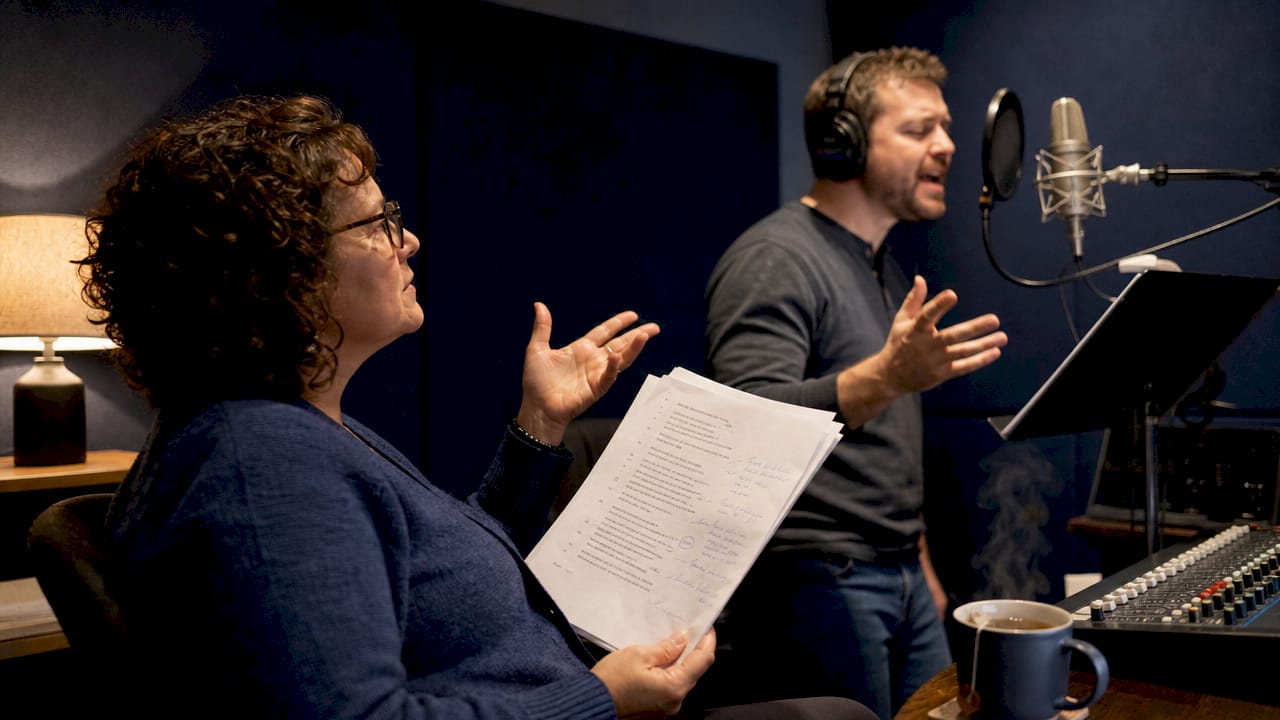
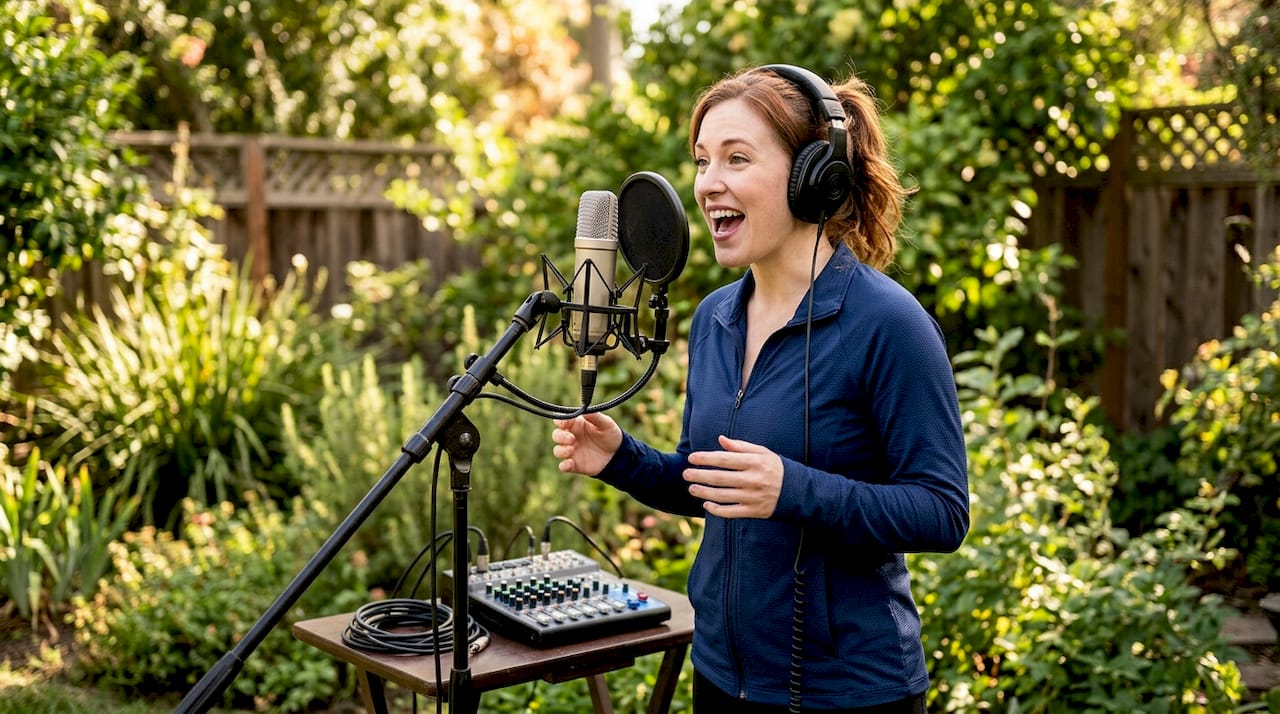
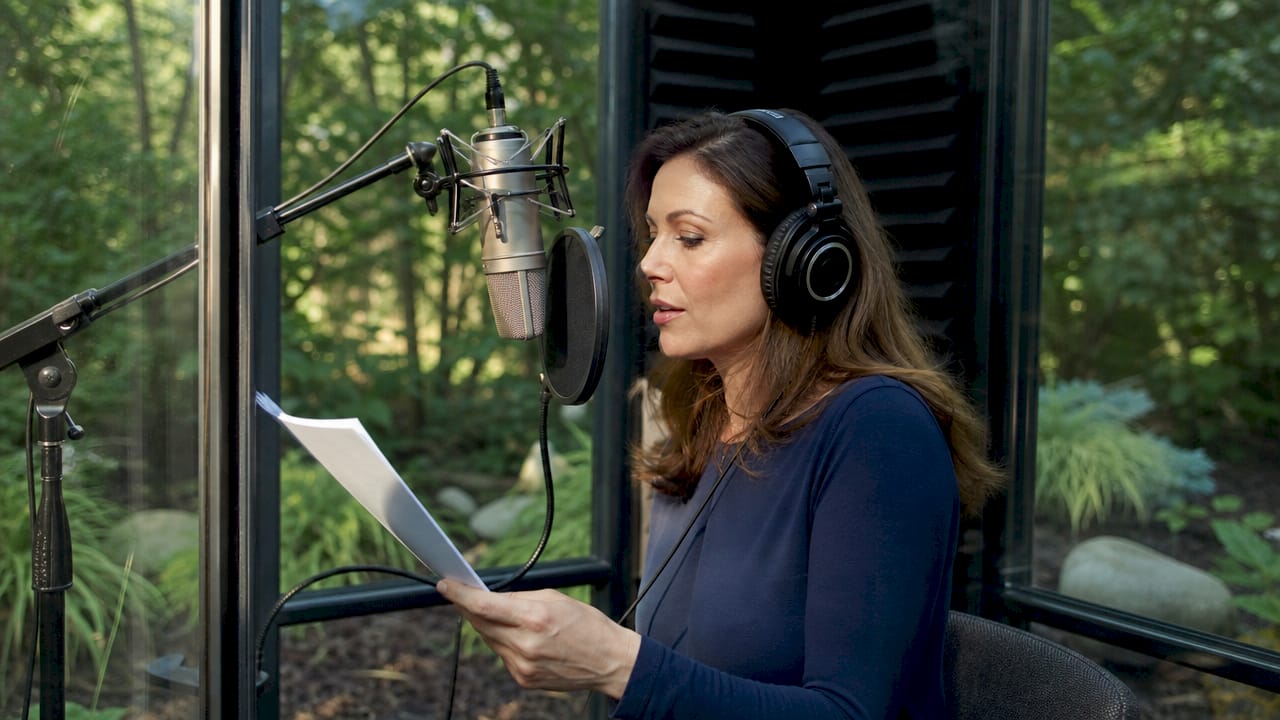
Voice actor recording in professional booth

How off-camera narration differs from voice-over and on-camera narration

Voice-over is the umbrella term for any non-visible speech in a production, including character thoughts, documentary narration, commercial announcements, and dubbed dialogue. Off-camera narration is a specific application of voice-over where the speaker functions as a storytelling guide rather than a character within the scene. Voice-over narrations are storytelling tools distinct from voice acting, which involves character performances inside the story world. Confusing the two leads to mismatched tones that undermine a project’s professionalism.

Here is how the main narration types compare:

Narration type Speaker visibility Storytelling role Common use
Off-camera narration Never on screen Guide, commentator, expositor Documentaries, film noir, explainer videos
On-camera narration Fully visible Direct address, presenter News, tutorials, branded content
Character voice-over Not visible during VO Internal monologue, memory Drama, literary adaptations
Voice acting Visible or animated Character performance Animation, dubbing, video games

Understanding these distinctions between narration roles prevents the most common casting and scripting errors. A documentary narrator needs gravitas and clarity. A character voice-over needs psychological intimacy. Hiring or directing the wrong type of talent for each role produces results that feel off, even if the audience cannot articulate why.

Off-screen narration, a term sometimes used interchangeably with off-camera narration, technically refers to a character who exists within the story world but is simply not shown in the current frame. A character speaking from another room is off-screen, not off-camera in the narration sense. The distinction matters when you are writing scripts and directing talent.

What are the core techniques for producing effective off-camera narration?

Effective off-camera narration follows a five-step production process that professional studios use consistently. The process covers outlining visuals, scripting for the ear, verifying timing, recording with natural breath, and applying post-production ducking. Each step builds on the previous one, and skipping any step typically creates problems that are expensive to fix in post-production.

  1. Map your visuals first. Before writing a single word of narration, list every visual beat in your sequence. Know what the audience sees at each moment. This prevents narration that fights the image rather than supporting it.
  2. Script for the ear, not the eye. Written language and spoken language follow different rules. Short sentences. Active verbs. Concrete nouns. Read every line aloud before recording it. If you stumble, rewrite it.
  3. Verify timing before recording. Read the script aloud against the edited video. Professional narration targets approximately 150 words per minute to maintain audience retention. Faster than that and comprehension drops. Slower and attention drifts.
  4. Record with natural breath and pauses. Inserting intentional silences before key information helps audiences process narration smoothly. Use punctuation and line breaks in your script to build these pauses naturally rather than adding them artificially in editing.
  5. Apply post-production ducking. When narration plays over music or ambient sound, the background audio should automatically lower in volume. This keeps the voice intelligible without requiring the narrator to compete with the mix.

Pro Tip: Apply light EQ to your narration track to roll off low-end rumble below 80Hz and add a gentle presence boost around 3kHz. This keeps the voice clear and forward in the mix without making it sound processed or unnatural.

Serious creators map narration scripts side-by-side with visual cues using a two-column format: narration text on the left, corresponding visual description on the right. This two-column scripting method is a senior-level best practice that prevents the most common mistake in off-camera narration, which is narrating what the audience can already see.

What are the benefits of off-camera narration in storytelling?

Off-camera narration solves problems that visuals alone cannot. Experts advise off-camera narration to provide intimate character insight or clarify complex information that would otherwise require clunky expository dialogue or on-screen text. When a character cannot logically explain their own psychology, a narrator can. When a documentary subject is too technical for a general audience, a narrator bridges that gap.

The technique also handles time compression with elegance. A narrator can move an audience from 1985 to 2003 in a single sentence, something that would otherwise require title cards, montages, or awkward dialogue. Films like Stand by Me and A Christmas Story use this device to frame childhood memories from an adult perspective, creating emotional distance that makes the nostalgia more powerful, not less.

The core benefits of off-camera narration include:

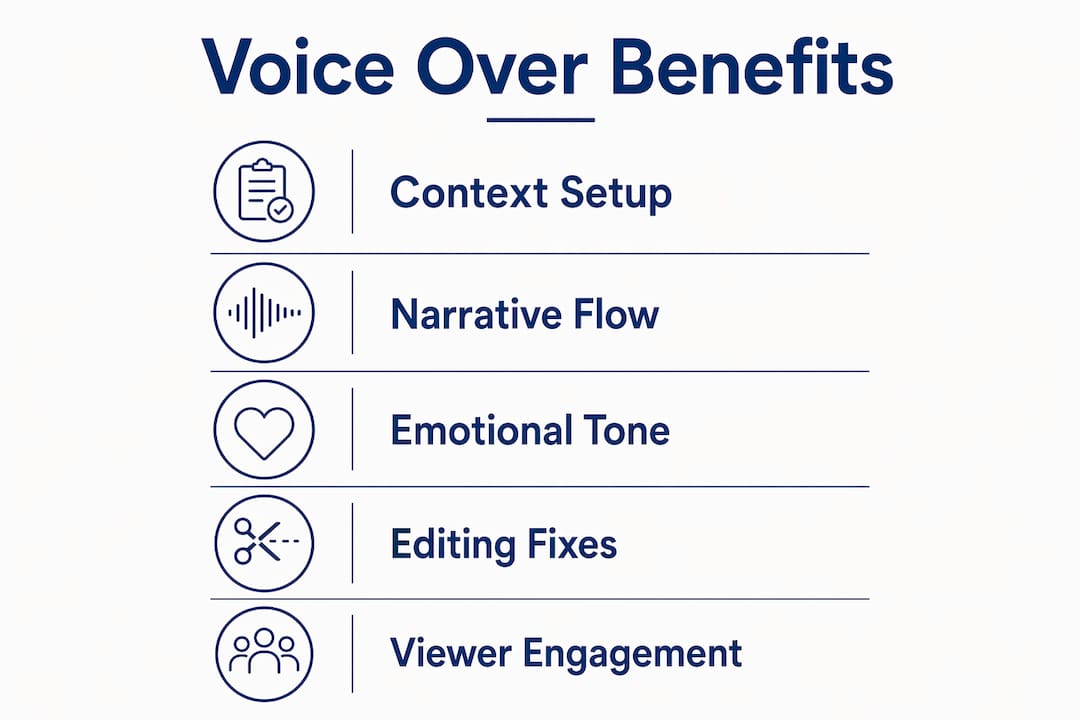
  • Emotional depth. A narrator’s tone, pace, and word choice add a layer of feeling that visuals alone rarely achieve.
  • Exposition without dialogue. Complex backstory, world-building, or technical information can be delivered efficiently without forcing characters to explain things unnaturally.
  • Scene continuity. Narration bridges cuts, time jumps, and location changes without confusing the audience.
  • Audience intimacy. A narrator speaking directly to the viewer creates a one-on-one relationship that on-screen action cannot replicate.
  • Flexibility in post-production. Narration can be rewritten and re-recorded after the edit is locked, giving creators a tool to fix pacing or clarity issues without reshooting.

Narration is most effective when it complements, not duplicates, the visual storytelling. This principle, often called “show, don’t tell,” means narration earns its place only when the visuals cannot carry the message alone. When both channels say the same thing, one of them is wasted.

What are the common pitfalls in off-camera narration, and how do you avoid them?

The most damaging mistake in off-camera narration is redundancy. When a narrator describes exactly what the audience sees on screen, the result feels condescending and slows the story. The fix is straightforward: write narration that adds information the visual does not provide, then cut anything that overlaps.

Pacing errors are the second most common problem. Engagement drops over 50% if narration is too fast or too complex for the audience to follow. If your script runs long, rewrite it rather than speeding up the recording. Adjust speaking rate or script content rather than using time-stretch audio effects to fix timing problems. Time-stretching creates robotic artifacts that are immediately recognizable in amateur productions and destroy the sense of authenticity that good narration requires.

Monotone delivery is the third major pitfall. A narrator who reads at a consistent pitch and volume without variation loses the audience within minutes. Micro-pauses and breathing patterns differentiate professional narration from robotic delivery and improve viewer engagement significantly. Whether you are directing a human talent or editing an AI voice, build these pauses into the script before recording.

Pro Tip: When mixing narration over background music, set the music to duck to roughly 20% of its original volume whenever the narrator speaks. This keeps the emotional atmosphere of the music without letting it compete with the voice for the listener’s attention.

How can filmmakers integrate AI tools into off-camera narration workflows?

AI text-to-speech tools have changed the economics of off-camera narration production. Professional narration setups cost between $5 and $22 per month for AI tools, compared to variable human talent fees that scale with project complexity. For early-stage content creators and independent filmmakers, this cost difference is significant. Tools like ElevenLabs, Murf, and Descript offer voice libraries with enough variety to match most project tones.

The workflow for AI narration follows the same five-step process as human narration, with one additional layer of direction. Because AI voices cannot interpret a script the way a trained actor can, the creator must build all performance cues directly into the text. Short sentences signal faster delivery. Punctuation creates pauses. Word choice shapes tone.

Key practices for effective AI narration integration:

  • Write scripts with explicit rhythm built in. Sentence length controls pace more reliably than any AI setting.
  • Use SSML (Speech Synthesis Markup Language) tags when your platform supports them to insert precise pauses and emphasis.
  • Audition multiple voice options against your actual video before committing to one. A voice that sounds good in isolation may clash with your visual tone.
  • Edit the AI output in a DAW like Adobe Audition or Reaper to add room tone, apply EQ, and blend the voice naturally into the mix.

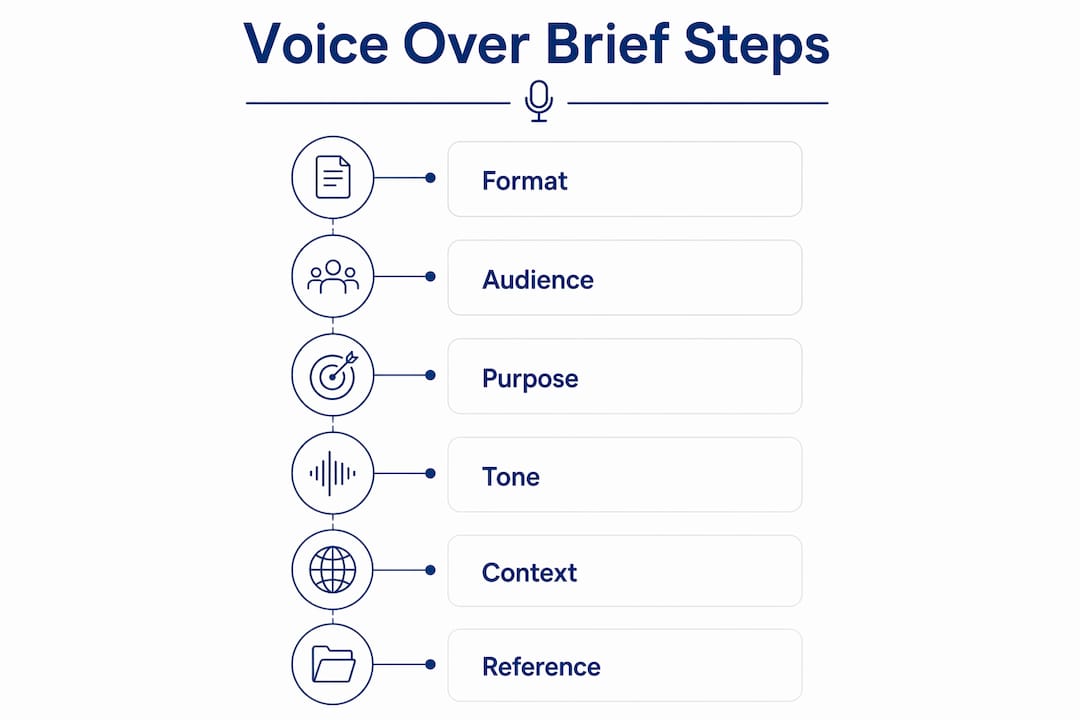
Professional narration balances human warmth with technical precision, achievable even with AI tools when the creator directs the performance thoughtfully. The limitation is not the technology. It is the creator’s willingness to treat the AI voice as a performance that needs direction, not a button that produces finished audio. When you need a voice that carries genuine emotional weight and brand authority, a professional voice actor remains the stronger choice. You can learn more about briefing your production team to get the most from either approach.

Key takeaways

Off-camera narration is most powerful when the script is built around the visuals, not written independently and forced to fit afterward.

Point Details
Definition is precise Off-camera narration is voice-over from a non-visible speaker guiding the story from outside the visual frame.
Pacing is non-negotiable Target 150 words per minute and rewrite scripts rather than time-stretching audio to fix timing problems.
Two-column scripting wins Map narration text against visual cues side by side to prevent redundancy and synchronization errors.
Redundancy kills engagement Write narration that adds information the visual cannot provide. Never describe what the audience already sees.
AI tools require direction AI voices need performance cues built into the script itself, including rhythm, pauses, and emphasis.

Why scripting discipline is the real skill in off-camera narration

Most aspiring filmmakers focus on the recording. They buy microphones, research acoustic treatment, and obsess over audio interfaces. That preparation matters, but it is not where off-camera narration succeeds or fails. The script is where it succeeds or fails.

I have reviewed narration projects where the recording quality was genuinely excellent and the result still felt flat and unconvincing. In every case, the problem was the same: the script was written to be read, not heard. Long sentences. Passive constructions. Narration that described the visuals instead of adding to them. No amount of post-production fixes that.

The two-column scripting method changed how I think about narration production entirely. When you force yourself to write narration alongside a description of what the audience sees at that exact moment, redundancy becomes impossible to ignore. You see it immediately. You cut it immediately. The result is narration that feels purposeful because it is purposeful.

The technology around narration is evolving fast. AI voices are improving every quarter, and the cost of production is dropping. But the discipline of writing narration that earns its place in the edit, that adds something the visual cannot, is a human skill that no tool replaces. Invest in that skill first. The technology will follow.

For those exploring brand storytelling through video, off-camera narration remains one of the most direct paths to emotional connection with an audience.

— kribi

Take your narration from script to screen

Whether you are producing your first documentary short or building a library of branded content, the quality of your off-camera narration determines how much of your story actually lands with the audience. Gregeschmeyervoice offers professional voice talent with a grounded, conversational delivery that works across commercials, documentaries, political messaging, and broadcast productions. Greg Eschmeyer’s clients consistently highlight fast turnaround, authentic tone, and the ability to match the specific emotional register each project demands.

https://gregeschmeyervoice.com

If you are ready to produce narration that sounds like a real person with something real to say, explore professional voice talent services at Gregeschmeyervoice. For creators building their own recording setup, the DIY voice-over recording guide walks you through producing studio-quality narration without a studio budget.

FAQ

What is the off-camera narration technique in simple terms?

Off-camera narration is a voice-over technique where a narrator who is not visible on screen delivers exposition, commentary, or emotional context to guide the audience through a story. It is the standard approach in documentaries, film noir, and explainer video production.

How is off-camera narration different from voice acting?

Off-camera narration functions as a storytelling guide from outside the story world, while voice acting involves character performances within the story. Misunderstanding this distinction leads to mismatched tones that reduce a project’s credibility and professionalism.

What pacing should off-camera narration follow?

Professional off-camera narration targets approximately 150 words per minute. Faster delivery reduces comprehension, and slower delivery loses audience attention. If your script runs long, rewrite it rather than speeding up the recording or using time-stretch effects.

Can AI tools replace human voice talent for off-camera narration?

AI tools like ElevenLabs and Murf can produce effective narration for many projects, particularly when the script is written with rhythm and pauses built in. For projects requiring genuine emotional authority or brand-specific warmth, human voice talent consistently delivers stronger results.

What is the biggest mistake creators make with off-camera narration?

Redundancy is the most common and damaging error. When narration describes what the audience already sees on screen, it wastes the viewer’s attention and slows the story. Effective narration always adds information the visual cannot provide on its own.

Off-Camera Narration Technique: A Filmmaker’s Guide2026-06-07T23:19:27-04:00

Voice Tone Examples for Brand Campaigns That Work

2026-06-06T23:03:17-04:00

Brand voice tone is the consistent personality and emotional register a company uses across every campaign, channel, and customer interaction. When Apple says “Think Different,” Nike says “Just Do It,” or Oatly prints rambling, self-aware copy on a milk carton, each brand is executing a deliberate voice system, not just choosing adjectives. The difference between campaigns that build loyalty and campaigns that disappear is almost always the clarity and discipline of that system. This article breaks down real voice tone examples from brand campaigns, explains what makes each one work, and gives you a framework to apply the same thinking to your own messaging.

1. What makes voice tone examples in brand campaigns actually work

Most brand voice documents fail before a single ad runs. They list adjectives like “friendly,” “bold,” and “authentic,” then leave writers to guess what that means in practice. Effective brand voice systems are measurable constraints and replicable templates, not mood boards. That distinction separates brands with recognizable campaigns from brands that sound like everyone else.

Think of it this way: Oatly’s voice system tells writers to use informal, rambling sentence structures that feel like a person thinking out loud. Alex Hormozi’s brand voice specifies sentence length caps, banned words, and a direct-challenge tone. These are rules a writer can follow or break deliberately. “Be bold” is not a rule. It is a wish.

  • Voice is the fixed personality of your brand. It does not change.
  • Tone shifts by context. Serious in a security alert, warm in a birthday email, playful in a product launch.
  • Voice system is the documented set of rules, examples, and constraints that make both voice and tone replicable.

Brand voice defines who you speak to and what you are not, beyond sounding merely professional. That “what you are not” clause is where most brands skip the work. Defining exclusions is as important as defining attributes.

Pro Tip: Write three sentences your brand would never say alongside three it would. The contrast teaches writers faster than any adjective list.

Hands typing brand voice tone examples on laptop

2. Top brand voice tone examples from real campaigns

The brands below each solve a specific business problem with their voice. Study the problem first, then the solution.

Brand Voice tone attributes Campaign context Business problem solved
Apple Minimal, confident, aspirational “Think Different,” product launches Justify premium pricing without specs
Nike Urgent, empowering, second-person direct “Just Do It,” athlete campaigns Drive emotional identification over product features
Oatly Informal, self-aware, conversational Carton copy, OOH ads Differentiate a commodity product in a crowded category
Liquid Death Aggressive, irreverent, absurdist “Murder Your Thirst,” social content Make canned water feel rebellious and worth a premium
Patagonia Principled, urgent, values-forward “Don’t Buy This Jacket,” activism campaigns Build loyalty through shared values, not discounts
IKEA Warm, democratic, slightly playful Catalog copy, in-store signage Make flat-pack furniture feel approachable and human
Coca-Cola Optimistic, inclusive, celebratory “Share a Coke,” holiday campaigns Connect a mass product to personal moments

Oatly and Liquid Death use their voice tone as a direct solution to justify premium positioning and differentiate in crowded markets. Oatly’s carton copy reads like a stream-of-consciousness journal entry. Liquid Death’s ads look like heavy metal merchandise. Neither approach works by accident. Both are the output of explicit voice rules applied with discipline.

Patagonia’s “Don’t Buy This Jacket” campaign is the clearest example of voice tone as a business strategy rather than a marketing tactic. The brand told customers not to buy its product. That works only when the voice is so consistent and credible that the message reads as conviction, not a stunt. Patagonia grew sales by 30% with that principled campaign approach, proving that a values-driven voice can outperform promotional messaging.

Monzo, the UK digital bank, applied a plain-English, direct voice to financial products that competitors wrapped in jargon. The result was a 500% increase in overdraft uptake after rewriting product communications in its brand voice. Clear, human language converted better than formal banking copy. That is a measurable voice tone outcome, not a brand feeling.

3. How to match voice tone to your brand and campaign goals

Matching voice tone to a brand starts with two questions: What specific business problem does this campaign solve? Who, precisely, is the audience? Generic answers produce generic voices.

Step 1: Define the business problem your voice must solve. Liquid Death needed to make water feel exciting. Oatly needed to make oat milk feel human. Your campaign has an equivalent problem. Write it in one sentence before you write a single word of copy.

Step 2: Audit your audience’s existing language. Read reviews, Reddit threads, and customer emails. The words your audience uses to describe their own problems are the words your voice should reflect back. This is not mimicry. It is resonance.

Step 3: Build a voice document with real constraints. An effective brand voice document includes 10 sections: brand mission, tone adjectives with definitions, sentence rhythm guidance, vocabulary lists, and worked examples. Functional documents run between 1,500 and 4,000 words. A one-page PDF with three adjectives is not a voice document.

Step 4: Specify tone modulation rules by channel and context. Tone shifts contextually while voice stays constant. A brand that is warm and direct in a customer celebration email should be warm and direct but more measured in a security notification. The personality does not change. The register does. Write explicit rules for each context your brand operates in.

Step 5: Enforce with examples, not just rules. Only 2% of companies enforce brand voice consistently despite 95% having guidelines. The gap is almost always the absence of worked examples. Show writers a before-and-after rewrite for each major content type.

Pro Tip: Create a single-source voice profile file, such as a BRAND_VOICE.md document, and integrate it with your AI writing tools to flag off-brand content before it publishes.

4. Campaign tone variations by platform and content type

Voice stays constant. Tone adapts. Here is how leading brands modulate tone across channels without losing their core identity.

Platform or content type Tone register Example brand behavior
Social media (organic) Playful, conversational, reactive Wendy’s Twitter uses wit and challenge; Duolingo TikTok uses absurdist humor
Email marketing Warm, direct, personal Mailchimp uses first-person, short sentences, and humor in onboarding sequences
Product launch campaigns Confident, aspirational, minimal Apple strips copy to its fewest possible words at every launch event
Customer service communications Calm, clear, empathetic Monzo uses plain English and avoids jargon in every support interaction
Investor or press communications Authoritative, measured, evidence-forward Patagonia uses the same values-driven voice but with formal structure
Out-of-home advertising Bold, punchy, single-idea Oatly and Liquid Death both use OOH to deliver one irreverent line at maximum volume

The critical insight here is semantic consistency. Your audience reads your Instagram post, then your email, then your website. If those three touchpoints sound like three different companies, you lose the cumulative trust that brand voice builds over time. Semantic mapping and AI tools now enable consistent multi-channel voice application by flagging tone drift before content goes live. That is a meaningful shift in how brand managers can enforce voice at scale.

Deployable brand voice profiles specify words to use and avoid, tone attributes, and channel-specific rules to keep voice consistent even when AI generates the first draft. This is not optional infrastructure for brands operating at scale in 2026. It is the baseline.

Key takeaways

The most effective brand voice tone examples share one trait: they are built on explicit, replicable systems that solve a specific business problem, not on adjective lists.

Point Details
Voice systems beat adjective lists Define measurable constraints and worked examples, not just descriptors like “bold” or “friendly.”
Tone modulates; voice does not Adjust register by channel and context while keeping the core personality fixed across all campaigns.
Enforcement is the real gap Only 2% of companies enforce brand voice consistently. Worked examples close that gap faster than guidelines alone.
Voice drives measurable outcomes Monzo’s 500% overdraft uptake and Patagonia’s 30% sales growth both trace directly to disciplined voice application.
Document for AI and humans equally A functional voice document runs 1,500 to 4,000 words and includes channel rules, vocabulary lists, and before-and-after rewrites.

Why most brand voice projects stall before they ship

I have reviewed a lot of brand voice documents over the years, and the pattern is almost always the same. A team spends weeks workshopping adjectives, produces a beautiful PDF, and then watches it sit untouched in a shared drive while the actual campaign copy sounds nothing like it.

The problem is not commitment. It is architecture. Brand voice documents that work are built like style guides for a newsroom, not mood boards for a rebrand. They answer specific questions: What do we say when a customer is angry? What do we never say in a product launch? What does our voice sound like when we are wrong about something?

The brands I find most instructive are not always the famous ones. Monzo is a better case study than Apple for most marketers, because Monzo solved a real operational problem with voice. It rewrote overdraft communications in plain English and saw conversion jump. That is a result any brand manager can replicate with the right document and the discipline to enforce it.

The other shift I keep watching is AI’s role in voice consistency. Tools that use semantic analysis to flag tone drift are genuinely useful, but they only work if the source document is specific enough to train against. A voice document with three adjectives gives an AI nothing to work with. A document with sentence rhythm rules, vocabulary constraints, and 20 worked examples gives it a real target.

My honest advice: treat your voice document as a product, not a project. It needs a version number, an owner, and a review cycle. The brands that get this right in 2026 will have a compounding advantage over those that keep treating voice as a one-time creative exercise.

— kribi

Bring your brand voice to life with Gregeschmeyervoice

https://gregeschmeyervoice.com

A voice document defines the personality. A skilled voice actor delivers it. Gregeschmeyervoice brings brand campaigns to life through a grounded, conversational delivery style that connects with audiences without sounding manufactured. Greg Eschmeyer works across commercials, political messaging, documentaries, and broadcast content, matching his performance to the specific tone your brand has defined. Clients consistently highlight his quick turnaround and ability to hit the emotional register a campaign requires on the first take. If your next campaign needs a voice that sounds like a real person, not a generic read, Gregeschmeyervoice is the place to start.

FAQ

What is brand voice tone in advertising campaigns?

Brand voice tone is the consistent personality and emotional register a brand uses across all campaign communications. Voice stays fixed; tone shifts by context, such as playful in a product launch and measured in a crisis response.

How do top brands like Apple and Nike define their voice tone?

Apple uses minimal, confident, aspirational language that justifies premium pricing without leading with specifications. Nike uses urgent, second-person direct copy that drives emotional identification with athletes and everyday people alike.

Why do most brand voice guidelines fail?

Only 2% of companies enforce brand voice consistently despite 95% having guidelines. The failure is almost always a lack of worked examples and channel-specific rules, not a lack of intention.

How do I choose the right tone for my brand campaign?

Start by identifying the specific business problem your campaign must solve, then audit your audience’s natural language. Build a voice document with explicit constraints, vocabulary lists, and before-and-after rewrites for each major content type.

Can voice tone really affect campaign sales results?

Monzo’s plain-English voice approach produced a 500% overdraft uptake increase, and Patagonia’s values-driven voice contributed to 30% sales growth. Voice tone is a measurable commercial lever, not just a brand aesthetic.

Article generated by BabyLoveGrowth

Voice Tone Examples for Brand Campaigns That Work2026-06-06T23:03:17-04:00

Can Voice Acting Really Be Replaced by AI?

2026-02-22T22:53:26-05:00

Let’s get REAL.


Can Voice Acting really be replaced by AI?

Absolutely…NOT! 


I am seeing more and more clients use AI as a place holder, but the more we hear AI voices, the more we all recognize how completely non-human it is. For years brands have evolved to be more personal, more conversational, more real. Connecting to an audience requires real empathy, real emotion, and a real skilled human talking to them. This cannot be achieved with simply a voice, real or synthetic, without the ability to connect human to human.

While AI can replicate sound, it can’t replicate soul. Voice acting is more than pronunciation and tone — it’s emotional intelligence, timing, and human connection. A skilled actor interprets context, nuance, and subtext; they understand pacing, energy, and authenticity in ways that go beyond data points.

Audiences instinctively recognize when something feels real — the subtle breath before a line, the imperfection that conveys emotion, the humanity that makes storytelling powerful. That’s what builds trust, empathy, and connection — things AI can imitate but not truly feel.

AI can be a helpful tool in production, but it should never replace the artistry, spontaneity, and emotional truth that professional voice actors bring to every project. Because at the end of the day, great storytelling needs a human voice — not just a human sound.

So…let me be the answer you’ve been waiting for. The passion behind your brand, the grit and hard work behind your story, the straightforward message to your audience, the voice people remember.


Let’s chat.


13 years of ongoing training, development, and results.


Commercials, Documentaries, Promo, Trailers, Corporate Narration, eLearning and more.


Let me tell your story.


Can Voice Acting Really Be Replaced by AI?2026-02-22T22:53:26-05:00
Go to Top