The voice over audition selection process is the set of practices voice actors use to submit compelling recordings that get noticed and selected by casting professionals. Mastering this process separates actors who book roles consistently from those who audition endlessly without results. The criteria for voice over auditions span technical quality, script interpretation, emotional performance, and submission compliance. Casting directors apply each of these filters before a single callback goes out. Understanding how they think gives you a real edge.
What tools and environment do you need for the voice over audition selection process?
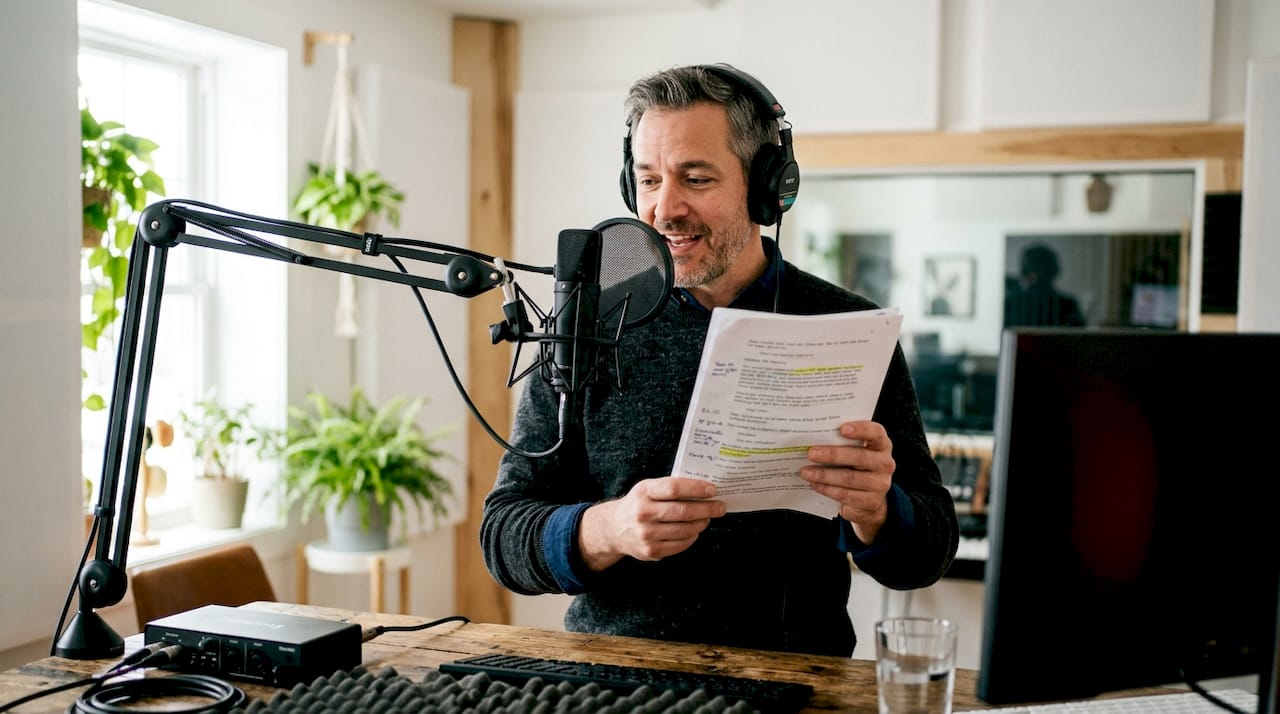
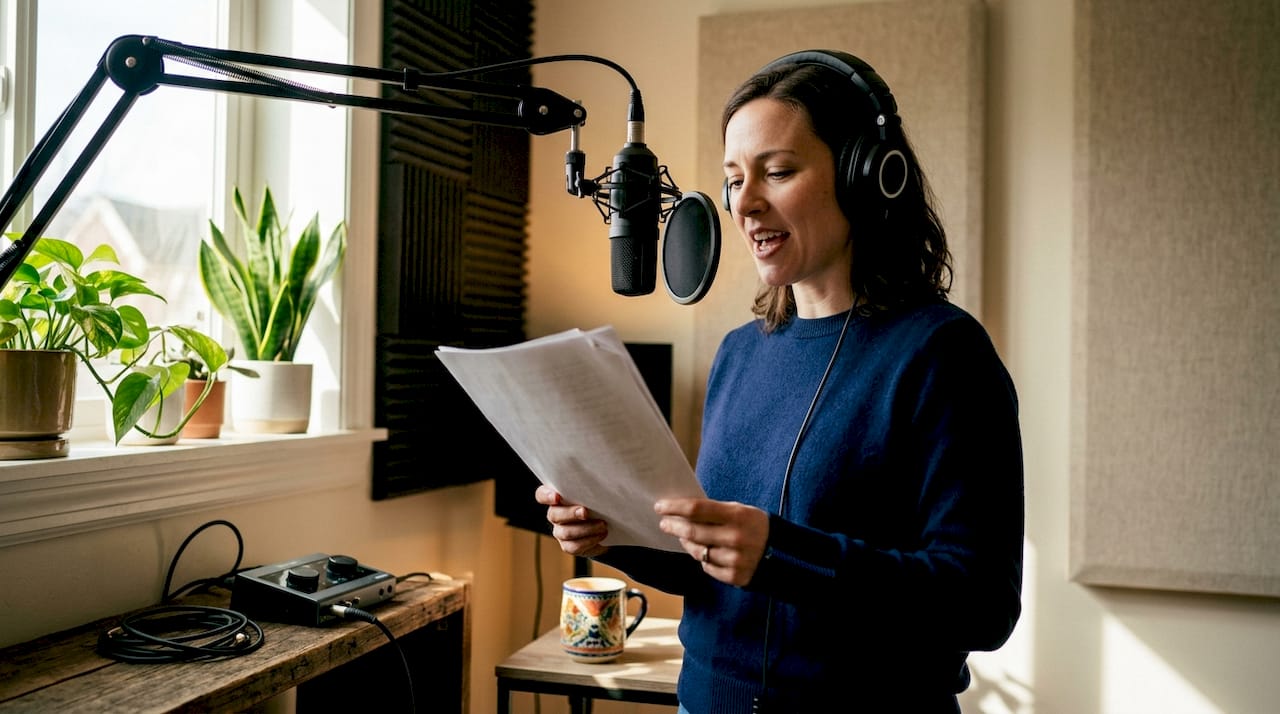
Your recording environment determines whether your audition gets heard or discarded. A clean noise floor is the baseline requirement, and recording 30 seconds of silence before every session helps you detect background noise that can ruin an otherwise strong take. Background hum, HVAC rumble, and street noise are irreparable once embedded in a recording. Fix the room before you fix your performance.
Core equipment every voice actor needs
- Microphone: A large-diaphragm condenser mic (such as the Audio-Technica AT2020 or Rode NT1) captures the vocal detail casting directors expect.
- Headphones: Closed-back headphones let you monitor your recording without bleed.
- Recording software: Audacity (free) or Adobe Audition handle professional-grade capture and editing.
- Acoustic treatment: Moving blankets, foam panels, or a purpose-built vocal booth reduce room reflections.
- Pop filter: Eliminates plosive sounds on “p” and “b” consonants that distort the signal.
If you record at home, check out this DIY studio guide for practical setup advice without professional construction costs.
Vocal and mental warm-up routines

A pre-audition vocal warm-up is not optional. Lip trills, tongue twisters, and humming exercises loosen the articulators and stabilize breath support before you hit record. Mental preparation matters equally. Spend two minutes reading the script silently, visualizing the audience, and setting your emotional intention. Actors who skip warm-ups produce inconsistent takes and tire faster during longer sessions.
Pro Tip: Record your room tone sample at the same time of day you plan to audition. Ambient noise shifts between morning and evening, and your silence sample needs to match your actual recording conditions.
How to analyze and prepare audition scripts for best performance
Script analysis is where most aspiring voice actors lose ground before they ever open a microphone. The optimal audition sample runs 30–60 seconds, which means every word carries weight. When a casting brief gives you a longer script, select the section that contains the most emotional movement.
Casting experts define this emotional movement as the “turn.” Finding the turn in a script means locating the moment where the tone, stakes, or character perspective shifts. That shift is what makes a read engaging rather than flat. A commercial that opens with a problem and resolves with relief has a clear turn. Your job is to find it and perform through it, not around it.
Here is a repeatable script preparation method:
- Read silently first. Absorb the meaning before you attempt any vocal choices.
- Identify the audience. A script for a pediatric hospital sounds nothing like one for a financial services firm. Tone follows audience.
- Mark the turn. Underline the sentence where the emotional energy shifts.
- Break long sentences. Split compound sentences at natural breath points so your delivery sounds conversational, not read.
- Add contractions. Where the script says “you are,” say “you’re.” It sounds human.
- Note pronunciations. Brand names, medical terms, and place names need research before recording, not during.
- Read aloud three times. The first read is discovery. The second is adjustment. The third is performance.
Pro Tip: Record your third read-through, even if you plan to do a full session later. Spontaneous first-performance energy is often the most natural, and you can compare it against your polished takes.
Understanding what casting directors look for in vocal performance helps you align your script choices with their actual selection criteria.
What are the step-by-step actions to record and submit a standout voice over audition?
A professional audition workflow reduces wasted takes and produces cleaner submissions. Grouping similar read types together during a session maintains your vocal tone and prevents the fatigue that comes from switching between wildly different character styles. Record all your warm, conversational reads before shifting to authoritative or high-energy reads.
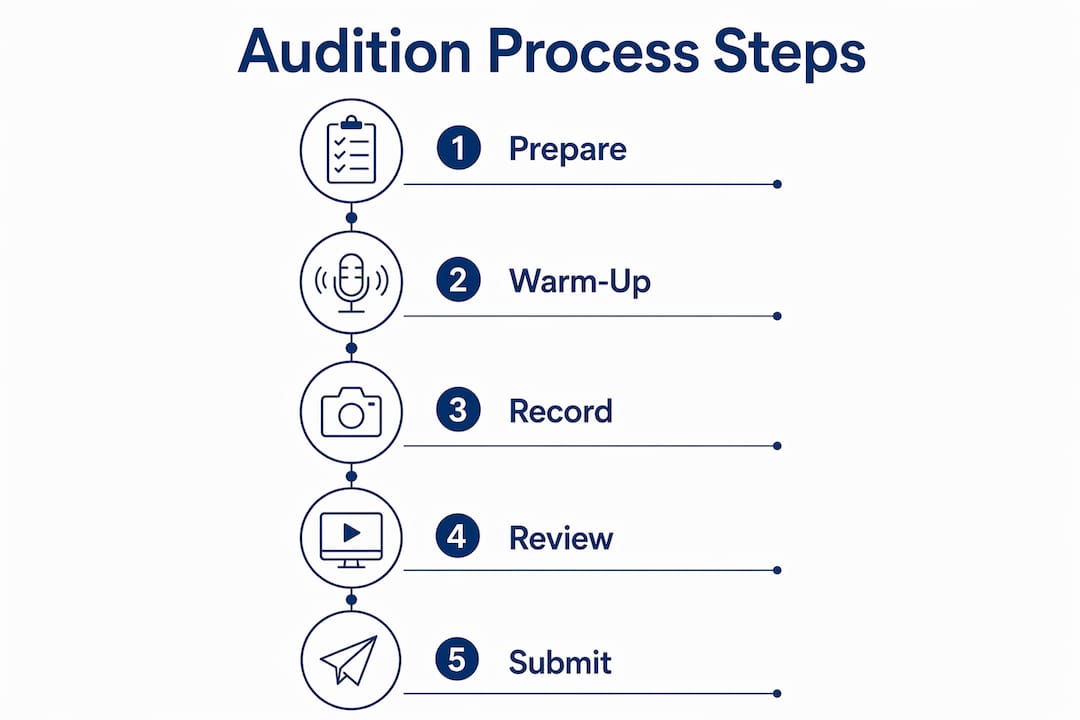
Follow this workflow for every audition:
- Warm up your voice and room. Complete your vocal exercises and record your silence sample.
- Set your intention. Decide on one emotional objective for the script before you press record.
- Record two to three distinct takes. Top voice actors submit multiple takes with different emotional choices, giving casting directors a view of your range and adaptability.
- Listen back critically. Check for mouth noise, breath artifacts, and pacing issues.
- Edit cleanly. Remove false starts and long silences. Do not over-process with compression or EQ unless the brief requests it.
- Name your file correctly. Use the format the casting brief specifies. A typical convention is: LastName_FirstName_ProjectTitle.wav.
- Include your slate if required. A slate is a brief spoken introduction (“Hi, this is [your name] for [project].”) that some casting directors request at the head of the file.
- Submit in the middle of the open window. Submitting too early appears rushed; submitting at the last minute signals poor time management.
| Step | Common mistake | Better approach |
|---|---|---|
| Takes | Recording 10+ takes hoping one works | Record 2–3 intentional, distinct reads |
| File format | Submitting MP3 when WAV is specified | Match the brief exactly, every time |
| Slate | Skipping the slate to save time | Include it when requested; skip it when not |
| Submission timing | Sending within minutes of the posting | Submit midway through the open window |
| Audio processing | Heavy reverb or noise reduction artifacts | Clean, dry audio with minimal processing |
Pro Tip: Keep a submission log. Note the project name, date submitted, casting platform, and any callback results. Over time, patterns emerge about which read styles and genres you book most consistently.
What common mistakes should voice actors avoid during auditions?
The most common audition errors are preventable. Recognizing them before you record saves you from submitting work that gets filtered out in the first pass.
- Flat, one-note reads. A read with no emotional arc gives casting directors nothing to hold onto. Every script has a beginning, middle, and end. Perform all three.
- Ignoring casting direction. If the brief says “warm and conversational,” a theatrical, projected delivery is a mismatch. Read the direction twice before you record.
- Poor audio quality. Background noise, clicks, and room echo signal an unprepared actor. Casting directors use submission quality as the first filter before they even evaluate performance.
- Overproducing the audio. Heavy compression, reverb, or pitch correction makes your voice sound processed. Casting directors want to hear your natural voice.
- Submitting non-compliant files. Following submission instructions precisely predicts professional reliability. A wrong file format or missing slate can eliminate you before anyone listens.
- Following up on submissions. Sending a message to ask if your audition was received is not professional practice in voice over casting. Submit and move on.
“Auditioning is not about reading words correctly. It is about performing a story with a clear emotional structure. The actors who book roles treat every audition as a full performance, not a technical exercise.”
The mismatch between audiobook narration and commercial audition styles trips up many voice actors. Overperforming in an audiobook audition disconnects the listener and signals a poor fit for the genre. Commercial energy does not translate to long-form narration. Know which style the project demands before you record.
How does the casting process differ across media types?
The voice over casting process varies significantly depending on the media type. What works in a commercial audition can actively hurt you in an audiobook submission.
- Commercial auditions favor energy, clarity, and a quick emotional hook. Open casting calls are common, and the selection window is short. Casting directors often decide within the first 10 seconds.
- Audiobook narration prioritizes fit, consistency, and storytelling endurance. Audiobook casting relies heavily on private talent rosters rather than open calls. Relationships with publishers and agents matter more here than in any other genre.
- Video game casting values character range and the ability to sustain a voice across hundreds of lines. Auditions often include multiple character types in a single submission.
- Corporate narration and e-learning reward a clear, neutral, and trustworthy tone. Casting is often handled internally by producers rather than dedicated casting directors.
- Animation demands extreme range and the ability to take direction in real time. Callbacks often include live direction sessions.
Understanding how selection varies across commercial types helps you tailor your preparation and demo selection to the specific genre you are targeting.
Key Takeaways
The voice over audition selection process rewards actors who combine clean audio, deliberate script analysis, and strict submission compliance in every single audition.
| Point | Details |
|---|---|
| Clean audio is the first filter | Background noise eliminates auditions before casting directors evaluate performance. |
| The 30–60 second rule | Select or prepare audition samples that fall within this range for maximum evaluator impact. |
| Find the emotional turn | Locate the script’s energy shift and perform through it to create an engaging, memorable read. |
| Submit in the middle window | Avoid submitting immediately or at the deadline; mid-window timing signals professionalism. |
| Match the media type | Commercial, audiobook, and game casting each require a distinct performance style and submission approach. |
What I have learned from years of watching actors audition
Most voice actors treat auditions as a numbers game. Send enough recordings, and something will stick. That thinking produces mediocre work at high volume, which is the fastest way to build a reputation for being forgettable.
The actors I have watched book consistently share one habit: they treat every audition as a complete performance, even for a 30-second spot. They do not record until they know exactly what emotional story they are telling. They warm up. They analyze the script. They submit one or two takes that represent a genuine creative choice, not a hedge.
Preparation also means building a space that works. You do not need a professional studio, but you do need a treated room where you can record the same quality every time. Inconsistent audio from audition to audition signals an actor who is not yet serious about the craft.
Log your submissions. Track what you book and what you do not. Over time, you will see which genres and styles align with your natural voice. That data is more useful than any single piece of advice. Persistence without self-awareness is just noise. Persistence with data is a career.
— kribi
Gregeschmeyervoice.com: professional support for your audition career
Preparing for voice over auditions takes more than reading tips. It takes hearing what a professional, booked performance actually sounds like and understanding the gap between where you are and where casting directors need you to be.
Gregeschmeyervoice.com offers professional voice actor services built on authenticity and genuine delivery, the exact qualities casting directors select for. Whether you are studying what makes ad voiceovers land or looking for a benchmark of conversational, grounded performance, Gregeschmeyervoice gives you a real-world reference point. Visit Gregeschmeyervoice.com to hear what professional voice work sounds like when it is done right.
FAQ
What is the voice over audition selection process?
The voice over audition selection process is the series of steps voice actors follow to prepare, record, and submit professional audition recordings that meet casting criteria. It covers script analysis, audio quality, performance delivery, and submission compliance.
How long should a voice over audition sample be?
The optimal audition sample length is 30–60 seconds. This range gives casting directors enough material to evaluate vocal quality and emotional range without losing their attention.
What do casting directors look for first in a submission?
Casting directors use file format, naming conventions, and slate inclusion as the first filter. Non-compliant submissions are eliminated before the audio is even played.
How do I prepare for voice over auditions at home?
Record a 30-second silence sample to check your noise floor, complete a vocal warm-up routine, and treat your recording space with acoustic panels or soft furnishings before you record your audition takes.
Does the audition process differ for audiobooks versus commercials?
Audiobook casting prioritizes voice fit, storytelling consistency, and long-form endurance, often through private talent rosters. Commercial casting favors energy and emotional hooks in open audition formats.