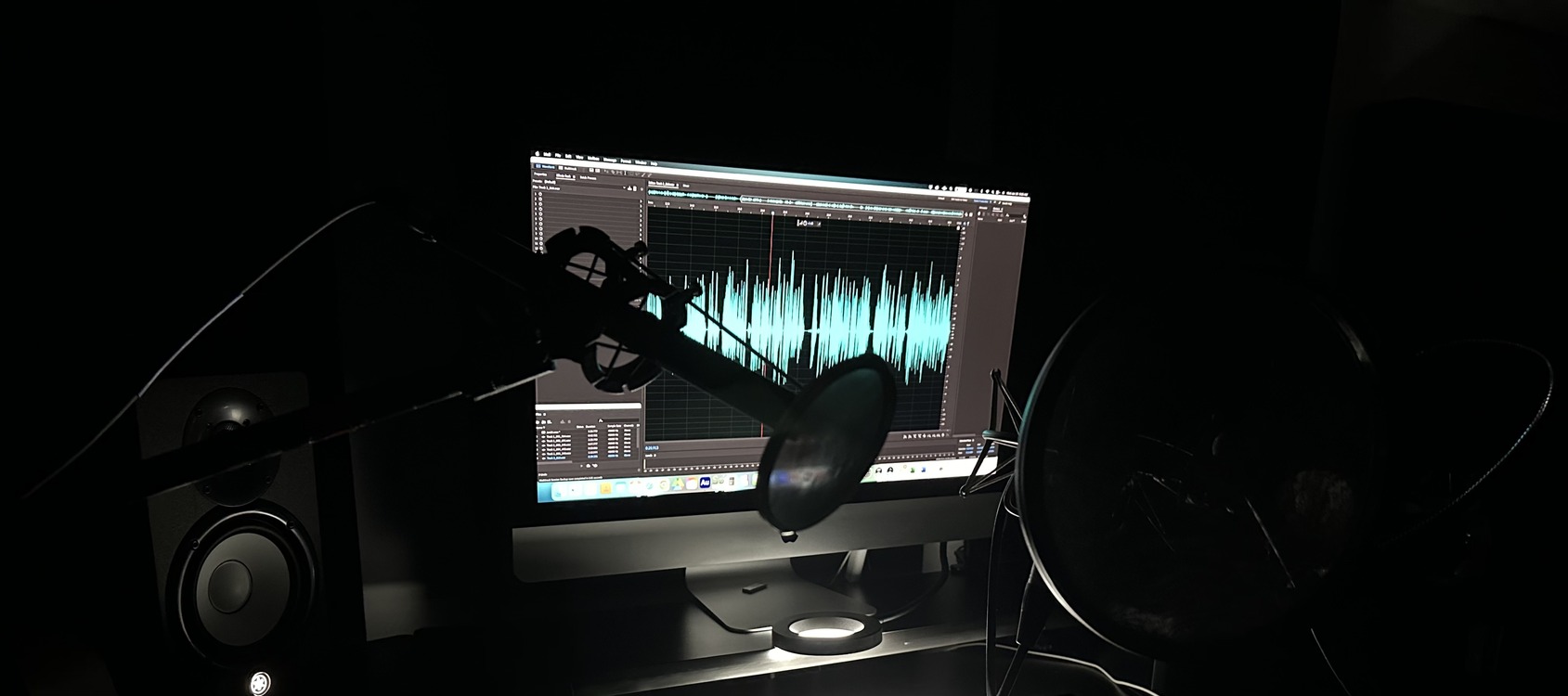
Why Ad Voiceovers Need a Human Touch
Human voiceovers are the single most effective tool for building emotional trust between a brand and its audience. Synthetic voices have improved technically, but the gap in emotional impact remains wide. Research confirms that human voices activate emotional and social brain circuits that influence preferences and decisions in ways AI-generated audio simply cannot match. Understanding why ad voiceovers need human touch is not a matter of preference. It is a matter of measurable performance, audience psychology, and the kind of storytelling that makes people remember and act.
Why ad voiceovers need human touch: the psychology behind it
The human brain processes a real voice differently than a synthetic one. Human voices activate areas linked to empathy and social bonding, triggering the same neural pathways that fire during face-to-face conversation. That neurological response is what makes a well-delivered voiceover feel personal rather than transactional.
One of the most underappreciated factors in voiceover performance is what researchers call emotionality flips. These are dynamic emotional shifts within a narration that sustain listener interest by varying tone, pace, and intensity. Human voice actors deliver these shifts intuitively. AI models tend to flatten them, producing audio that sounds consistent but feels lifeless.
Vocal imperfections play a surprising role as well. Removing natural texture from a voice actually reduces trust. Human vocal flaws signal authenticity to the brain, while synthetic perfection creates a subtle but real sense of unease. Audiences may not consciously identify the source of that unease, but they respond to it by disengaging.
Cognitive load is the final piece of the psychology puzzle. Listeners expend more mental effort decoding AI-generated speech, which leads to faster drop-off and lower comprehension. That extra processing cost comes directly out of the mental bandwidth your audience would otherwise spend engaging with your message.
- Empathy activation: Human voices trigger social bonding circuits that synthetic voices do not reach.
- Emotionality flips: Natural shifts in tone and pacing hold attention across long-form content.
- Authentic imperfection: Small vocal variations signal trustworthiness to the listener’s brain.
- Reduced cognitive load: Human narration is easier to decode, freeing mental space for message retention.
Pro Tip: When auditioning voice talent, listen for natural breath patterns and micro-pauses. Those small human moments are exactly what the brain uses to gauge authenticity.
What evidence shows human voiceovers improve ad effectiveness?
The performance data on human voiceovers is consistent and compelling. Professional human narration in crowdfunding videos increased pledged amounts by 39% and backers by 38%. That is not a marginal improvement. It is the difference between a campaign that funds and one that stalls.
Trusted human hosts in audio ads increase ad recall by 22 percentage points and lift purchase intent by 5 points over standard ads. Long-form host-read ads produce twice the recall of shorter formats. Those numbers reflect a consistent pattern: when a real person delivers a message with genuine investment, audiences remember it and act on it.
The penalty for using AI voices is equally well documented. Consumers lower favorability and trust for ads they identify as AI-generated, even when audio quality is technically high. The issue is not fidelity. It is intentionality. Audiences sense when a voice is performing versus when it is reading.
| Metric | Human voiceover result |
|---|---|
| Crowdfunding pledges | +39% with professional human narration |
| Crowdfunding backers | +38% with professional human narration |
| Ad recall lift | +22 percentage points with trusted human hosts |
| Purchase intent lift | +5 points over standard ads |
| Long-form recall | 2x higher for host-read vs. shorter formats |
The pattern across all these data points is the same. Human voices encode memory more effectively, sustain attention longer, and generate stronger behavioral responses. For advertisers measuring cost per acquisition or return on ad spend, those differences are not abstract. They show up in campaign results.
How do human voiceovers shape creative storytelling in ads?
The creative advantages of human narration go well beyond technical delivery. A skilled voice actor brings timing, breath, emphasis, and warmth to a script in ways that AI cannot authentically replicate. These elements carry the emotional payload of a story. They tell the audience how to feel before the words themselves do.
Emotional shifts are the storytelling mechanism that separates memorable ads from forgettable ones. A human narrator can drop to a near-whisper to create intimacy, then build to a confident close that drives action. That arc mirrors how humans naturally tell stories to each other. It is the structure the brain expects, and when it arrives, engagement deepens.
Human hosts remain the trusted centerpiece in audio advertising precisely because they bring consistent personality across a campaign. A voice that listeners recognize and trust becomes an asset over time. That accumulated trust transfers to the brand itself. AI can assist with production efficiency, but it cannot build that kind of relationship.
Filmmakers working with voice and scene pacing understand this instinctively. The right narrator does not just read the script. The narrator interprets it, finding the emotional center of each scene and delivering it in a way that pulls the audience forward.
- Subtext delivery: Human actors convey meaning between the lines through tone and timing.
- Emotional arc: Natural builds and drops in intensity mirror the structure of compelling stories.
- Personality consistency: A recognizable human voice builds cumulative trust across a campaign.
- Interpretive depth: Human narrators find the emotional core of a script, not just its words.
Pro Tip: Give your voice talent a brief on the emotional intent of each section, not just the copy. The best performances come from actors who understand what the audience should feel, not just what they should hear.
What should advertisers consider when choosing voiceover talent?
Selecting the right voice for an ad campaign is a creative and strategic decision. The voice talent qualities that matter most are not the ones that sound impressive in isolation. They are the ones that hold up across a full campaign and connect with a specific audience.
-
Prioritize emotional range over technical polish. A voice that can shift from warmth to urgency to reassurance within a single spot is worth more than one that sounds consistently smooth. Emotional range is what creates the audience immersion that drives recall.
-
Align vocal personality with brand values. A financial services brand needs a different vocal quality than a consumer packaged goods brand. Define the emotional territory your brand occupies before you audition talent.
-
Avoid over-relying on synthetic voices. Consumers penalize AI-voiced ads with lower trust and favorability. Using synthetic audio to cut costs can cost more in lost engagement than it saves in production.
-
Use AI tools for efficiency, not performance. AI can assist with script editing, timing analysis, and production workflows. The actual vocal performance should remain human. The most successful campaigns blend AI-assisted production with authentic human-read audio.
-
Audition for emotional engagement, not just clarity. Ask talent to read a section with two different emotional intentions. The actor who can shift convincingly between them is the one who will serve your campaign across multiple spots and formats.
Following voice over best practices for ad campaigns means treating the voice selection process with the same rigor you apply to visual creative. The voice is not a finishing touch. It is a core creative element.
Key Takeaways
Human voiceovers outperform synthetic alternatives in recall, trust, purchase intent, and emotional engagement because the human brain is wired to respond to authentic vocal performance.
| Point | Details |
|---|---|
| Neuroscience advantage | Human voices activate empathy and social bonding circuits that AI voices do not trigger. |
| Proven ad performance | Trusted human narrators lift ad recall by 22 points and purchase intent by 5 points. |
| Emotional storytelling | Emotionality flips and vocal subtext create memorable moments that synthetic voices flatten. |
| AI penalty is real | Audiences lower trust and favorability for ads they identify as AI-voiced, regardless of audio quality. |
| Talent selection matters | Audition for emotional range and brand alignment, not just technical clarity or vocal smoothness. |
The case for human voice will only get stronger
I have watched the AI voice debate play out across advertising and documentary production for several years now. The pattern is always the same. A brand switches to synthetic audio to save money, engagement drops, and they quietly bring a human voice actor back in. The cost savings evaporate. The time lost does not.
What surprises me most is how often creative teams underestimate the interpretive role of a voice actor. They treat the voiceover as a delivery mechanism for copy. The best voice actors are not delivery mechanisms. They are co-authors of the emotional experience. They find things in a script that the writer did not consciously put there, and they make the audience feel those things.
The technology will keep improving. AI voices will get better at mimicking the surface features of human speech. But mimicry is not performance. The brain knows the difference, even when the conscious mind does not. Advertisers who understand that distinction will keep investing in authentic human narration. The ones who do not will keep wondering why their metrics are flat.
Gregeschmeyervoice is built on exactly this principle. Every project starts with the question of what the audience should feel, not just what they should hear. That is the standard worth holding.
— kribi
Gregeschmeyervoice: professional human voiceovers for real results
Gregeschmeyervoice delivers the grounded, conversational narration that advertisers and filmmakers need to build genuine audience connection.
Greg Eschmeyer’s work spans commercials, political messaging, documentaries, and broadcast, with a consistent focus on authentic delivery and fast turnaround. Clients return because the performances match the emotional intent of the project, not just the words on the page. Whether you need a single spot or a full campaign, professional voiceover services from Gregeschmeyervoice give your message the human credibility that drives recall, trust, and action. Explore the full range of voice over scene types to find the right format for your next project.
FAQ
Why do human voiceovers outperform AI in advertising?
Human voices activate emotional and social brain circuits that synthetic voices do not reach. That neurological response drives higher recall, stronger trust, and better purchase intent.
How much does a human voiceover improve ad recall?
Trusted human hosts increase ad recall by 22 percentage points and lift purchase intent by 5 points compared to standard ads.
Do audiences actually notice when a voiceover is AI-generated?
Consumers lower favorability and trust for ads they identify as AI-voiced, even when the audio quality is technically high. The issue is perceived intentionality, not fidelity.
What makes a human voice actor effective for ad campaigns?
Emotional range, vocal personality aligned with brand values, and the ability to deliver emotionality flips are the qualities that separate effective voice talent from average performers.
Can AI and human voiceovers work together in production?
AI tools can assist with production efficiency, script timing, and workflow. The vocal performance itself should remain human to preserve the emotional authenticity that drives audience engagement.
Recommended
How to Evaluate Voice Over Demos for Media Pros
Evaluating voice over demos is the process of critically assessing audio samples to identify the voice talent that best matches your project’s tone, audience, and creative goals. For professionals in advertising, film production, and marketing, this skill separates a campaign that resonates from one that falls flat. Interactive demos convert at 24.35% compared to 3.05% for static video. That gap reflects how much the right voice performance shapes audience response. Gregeschmeyervoice is built on exactly this principle: authentic, grounded delivery that connects with real people rather than talking past them.
What criteria matter when you evaluate voice over demos?
The industry term for this process is voice talent assessment, and it covers far more than whether a voice sounds pleasant. You are measuring fit across several dimensions at once.
Voice clarity and tonal range are the starting point. A demo should demonstrate the talent’s ability to shift register, from warm and conversational to authoritative and direct, without sounding forced. Clarity means every word lands cleanly, with no muddiness in the midrange frequencies that carry consonants.
Emotional authenticity is the harder quality to pin down, but it is the one that matters most. Most voice over demos fail because of overproduction or weak vocal performance, not technical problems. Strong vocal performance outperforms elaborate production every time. Listen for whether the emotion feels earned or performed. A talent reading a commercial script should sound like they believe the product, not like they are reciting copy.
Pacing and script delivery reveal professional discipline. Professional voice over demos perform best at 120–150 words per minute. Faster feels rushed. Slower drags attention away. Time a 30-second segment of the demo and count the words. If the rate falls outside that window, flag it.
Technical production quality matters, but only as a baseline. Background noise, room reverb, and inconsistent levels are red flags. They signal either a poor recording environment or careless editing.
- Listen for consistent volume across the full demo, not just the opening seconds
- Check for unnatural breath edits or abrupt cuts between takes
- Note whether the demo includes multiple styles (commercial, narration, documentary) or only one
- Assess whether the sample types align with your specific project category
Pro Tip: Play the demo on both studio monitors and earbuds. Talent that sounds great only on high-end speakers may not translate to the mobile devices where most audiences actually listen.
What tools and knowledge help you assess voice demos accurately?
Accurate demo assessment requires the right listening environment before it requires any judgment. Good raw audio quality is critical before post-processing. A poor recording environment limits what any demo can achieve. The same principle applies to your evaluation setup: if you are listening through laptop speakers, you will miss the artifacts and room noise that reveal a talent’s true recording conditions.
| Evaluation Tool | Purpose | Recommended Standard |
|---|---|---|
| Closed-back headphones | Isolate audio details and catch background noise | Studio-grade, 20Hz–20kHz response |
| Digital audio workstation (DAW) | Visualize waveforms and check for edits or clipping | Audacity, Adobe Audition, or similar |
| Evaluation rubric | Score demos consistently across multiple candidates | Criteria: clarity, pacing, tone, authenticity, fit |
| Reference recordings | Anchor your judgment to known-good performances | Use past successful projects as benchmarks |
| Demo length checklist | Verify pacing and script density | 120–150 words per minute as the target range |
A structured evaluation rubric is the single most underused tool in demo review. Without one, producers default to gut feeling, which is inconsistent and hard to defend to a creative director or client. A rubric forces you to score pronunciation, prosody, naturalness, and brand fit separately. Scoring voice quality across these dimensions with continuous regression checks catches silent degradation over time. The same logic applies when comparing multiple human talent demos: score each dimension independently before forming an overall impression.
Pro Tip: Build a “golden pair” reference file for each project type. Record your ideal performance description in writing, then attach a reference clip that matches it. Compare every demo against that file, not against the previous demo you heard.
How to analyze and rate voice over demos step by step
A repeatable workflow removes subjectivity and speeds up decisions. Here is the process media professionals use to move from raw demo to final selection.
-
Screen for audio quality first. Before evaluating performance, confirm the recording is clean. Any demo with audible room noise, clipping, or inconsistent levels fails this gate. Do not rationalize poor audio as fixable in post.
-
Match the demo style to your project tone. Listening to demos aligned to project tone such as energetic, calm, or warm ensures better fit and authenticity assessment. Pull only the demo segments that match your project category. A documentary narrator demo tells you nothing about how that talent handles a 30-second retail commercial.
-
Score each criterion on your rubric independently. Rate clarity, pacing, emotional authenticity, and persona fit on a 1–5 scale before forming an overall impression. Write one sentence of notes per criterion while the audio is still fresh.
-
Cross-check against your script tone. Read a passage of your actual script aloud in the voice you heard. Does the talent’s delivery style fit the rhythm and intent of your copy? This test catches mismatches that rubric scores alone miss.
-
Flag red flags immediately. Common problems include: unnatural breath placement that suggests heavy editing, pacing that accelerates toward the end of sentences (a sign of nerves or inexperience), and demo segments that sound like different recording sessions stitched together.
-
Verify production consistency across the full demo. A strong opening 15 seconds followed by a drop in quality signals a talent who front-loads their best material. Listen to the full demo, not just the highlight.
“The voice that sounds best in isolation is not always the voice that serves the story. Fit matters more than flash.”
Common mistakes to avoid when reviewing voice over demos
The most expensive mistake in demo review is confusing production polish with vocal talent. A heavily produced demo with music beds, sound effects, and studio-grade mixing can make a mediocre performance sound professional. Strip the production away mentally and ask: does this voice hold up on its own?
- Skipping a structured rubric. Reviewing demos without defined criteria leads to decisions based on recency bias. The last demo you heard sounds best because it is freshest in memory.
- Ignoring persona fit. A technically clean demo from a talent whose voice persona does not match your brand will underperform in market. A luxury automotive spot requires a different presence than a children’s educational app.
- Rushing the process. Listening to 20 demos in a single session degrades judgment. Limit active evaluation sessions to 8–10 demos with breaks between them.
- Neglecting reliability signals. Experts recommend prioritizing voice actors with over 90% response rates and under 1-hour reply times. A brilliant demo from a talent who misses deadlines costs more than a good demo from a reliable professional.
- Misreading demo length as depth. A longer demo does not mean more range. A focused 90-second demo that covers three distinct styles is more useful than a 4-minute showcase padded with similar takes.
- Overlooking review patterns. Clear communication history and positive reviews mentioning audio quality and delivery speed are reliable signals of consistent talent. Patterns in buyer feedback predict freelancer reliability better than any single demo.
Key Takeaways
Effective voice over demo evaluation requires structured criteria, the right listening environment, and a repeatable scoring process applied before any gut-level judgment.
| Point | Details |
|---|---|
| Vocal performance over production | Strong delivery outperforms elaborate production; strip away music beds mentally when assessing. |
| Pacing is measurable | Target 120–150 words per minute; time demo segments to verify before shortlisting talent. |
| Use a scoring rubric | Rate clarity, pacing, tone, and persona fit independently to remove recency bias from decisions. |
| Match demos to project tone | Pull only demo segments that align with your specific project category for accurate fit assessment. |
| Reliability matters as much as talent | Response rates, review patterns, and communication history predict project success alongside demo quality. |
Why authentic voice evaluation changes everything
I have sat through hundreds of demo review sessions across advertising, documentary, and broadcast projects. The pattern I keep seeing is this: producers spend 80% of their attention on the first 10 seconds of a demo and almost none on how the talent handles a transition or a quiet moment. Those quiet moments are where authenticity lives.
The best demos I have evaluated share one quality that no rubric fully captures: the talent sounds like they are talking to one person, not performing for a crowd. That distinction is what authentic voice over actually means in practice. It is not a style choice. It is a fundamental orientation toward the listener.
Structured evaluation does not kill that instinct. It protects it. When you score the technical dimensions first, you free your ear to hear the human qualities without distraction. I have found that producers who use a rubric consistently make faster decisions and report higher satisfaction with their final selections. The rubric handles the checklist. Your judgment handles the rest.
The one thing I would tell any media professional starting a demo review process: do not skip voice talent selection as a strategic step. It shapes every downstream creative decision, from music choice to edit pacing to final mix. Get it right at the source.
— kribi
Gregeschmeyervoice: authentic voice talent for media professionals
Gregeschmeyervoice delivers the grounded, conversational performance that media professionals in advertising, film, and marketing need when authenticity is non-negotiable. Greg Eschmeyer’s demos are built around genuine human connection, not processed tone or generic delivery.
Clients consistently highlight fast turnaround, clear communication, and performances that match specific project needs from the first take. Whether you are casting a commercial, a documentary narration, or a broadcast spot, explore Greg’s voice demos to hear the difference a grounded performance makes. For project-specific guidance, the voice over scene types resource breaks down delivery approaches by format so you can match talent to your exact creative brief.
FAQ
What does it mean to evaluate voice over demos?
Evaluating voice over demos is the process of scoring audio samples against defined criteria including vocal clarity, pacing, emotional authenticity, and project fit to identify the best talent for a specific production.
How long should a professional voice over demo be?
A professional demo typically covers 90 seconds to 3 minutes. Optimal pacing runs at 120–150 words per minute, so a 5-minute demo script runs roughly 600–750 words.
What is the biggest mistake when reviewing voice demos?
The most common mistake is confusing production quality with vocal performance. A heavily produced demo can mask a weak performance. Score the voice independently from the music and sound design.
How do I check if a voice talent is reliable?
Look for response rates above 90% and reply times under one hour. Review patterns mentioning audio quality and on-time delivery are stronger reliability signals than a single impressive demo.
What equipment do I need to assess voice demos accurately?
Closed-back studio headphones are the minimum requirement. Listening through laptop speakers masks background noise and room artifacts that reveal the true quality of a talent’s recording environment.
Recommended
Types of Commercial Voice Performances: A Creator’s Guide
Commercial voiceover is defined as the recording of a voice performance for an advertisement, designed to connect with audiences across radio, television, and online platforms. Understanding the types of commercial voice performances is not optional for producers and marketers. It is the difference between a campaign that lands and one that gets skipped. The field breaks into two primary structural categories, narration and dialogue, each with distinct tonal styles that shape how a message hits the listener. Coaching frameworks from Topher Keene and CJ Emerson confirm that technique, not just vocal quality, drives results.
1. What are the main types of commercial voice performances?
Commercial voice performances fall into two core categories: narration style and dialogue style. Narration has the voice speaking directly to the audience as the brand’s representative. Dialogue places the voice inside a scene, interacting with other characters while weaving in the product message. Every other distinction, tone, energy level, pacing, sits inside one of these two structures. Knowing which structure a project calls for shapes every casting and performance decision that follows.
2. What is narration-style commercial voice performance?
Narration style is the most recognized form of advertising voice performance. The voice actor speaks directly to the listener as the brand’s voice, without a scene or co-performer. This approach dominates traditional TV spots, radio ads, and pre-roll video because it delivers a clear, uninterrupted message.
Common tonal approaches in narration include:
- Authoritative: Conveys expertise and credibility. Works well for financial services, healthcare, and legal advertising.
- Conversational: Builds intimacy and trust. Fits lifestyle brands, consumer goods, and direct-response ads.
- Upbeat: Generates energy and excitement. Used in retail promotions, fast food, and entertainment.
- Dramatic: Creates urgency or suspense. Effective for movie trailers, public service announcements, and insurance.
Tone styles like conversational, authoritative, upbeat, and dramatic each serve different emotional and persuasive goals. Choosing the wrong tone for a brand’s personality undercuts even a technically clean read.
Pro Tip: Before recording a narration script, identify three adjectives that describe the brand’s personality. Every performance choice, pace, pitch, and pause, should reflect those three words.
3. What defines dialogue-style commercial voice performance?
Dialogue style requires the voice actor to perform as a character inside a scene. Dialogue-style commercials demand that product mentions integrate naturally within the conversation, which requires stronger acting and reaction skills than narration. This style appears with increasing frequency in digital and streaming ads, where audiences expect content that feels less like an ad and more like a moment.
Key skills for dialogue-style performance include:
- Natural reactions: Responding to an imagined scene partner with believable emotion.
- Conversational flow: Keeping the exchange feeling spontaneous, not scripted.
- Product integration: Mentioning the brand or product without breaking the scene’s reality.
- Character consistency: Maintaining a clear, specific character voice across multiple takes.
The casting criteria for dialogue work differ sharply from narration. Directors look for acting range and scene behavior, not just vocal tone. A performer who excels at authoritative narration may struggle with the improvisational feel that dialogue demands.
Pro Tip: When auditioning for a dialogue-style role, create a specific backstory for your character before the session. A defined context produces more believable reactions than trying to “act natural” without one.
4. What are the common tone styles in commercial voice performances?
Tone is the emotional color of a performance. The same script read in four different tones produces four completely different audience responses. Understanding tone categories helps producers brief talent accurately and helps creators match voice to campaign goals.
Conversational tone prioritizes intimacy. The listener feels like a friend is talking to them, not a brand. This tone works best for consumer packaged goods, wellness products, and any campaign targeting millennials or Gen Z audiences who distrust overt advertising.
Authoritative tone signals expertise and trust. Financial institutions, pharmaceutical brands, and technology companies rely on this register to establish credibility. The voice does not need to sound cold. Authority can coexist with warmth when the performance is calibrated correctly.
Upbeat tone drives energy and action. Retail sales events, entertainment launches, and fast food promotions use this register to create momentum. The risk with upbeat reads is that they can tip into forced enthusiasm, which listeners detect immediately and reject.
Dramatic tone creates stakes. Insurance ads, public service campaigns, and movie trailers use dramatic delivery to signal that something important is happening. Overuse of dramatic tone outside high-stakes categories makes brands seem out of touch with their audience.
Matching tone to product category and audience demographic is not guesswork. It is a production decision that should appear in the creative brief before a single audition is sent.
5. How do production and casting considerations shape commercial voice selection?
Casting a commercial voice goes far beyond finding someone who sounds good. Effective commercial casting requires voices that fulfill roles like authority, warmth, urgency, and humor while surviving post-production layers including music beds and legal copy read at speed. A voice that sounds great in isolation may disappear under a full mix.
Producers should evaluate candidates against these criteria:
- Role clarity: Does the voice communicate the intended emotional role, trust, aspiration, urgency, without direction?
- Read repeatability: Can the performer deliver consistent quality across 10 or 20 takes without fading?
- Direction responsiveness: Does the talent adjust quickly when given specific notes?
- Brand fit: Does the voice match the brand’s existing identity and audience expectations?
- Post-production compatibility: Does the voice cut through music and effects at the intended mix level?
“Performance briefs should define the precise role, urgency, trust, aspiration, because raw vocal quality alone won’t predict success in final edits.” — CJ Emerson, commercial voice casting guide
Commercial demo reels serve as the primary audition tool for producers who cannot hold live sessions. A strong demo showcases range across multiple read types, not just the performer’s best single style. Topher Keene’s coaching framework emphasizes that casting directors value versatility more than vocal depth or drama alone. That insight should directly inform how producers evaluate demo submissions.
6. How do narration and dialogue auditions differ in practice?
Testing narration auditions focuses on tonal register and brand voice, while dialogue auditions emphasize believable scene behavior and natural flow with imagined partners. Each type requires tailored evaluation criteria. Sending the same audition script for both styles produces misleading results and wastes casting time.
For narration auditions, evaluate:
- Tonal accuracy relative to the brief
- Pacing control across the full script length
- Ability to land the call to action with the right energy
For dialogue auditions, evaluate:
- Believability of reactions and scene behavior
- Natural product integration without sounding scripted
- Character specificity and consistency
Understanding voice talent selection criteria before auditions begin saves significant production time. Producers who define evaluation criteria upfront make faster, more confident casting decisions.
7. Situational recommendations for matching voice types to media
Different media formats reward different voice performance approaches. The table below maps common commercial applications to the most effective voice performance type and tone.
| Media format | Best performance type | Recommended tone |
|---|---|---|
| Traditional TV spot | Narration | Authoritative or upbeat |
| Radio ad | Narration | Conversational or dramatic |
| Pre-roll video (15 sec) | Narration | Upbeat or conversational |
| Streaming audio ad | Narration or dialogue | Conversational |
| Social media video ad | Dialogue | Conversational or upbeat |
| OTT/connected TV ad | Dialogue | Conversational or dramatic |
| Brand storytelling video | Narration | Warm, authoritative |
Tone selection should also account for the target demographic. Younger audiences respond more strongly to conversational and upbeat registers. Older audiences often respond better to authoritative and warm tones. Reviewing ad campaign best practices before finalizing a brief helps producers align voice choices with current platform expectations.
Live direction sessions improve results for both narration and dialogue styles. When a director can give real-time notes, performers adjust faster and the session produces more usable takes. Remote directed sessions via Source-Connect or similar tools now make live direction accessible for most production budgets.
Key takeaways
Commercial voice performance success depends on matching the right structural style, narration or dialogue, to the right tone and media format before casting begins.
| Point | Details |
|---|---|
| Two core structures | All commercial voice performances are either narration style or dialogue style. |
| Tone drives audience response | Conversational, authoritative, upbeat, and dramatic tones each produce distinct emotional effects. |
| Casting beyond vocal sound | Voices must fulfill specific roles like trust or urgency and survive post-production mixing. |
| Audition criteria differ | Narration auditions test tonal register; dialogue auditions test scene behavior and natural flow. |
| Media format guides selection | Match performance type and tone to the specific platform and target demographic for best results. |
Why versatility is the skill producers underestimate most
Producers often brief for a single tone and then wonder why the final spot feels flat. The real issue is that most commercial scripts contain more than one emotional beat. A 30-second TV spot might open with warmth, shift to authority in the middle, and close with urgency. A voice actor who can only deliver one register will nail the open and lose the close.
The narration versus dialogue distinction matters more than most creative briefs acknowledge. I have seen projects cast a strong narration performer for a dialogue-heavy script and spend twice the session time trying to coach out the “announcer” quality. The reverse happens too. Dialogue performers can sound too casual and scene-specific for a straight brand narration. These are not talent failures. They are casting mismatches that a clearer brief would have prevented.
The most useful thing a producer can do before sending auditions is write a one-sentence performance role description. Not “warm and friendly.” Something like: “A neighbor who genuinely uses this product and is telling a friend why it changed their morning.” That level of specificity gives talent something to act from, not just a tone to imitate. The authentic voice performance approach that Gregeschmeyervoice applies is built on exactly this kind of role clarity. It produces reads that feel real because the performer knows who they are in the scene, not just how they should sound.
— kribi
Gregeschmeyervoice for your commercial voice needs
Gregeschmeyervoice delivers commercial voice performances built on genuine human connection, not processed tone or generic delivery. Whether your project calls for a grounded narration read or a natural dialogue performance, Greg Eschmeyer brings the role clarity and directability that producers need to get usable takes fast.
Clients consistently highlight quick turnaround, professional session behavior, and the ability to match specific brand voices across narration and dialogue formats. From traditional TV spots to streaming audio ads, Gregeschmeyervoice tailors every performance to the campaign’s emotional goal. Visit Gregeschmeyervoice.com to hear demo reels, review service options, and connect directly with Greg for your next commercial project.
FAQ
What is commercial voiceover?
Commercial voiceover is the recording of a voice performance for an advertisement, used across radio, television, and online platforms to promote a product or service.
What is the difference between narration and dialogue style?
Narration has the voice speaking directly to the audience as the brand’s representative, while dialogue style places the voice inside a scene with characters and product integration.
What tone works best for digital and streaming ads?
Conversational tone performs best in digital and streaming environments because it feels less like advertising and more like a genuine recommendation from a real person.
Why does casting criteria matter beyond vocal quality?
Raw vocal quality alone does not predict performance success in final edits. Voices must fulfill specific emotional roles and hold up under music, effects, and legal copy in post-production.
How many voice types should a commercial demo reel include?
A strong commercial demo reel should demonstrate range across multiple read types. Topher Keene’s framework shows that casting directors prioritize versatility over a single standout vocal style.
Recommended
The Role of Voice in Internal Training Videos
Voice is the primary social cue in internal training videos, shaping learner attention, emotional engagement, and knowledge retention more than any visual element alone. Corporate trainers and HR professionals who treat narration as an afterthought leave measurable learning gains on the table. Research from 2026 confirms that voice-related social cues outperform visual-only cues in driving learning outcomes, with a moderate-to-strong effect size. The role of voice in internal training videos extends far beyond reading a script. It directs pacing, signals importance, and creates the social presence that keeps employees watching and learning.
How vocal characteristics influence learner engagement in training videos
Voice is not a single variable. Pitch, intensity, emotional tone, and vocal quality each affect how learners process and respond to training content.
A large-scale analysis of 1,188 videos and 40,742 observations found that pitch and intensity follow a U-shaped curve in their effect on audience engagement. Too flat or too extreme, and attention drops. The sweet spot sits in a moderate range that feels natural and authoritative without sounding robotic or theatrical.
Emotional tone matters just as much as pitch. A study analyzing 210 video lectures and 738 student feedback responses found that positive high-arousal vocal emotions such as happiness and surprise improve learner affective engagement. Negative high-arousal emotions, particularly anger, reduce it. This finding holds even when the verbal content is enthusiastic. The voice itself carries the emotional signal, independent of the words.
Vocal quality metrics like jitter and shimmer also play a role. Jitter refers to micro-variations in pitch frequency, and shimmer refers to variations in amplitude. Excessive jitter or shimmer makes a voice sound strained or unsteady. Listeners perceive this as low credibility, even if they cannot name the acoustic cause.
Speaker presence on camera amplifies these effects. When a trainer appears on screen, visual presence strengthens vocal cue effects, meaning the voice and face work together to create a stronger social signal. Off-camera narration still works, but it requires a higher standard of vocal delivery to compensate for the missing visual layer.
- Pitch and intensity: Stay in the moderate range. Avoid monotone delivery and avoid exaggerated theatrical highs.
- Emotional tone: Use happiness and surprise as your emotional anchors. Avoid urgency that tips into frustration or pressure.
- Vocal quality: Record in a treated space to minimize jitter and shimmer caused by room noise or mic distortion.
- Pacing: Treat pauses as punctuation. A deliberate pause after a key point signals importance better than repeating the line.
Pro Tip: Direct your voice talent to deliver the script as if explaining something exciting to a trusted colleague, not presenting to a boardroom. That single direction shifts tone from formal to engaging without losing professionalism.
Human voice vs. AI avatar: which works better for corporate training?
The debate between human and synthetic narration is no longer theoretical. A 2026 JMIR randomized crossover study compared AI avatar-based explainer videos directly against human-presented ones. The results are instructive for any HR team weighing production costs against learner experience.
| Factor | Human voice presenter | AI avatar voice |
|---|---|---|
| Immediate learning gains | Comparable | Comparable |
| User experience (UX) ratings | Significantly higher | Lower |
| Social presence | Strong | Reduced |
| Natural prosody | Yes | Limited |
| Facial expression alignment | Yes | Partial |
| Long-term learner motivation | Higher | Uncertain |
The key finding is that learning gains are similar short-term, but human presenters score significantly higher on user experience. That gap matters more than it appears. UX ratings predict completion rates and learner persistence over time. An employee who finds a training video credible and engaging is more likely to finish it, revisit it, and apply what they learned.
Humanlike social cues such as natural voice, facial gestures, and conversational prosody activate social agency mechanisms in the learner’s brain. AI voices attract novelty, but they do not yet replicate the social engagement that a skilled human narrator delivers. For compliance training, onboarding, or any content where trust and credibility matter, human voice remains the stronger choice.
The practical implication for corporate trainers is this: if budget forces a choice, invest in a professional human voice talent for your highest-stakes training modules. Reserve AI voice tools for lower-stakes content updates where speed and cost outweigh the social presence gap.
How voice interacts with subtitles and visuals in multilingual training
Global enterprises face a specific challenge: the same training video must work across language groups. Voice strategy in this context is not just about delivery. It is about how narration interacts with subtitles, dubbing, and visual attention.
An eye-tracking study with 40 participants found that subtitle area dominates viewer gaze in bilingual instructional videos, regardless of whether the subtitle is in the learner’s first or second language. Learners spend the majority of their visual attention on text, not on the speaker’s face. This has a direct consequence for voice design: when subtitles are present, the voice must carry emotional and pacing cues that the face cannot deliver, because learners are not watching the face.
Dubbing shifts this pattern. When audio is dubbed into the learner’s language, gaze moves from the speaker’s mouth to the speaker’s eyes. Comprehension remains high across both subtitle and dubbing conditions. The difference is in nonverbal cue processing. Dubbed audio allows learners to read facial expressions more fully, which reinforces the social presence of the narrator.
| Audio condition | Primary gaze area | Comprehension | Nonverbal cue access |
|---|---|---|---|
| Original audio with L1 subtitles | Subtitle area | High | Limited |
| Original audio with L2 subtitles | Subtitle area | High | Limited |
| Dubbed audio | Speaker’s eyes | High | Strong |
Pro Tip: If your training video will be localized, record the original narration with extra deliberate pacing and clear sentence breaks. This gives your localization team clean audio segments and reduces cognitive load for learners reading subtitles simultaneously.
The research recommends testing audio-visual integration before rolling out multilingual training at scale. A short pilot with eye-tracking or attention surveys reveals whether your subtitle placement and audio pacing are working together or competing for learner attention.
Best practices for corporate trainers to optimize voice in training videos
Voice works best when you treat it as an attention and pacing system, not just narration. The following practices reflect current research and professional voiceover standards.
Select voice talent strategically
Understand that voice talent selection directly affects learner trust and engagement. Match the voice to the content’s emotional register. Compliance training calls for calm authority. Leadership development content benefits from warmth and confidence. Safety training needs clarity and measured urgency, never panic.
- Audit your training catalog by content type and emotional register before casting.
- Request audition samples with a line from your actual script, not a generic demo reel.
- Direct talent toward positive high-arousal delivery. Avoid coaching that produces flat, corporate-sounding reads.
- Test the final recording with a sample of your actual learner population before full production.
- Review vocal quality for jitter and shimmer using audio editing tools like Adobe Audition or iZotope RX before final export.
Integrate voice with visual design
Social voice cues activate emotional engagement that visual cues alone cannot replicate. The meta-analysis of 40 studies found that combining social and visual cues without careful integration actually produced a negative effect. That is a warning, not a green light to layer every element simultaneously.
- Time vocal emphasis to align with on-screen text or graphic reveals, not before or after.
- Avoid narrating every visual. Let silence carry moments where the graphic speaks for itself.
- Use vocal pacing changes, not just volume, to signal transitions between sections.
- Keep narration sentences short in complex technical content to reduce cognitive load.
Coach for emotional tone, not just accuracy
Vocal delivery coaching should focus on managing emotional tone shifts throughout the video. A narrator who starts warm and slides into flat delivery by minute four loses the learner’s emotional engagement before the key content arrives. Brief the talent on the arc of the module, not just the individual lines.
Key takeaways
Voice functions as a social cue system in training videos, and its emotional tone, pitch, and integration with visuals directly determine whether employees engage, complete, and retain the content.
| Point | Details |
|---|---|
| Vocal tone drives engagement | Positive high-arousal delivery (happiness, surprise) increases learner engagement; negative high-arousal tones reduce it. |
| Human voice outperforms AI on UX | Human presenters score significantly higher on user experience despite similar short-term learning gains. |
| Subtitles redirect visual attention | When subtitles are present, voice must carry all emotional and pacing cues because learners are not watching the speaker’s face. |
| Combined cues need careful timing | Layering social and visual cues without deliberate timing produces negative learning effects, not additive ones. |
| Voice talent selection is a training decision | Matching voice register to content type and coaching for emotional arc directly affects completion rates and retention. |
Why voice strategy is the most underrated decision in training production
Corporate trainers spend weeks on content accuracy and slide design, then spend 30 minutes casting a narrator. That order of priorities is backwards. The voice is what the learner experiences for the entire duration of the video. Every other production decision sits underneath it.
What I have seen repeatedly in professional voiceover work is that the scripts are often excellent and the visuals are polished, but the vocal direction is vague. “Sound professional” is not a direction. It produces a flat, credentialed-sounding read that learners tune out by the third module. The research backs this up. Verbal enthusiasm alone does not move the needle. The acoustic properties of the voice, its pitch curve, its emotional warmth, its pacing, are what create the social presence that keeps a learner engaged.
The comparison between human and AI voices is real, but it is also a distraction from the bigger issue. A poorly directed human narrator is worse than a well-configured AI voice. The question is not human versus synthetic. The question is whether you have given your voice talent a clear emotional brief and tested the result with real learners before publishing.
One more thing worth saying plainly: the multilingual training challenge is not solved by subtitles alone. If your global workforce is reading subtitles while a narrator speaks in a language they do not understand, the voice is still doing work. It is setting pace, signaling importance, and creating or destroying credibility. Treat localization as a voice strategy decision, not just a translation task.
— kribi
Professional voiceover for your internal training videos
Corporate training content earns its return when learners actually engage with it. A professional narrator with a clear emotional brief and strong vocal delivery is the most direct path to that outcome.
Gregeschmeyervoice delivers grounded, conversational narration built for corporate training, onboarding, and employee development content. Greg Eschmeyer brings a natural, credible tone that holds learner attention across full-length modules, not just the first two minutes. Clients consistently highlight his quick turnaround and ability to match the specific emotional register each project requires. To hear examples and explore professional voiceover services for your next training video, visit Gregeschmeyervoice. You can also review voice-over scene types to identify the right narration style for each module in your training catalog.
FAQ
What is the role of voice in internal training videos?
Voice is the primary social cue in training videos, directing learner attention, setting emotional tone, and creating the social presence that drives engagement and retention. Research shows voice-related social cues produce a stronger effect on learning outcomes than visual cues alone.
Does human voice outperform AI voice in corporate training?
A 2026 JMIR study found that human presenters and AI avatars produce comparable immediate learning gains, but human presenters score significantly higher on user experience ratings. Higher UX scores predict better completion rates and long-term learner motivation.
How does vocal tone affect learning retention?
Positive high-arousal vocal tones such as happiness and surprise improve learner affective engagement, while negative high-arousal tones like anger reduce it. This effect is acoustic, meaning the emotional signal comes from the voice itself, not just the words spoken.
How should voice be handled in multilingual training videos?
Eye-tracking research shows learners prioritize subtitle text over the speaker’s face when subtitles are present. Voice must carry all pacing and emotional cues in subtitle conditions, and dubbed audio allows learners to read facial expressions more fully, strengthening social presence.
What is the biggest mistake trainers make with voiceover direction?
The most common mistake is giving vague direction such as “sound professional,” which produces flat delivery. Effective direction specifies the emotional register, the pacing arc across the module, and the target feeling the learner should have at each key content moment.
Recommended
Voice Talent Qualities Checklist for Media Pros
A voice talent qualities checklist is the structured evaluation framework media professionals use to separate broadcast-ready performers from everyone else. Casting the wrong voice costs you reshoots, client trust, and budget. The right checklist covers five non-negotiable pillars: vocal clarity, acting ability, technical setup, professionalism, and adaptability. Each pillar applies whether you are producing a 30-second political spot, a feature film narration, or a national ad campaign. This article gives you the full voiceover talent skills checklist, built for producers who cannot afford a casting mistake.
1. What belongs on a voice talent qualities checklist?
The core voice talent assessment criteria fall into five categories: vocal performance, acting skill, technical quality, professional behavior, and versatility. Producers who evaluate all five make better casting decisions than those who rely on a single demo reel impression. The checklist functions as a scoring rubric, not a gut-check. Each category carries weight depending on your project type.
Advertising demands clarity and emotional pull in under 30 seconds. Film narration requires sustained tonal control and interpretive depth. Political messaging prioritizes trust, authority, and listener credibility. Your checklist should weight each category accordingly before you audition a single candidate.
2. Vocal clarity, breath control, and articulation
Vocal clarity involves breath control, consonant precision, and appropriate pacing. These qualities are critical for storytelling and audience engagement. Clarity goes beyond enunciation. It includes rhythm, timing, and the ability to land every word without sounding mechanical.
Breath control determines whether a performer can sustain a long sentence without audible gasps or uneven pressure. Consonant precision affects how well listeners follow complex copy, especially in political or legal advertising where every word carries weight. Pacing controls emotional tempo. A voice actor who rushes a tagline or drags a product name kills the spot.
Key vocal skills to check on every audition:
- Pitch control across a full sentence without drift
- Resonance that suits the medium (warm for documentary, crisp for retail)
- Articulation of consonants at natural conversational speed
- Breath management across long copy blocks
- Tonal consistency from take one to take ten
Pro Tip: Always request dry vocal samples without reverb, compression, or EQ. Effects can mask weak articulation and uneven breath control. The raw file tells you what you are actually hiring.
3. How acting skills transform a voice performance
Acting ability outweighs a naturally pleasant voice in every professional casting context. Agents and producers who understand this cast performers who connect, not just performers who sound good. A voice actor who reads copy is a reader. A voice actor who performs copy is an asset.
Emotional connection is the mechanism that makes audiences respond. In advertising, it drives purchase intent. In political media, it builds trust. In film narration, it sustains attention across long-form content. The voice actor must understand subtext, not just text.
“Agents seek voice actors who convey subtext and know their audience and purpose.” — What Voice Over Agents Actually Listen For
Script interpretation is a distinct skill from reading fluency. A strong performer identifies the emotional arc of a script and delivers it without being told. Weak performers wait for direction on every line. Strong performers offer choices.
Acting qualities to assess during auditions:
- Emotional range without overacting
- Ability to convey subtext in a single read
- Script analysis shown through pacing and emphasis choices
- Audience awareness (who is this message for?)
- Willingness to take direction and apply it immediately
For voice over scene types in film, acting skill separates narrators who guide the audience from those who merely describe events.
4. Technical setup and professional standards
Technical quality differences, including preamps, compressors, and acoustic treatment, contribute significantly to the final audio’s clarity and listener experience. Better equipment reduces your editing time and raises the production standard of the final output. This matters on tight deadlines.
Exceptional voice talent setups use an XLR condenser microphone in a soundproof booth. Basic setups use a USB microphone in an untreated room. The difference shows up in every deliverable.
| Standard | Basic Setup | Exceptional Setup |
|---|---|---|
| Microphone | USB condenser | XLR condenser with preamp |
| Recording space | Untreated room | Soundproof booth with acoustic panels |
| Signal chain | Direct to computer | Preamp, compressor, interface |
| Background noise | Audible room tone | Near-silent floor |
| Editing burden | High (client side) | Low (talent side) |
| Delivery format | Single take, unedited | Marked, labeled, multiple takes |
Professionalism is not a soft skill. Punctuality, easy direction taking, and delivering multiple takes with nuanced variations on demand are measurable behaviors. They determine whether a project finishes on time.
Pro Tip: Ask candidates to deliver the same 15-second read in three distinct emotional registers during the audition. How they respond to that request tells you more about their professionalism than their demo reel does.
5. How to assess versatility and adaptability
Versatility does not mean having a large number of voices. It means adapting psychological and tonal qualities to suit a role authentically. A voice actor who can do ten cartoon voices but cannot shift from authoritative to warm within the same script is not versatile for your purposes.
Commercial work requires a relaxed, natural feel. Animation and games call for believable character acting. Political advertising demands a grounded, trustworthy presence that does not sound performed. Each context requires a different internal approach, not just a different vocal texture.
Stamina matters more than producers expect. A voice actor who delivers a strong first take but fades by take six is a liability on long-session projects. Consistent quality across an extended session is a professional standard, not a bonus.
Traits that signal genuine adaptability:
- Tone shifting within a single script without prompting
- Emotional range that reads as authentic, not theatrical
- Pacing control that adjusts to picture lock or time constraints
- Consistent quality across multiple takes in a single session
- Ability to match a reference read without losing personal authenticity
For producers auditioning narrators for documentary work, ask for two reads of the same passage: one authoritative, one conversational. The gap between those two reads shows you the talent’s actual range.
6. Situational recommendations by project type
Not every project weights the checklist the same way. Political advertising prioritizes trust, clarity, and a grounded delivery that does not call attention to itself. Film narration prioritizes emotional range, tonal consistency, and the ability to sustain a performance across long-form content. Advertising prioritizes clarity, energy, and the ability to land a call to action with conviction.
| Project Type | Top Priority | Secondary Priority | Watch For |
|---|---|---|---|
| Political advertising | Trust and clarity | Grounded delivery | Overperforming or sounding scripted |
| Film narration | Emotional range | Tonal consistency | Fatigue across long sessions |
| National ad campaign | Clarity and energy | Call-to-action conviction | Rushed pacing or flat endings |
| Documentary | Authoritative warmth | Adaptability | Monotone delivery on long reads |
| Corporate video | Conversational tone | Professionalism | Overly formal or stiff reads |
Budget-conscious producers should prioritize vocal clarity and acting skill over equipment when forced to choose. A strong performance recorded in a decent space is more usable than a weak performance recorded in a world-class studio. Raw vocal samples and multiple takes give you the data you need to make that call.
Pro Tip: Request at least two takes of your actual script, not just demo material. Demo reels are curated. Your script is the real audition.
Voice talent selection for media projects is a decision that compounds. The right voice builds brand equity over time. The wrong voice requires replacement, which costs more than the original casting process.
Key takeaways
Effective voice talent evaluation requires scoring vocal clarity, acting ability, technical setup, professionalism, and adaptability as a unified system, not as isolated traits.
| Point | Details |
|---|---|
| Vocal clarity is foundational | Assess breath control, consonant precision, and pacing using dry, unprocessed samples. |
| Acting beats a nice voice | Prioritize emotional connection and script interpretation over natural vocal quality. |
| Technical setup affects your budget | XLR setups with acoustic treatment reduce client-side editing time significantly. |
| Professionalism is measurable | Evaluate punctuality, direction-taking, and consistent multi-take delivery during auditions. |
| Versatility is psychological | True adaptability means shifting internal approach, not just vocal texture, across project types. |
What I have learned from casting voice talent across industries
The biggest mistake producers make is auditing the demo reel instead of the performer. Demo reels are marketing. They show you the best 90 seconds of a career, often with production polish that masks real limitations. I have sat in sessions where a talent with a stunning reel could not take a single direction without reverting to their default read. That costs everyone time and money.
The second mistake is treating technical setup as the talent’s problem. It is your problem too. If a voice actor delivers files with audible room noise or inconsistent levels, your post team absorbs that cost. Asking about equipment before booking is not being difficult. It is being a professional.
Voice acting success depends more on performance quality, emotional intelligence, and business acumen than simply having a good voice. That insight reframes the entire casting process. You are not looking for a sound. You are looking for a communicator who happens to work in audio.
The checklist approach works because it removes subjectivity from the first pass. Score each candidate on the five pillars before you form an opinion. You will catch talent you would have dismissed and avoid talent you would have hired on instinct alone.
— kribi
Professional voice talent that meets every checklist standard
Gregeschmeyervoice delivers broadcast-ready voice performances for advertising, film, and political media. Greg Eschmeyer’s work is built on a grounded, conversational style that produces genuine emotional responses without artificial enhancement. Clients consistently highlight fast turnaround, clear direction-taking, and consistent quality across every take. If your next project requires a voice that clears every item on your professional voice actor checklist, Gregeschmeyervoice is worth a direct conversation. For producers running ad campaigns in 2026, the ad campaign best practices resource covers exactly how emotional resonance translates to audience response.
FAQ
What are the most important qualities of a good voice actor?
The most important qualities are vocal clarity, emotional connection, and the ability to take direction. Acting skill consistently outranks natural vocal quality in professional casting decisions.
How do I evaluate voice talent before booking?
Request dry, unprocessed samples and at least two takes of your actual script. Assess breath control, consonant precision, and how the talent responds to a direction change mid-session.
What technical setup should a professional voice actor have?
An XLR condenser microphone in a soundproof booth with acoustic treatment is the professional standard. This setup delivers broadcast-ready audio and reduces post-production editing time.
How does versatility differ from having multiple voices?
Versatility means adapting tone, pacing, and emotional register to suit a specific role authentically. It is a psychological shift, not a collection of character voices.
Why does professionalism matter as much as vocal performance?
Reliable delivery of marked files, punctuality, and consistent multi-take performance directly affect project timelines and client relationships. A talented but unreliable voice actor costs more than a slightly less talented but dependable one.
Recommended
The Role of Voice in Audience Immersion: 2026 Guide
Voice is the primary emotional instrument that pulls audiences into a story, a brand message, or a virtual world. The role of voice in audience immersion goes far beyond sound quality or accent. It includes tone, pitch, rhythm, and emotional texture, each working together to create a sense of presence and connection. Recent research from audiobook studies, cinematic VR, and marketing science confirms that voice shapes how audiences feel, think, and stay engaged. This guide breaks down the mechanisms, the science, and the practical techniques that content creators, marketers, and filmmakers need to use voice with intention.
How vocal cues drive audience immersion and emotional engagement
Voice immersion, as researchers define it, is the process by which listeners perceive vocal cues, infer emotional meaning, evaluate what they hear, and then experience deeper involvement with the content. A 2026 audiobook study grounded in CASA (Computers Are Social Actors) theory confirms this perception-to-immersion cycle, showing that social presence effects amplify emotional resonance at each stage. The implication is clear: voice does not just carry words. It acts as a social actor that audiences respond to instinctively.
Pitch and intensity are the two most studied vocal variables, and their effects are not linear. A 2026 study using 40,742 daily video observations on Bilibili found that pitch and intensity have U-shaped effects on audience engagement, while jitter and shimmer show inverted U-shaped effects. Emotional arousal mediates all of these relationships. That means a voice that is too flat or too extreme in any dimension will lose the audience. The sweet spot is modulated, not maxed out.
Vocal texture, meaning the grain and warmth of a voice, drives emotional contagion. When a narrator sounds genuinely moved, listeners mirror that state. This is why authentic voice over consistently outperforms technically polished but emotionally neutral delivery in audience retention.
Key vocal techniques that support immersion include:
- Pitch variation: Shift pitch to signal emotional transitions, not just emphasis.
- Pacing control: Slow down at emotionally loaded moments to let meaning land.
- Tonal warmth: Use chest resonance for trust-building; higher register for urgency.
- Intentional silence: Pauses create anticipation and give listeners time to feel.
Pro Tip: Test your vocal delivery at three intensity levels before recording. The middle level almost always produces the strongest audience connection, not the most energetic take.
Does spatial audio design strengthen voice-driven presence?
Spatial audio design is the practice of placing sound sources in three-dimensional space to match the listener’s environment and the narrative context. In cinematic VR, a systematic review of 18 studies found that world-locked diegetic audio produces measurable presence gains, while head-locked or sparse audio mixes do not. The difference comes down to coherence. When voice aligns with environmental sound cues, the brain accepts the experience as real.
Foley effects, the synchronized ambient sounds that accompany voice, add another layer of perceived humanity. CMU research from 2026 shows that spatialized speech plus Foley produces statistically clear increases in engagement and makes agents sound more humanlike. The key word is “synchronized.” Foley that does not match the narrative moment breaks immersion rather than building it.
Filmmakers and VR producers can apply these findings through a structured approach:
- Map your audio to narrative beats. Identify the emotional peak of each scene and design the spatial audio to support it.
- Use world-locked audio placement. Anchor voice and environmental sounds to fixed points in the scene, not to the listener’s head position.
- Synchronize Foley to vocal rhythm. Match ambient sound events to the cadence of the narrator’s speech.
- Validate with behavioral data. Track gaze direction and engagement metrics to confirm that audio is guiding attention where you intend.
- Avoid perceptual mismatches. CMU researchers warn that poorly timed Foley makes speakers seem distracted and actively harms engagement.
| Audio approach | Presence effect | Common mistake |
|---|---|---|
| World-locked diegetic audio | High presence gain | Treating all audio as head-locked |
| Synchronized Foley effects | Increased humanlike engagement | Misaligning Foley with speech rhythm |
| Sparse or head-locked audio | Minimal or no presence gain | Using spatial audio without narrative anchoring |
Pro Tip: Record a rough cut of your narration first, then build Foley and spatial audio around the voice track. Starting with environmental sound and fitting voice to it produces mismatches that are hard to fix in post-production.
What role do emotionality flips play in keeping audiences engaged?
Emotionality flips are directional changes in emotional valence across narrative units. A voice that moves from warmth to tension to relief creates more engagement than one that stays consistently upbeat or consistently serious. Research analyzing 33,598 podcasts and 3,381 TED talks confirms that emotionality flips drive engagement, with narrative transport and character identification serving as the key mediating mechanisms. Static emotional intensity, no matter how high, does not sustain audience attention over time.
This finding reframes how creators should think about voice performance. The goal is not to be consistently passionate or consistently calm. The goal is to move. Neuroscience supports this: angry versus happy speech changes the timing of the speech envelope and triggers different alpha-band brain responses, altering listener vigilance and attention states. Voice literally changes how the brain tracks a story.
Narrative voice perspective also shapes emotional response. A 2026 Frontiers study on climate change narratives found that first-person versus third-person narration produces different levels of emotional activation and attitude change. First-person voice creates stronger character identification. Third-person voice supports broader cognitive processing. Choosing the right perspective is a creative decision with measurable emotional consequences.
Practical ways to design emotionality flips into your content:
- Script emotional arcs before recording. Mark where the tone shifts from curious to tense, from tense to resolved.
- Use contrast deliberately. A quiet, intimate moment before a high-energy reveal amplifies both.
- Avoid emotional plateaus. If your narration stays at the same emotional level for more than two minutes, listeners disengage.
- Track audience response. Podcast analytics, video retention graphs, and listener surveys all reveal where emotional engagement drops.
How to apply voice techniques across film, marketing, and digital media
Voice selection and modulation must match the medium and the audience. A documentary narrator who works brilliantly for a 90-minute film may feel too slow for a 30-second ad. A high-energy podcast host who keeps listeners engaged for an hour may feel exhausting in a corporate training video. The importance of voice in storytelling shifts depending on context, and creators who ignore that pay for it in engagement metrics.
The research is clear that testing vocal ranges matters more than committing to a single style. Pitch, intensity, and texture should be treated as variables to experiment with, not defaults to set and forget. Gregeschmeyervoice applies this principle directly, offering grounded, conversational delivery that adapts to the specific emotional register each project requires, whether that is a political broadcast, a commercial, or a documentary.
| Medium | Optimal voice style | Key variable to test |
|---|---|---|
| Film and documentary | Measured, emotionally variable narration | Pacing and tonal warmth |
| Marketing and advertising | Conversational, trust-building tone | Pitch range and intensity |
| Podcast and long-form audio | Dynamic, emotionally volatile delivery | Emotionality flip frequency |
| Sales presentations | Authoritative but warm, clear pacing | Vocal intensity and pause length |
| VR and immersive media | Spatially anchored, diegetically coherent voice | Synchronization with environmental audio |
For sales presentations, voice-over that integrates warmth with authority consistently outperforms either quality alone. For VR, the spatial anchoring of voice to the environment matters as much as the performance itself. For podcasts and TED-style content, emotional volatility in the narration, not polish, is the primary driver of audience retention.
Visual presence amplifies voice. When a speaker’s face is visible, vocal tone and facial expression reinforce each other. When voice is the only channel, as in audio-only content, the performance must carry the full emotional load. Creators working in audio-only formats need to invest more in vocal range and emotionality than those working with video.
Key Takeaways
Voice drives audience immersion through a combination of emotional cues, spatial design, and dynamic vocal performance, not through volume or technical polish alone.
| Point | Details |
|---|---|
| Vocal cues trigger immersion stages | Listeners move from perception to emotional resonance when pitch, tone, and rhythm are modulated intentionally. |
| Spatial audio requires narrative coherence | World-locked diegetic audio and synchronized Foley produce presence gains; mismatched audio breaks immersion. |
| Emotionality flips sustain engagement | Dynamic shifts in emotional valence, not static intensity, keep audiences connected across long-form content. |
| Voice perspective shapes persuasion | First-person narration increases character identification; third-person supports broader cognitive processing. |
| Medium determines optimal voice style | Matching vocal delivery to the platform and audience is as important as the performance itself. |
Why most creators are thinking about voice the wrong way
The conventional advice is to sound confident and energetic. That advice is incomplete, and in many contexts it is actively wrong. Confidence without emotional variability produces the kind of narration that sounds professional but leaves audiences cold. Energy without pacing control overwhelms listeners rather than drawing them in.
What the 2026 research makes clear is that voice works as affect choreography. The best vocal performances are planned emotional journeys, not sustained performances of a single state. I have seen creators spend significant budget on studio quality and zero time on emotional arc design. The result is technically clean audio that audiences abandon halfway through.
The other common mistake is treating spatial audio as a technical checkbox rather than a narrative tool. Placing audio in three-dimensional space only works when it aligns with what the story is doing at that moment. A spatially rich mix that does not match the narrative creates confusion, not presence. The behavioral validation step, actually tracking where listeners look and when they disengage, is the step most creators skip.
My honest recommendation: record your next project with three emotional arc variations, not three takes of the same arc. Map the emotionality flips before you step into the booth. Then measure what your audience actually responds to. Voice is the most direct line to audience emotion you have. Use it with the same deliberate planning you give to visuals and script.
— kribi
Professional voice services that bring these techniques to life
The gap between knowing these techniques and executing them consistently is where professional voice talent earns its value. Gregeschmeyervoice specializes in the kind of grounded, emotionally variable delivery that the research identifies as most effective for audience immersion.
Whether you need narration for a documentary, a commercial, or a political broadcast, the right voice actor brings intentional emotional arc design to every take. Gregeschmeyervoice works across voice over scene types and adapts vocal style to the specific demands of each medium. Clients consistently highlight quick turnaround, professional delivery, and the ability to match the emotional register a project requires. For creators who want to put the research into practice, professional voice actor services from Gregeschmeyervoice are the direct next step.
FAQ
What is the role of voice in audience immersion?
Voice drives immersion by triggering a multi-stage process where listeners perceive vocal cues, infer emotional meaning, and experience deeper narrative involvement. Research confirms this cycle is mediated by social presence effects and emotional arousal.
How does vocal tone affect audience engagement?
Vocal tone influences engagement through pitch, intensity, and texture, each with curvilinear effects on listener response. A 2026 study of over 40,000 video observations found that moderated, variable vocal delivery outperforms extreme or flat tones.
What are emotionality flips and why do they matter?
Emotionality flips are directional changes in emotional valence across a narration. Analysis of 33,598 podcasts and 3,381 TED talks shows they drive stronger engagement than sustained emotional intensity by triggering narrative transport and character identification.
Does spatial audio improve voice-driven immersion in VR?
Yes. World-locked diegetic audio aligned with environmental cues produces measurable presence gains in cinematic VR. Synchronized Foley effects further increase perceived humanlike engagement, according to CMU research from 2026.
How does first-person versus third-person narration affect audiences?
First-person narration increases emotional activation and character identification, while third-person narration supports broader cognitive processing. Choosing the right perspective is a deliberate creative decision with measurable effects on persuasion and emotional response.