Voice is the primary emotional instrument that pulls audiences into a story, a brand message, or a virtual world. The role of voice in audience immersion goes far beyond sound quality or accent. It includes tone, pitch, rhythm, and emotional texture, each working together to create a sense of presence and connection. Recent research from audiobook studies, cinematic VR, and marketing science confirms that voice shapes how audiences feel, think, and stay engaged. This guide breaks down the mechanisms, the science, and the practical techniques that content creators, marketers, and filmmakers need to use voice with intention.
How vocal cues drive audience immersion and emotional engagement
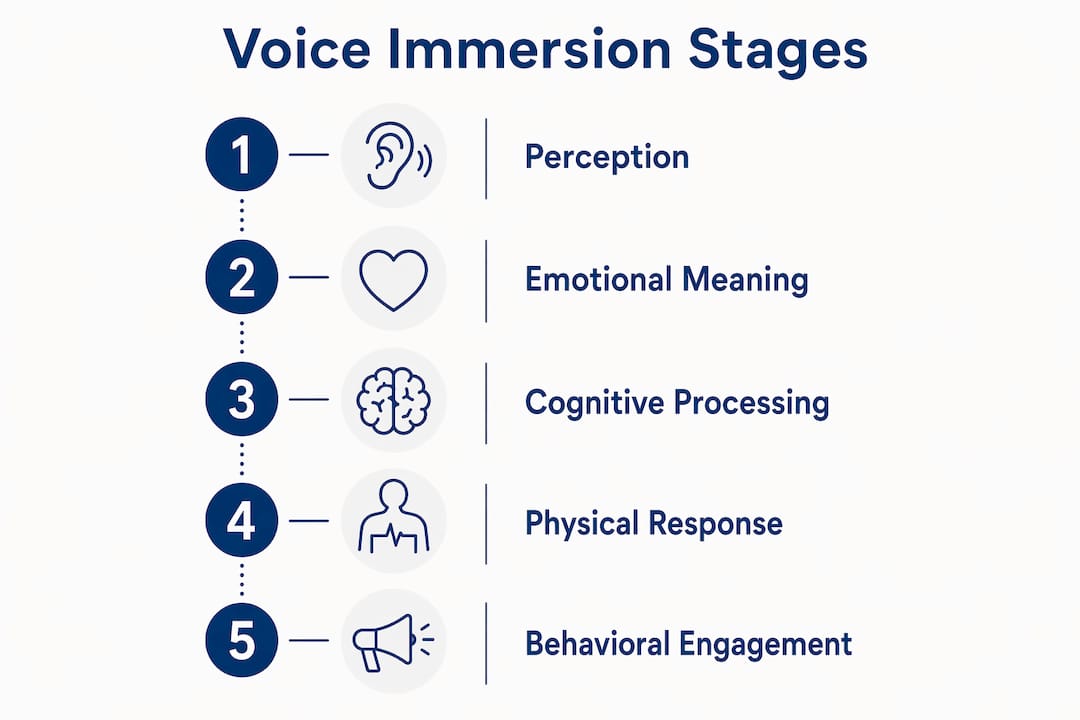
Voice immersion, as researchers define it, is the process by which listeners perceive vocal cues, infer emotional meaning, evaluate what they hear, and then experience deeper involvement with the content. A 2026 audiobook study grounded in CASA (Computers Are Social Actors) theory confirms this perception-to-immersion cycle, showing that social presence effects amplify emotional resonance at each stage. The implication is clear: voice does not just carry words. It acts as a social actor that audiences respond to instinctively.
Pitch and intensity are the two most studied vocal variables, and their effects are not linear. A 2026 study using 40,742 daily video observations on Bilibili found that pitch and intensity have U-shaped effects on audience engagement, while jitter and shimmer show inverted U-shaped effects. Emotional arousal mediates all of these relationships. That means a voice that is too flat or too extreme in any dimension will lose the audience. The sweet spot is modulated, not maxed out.
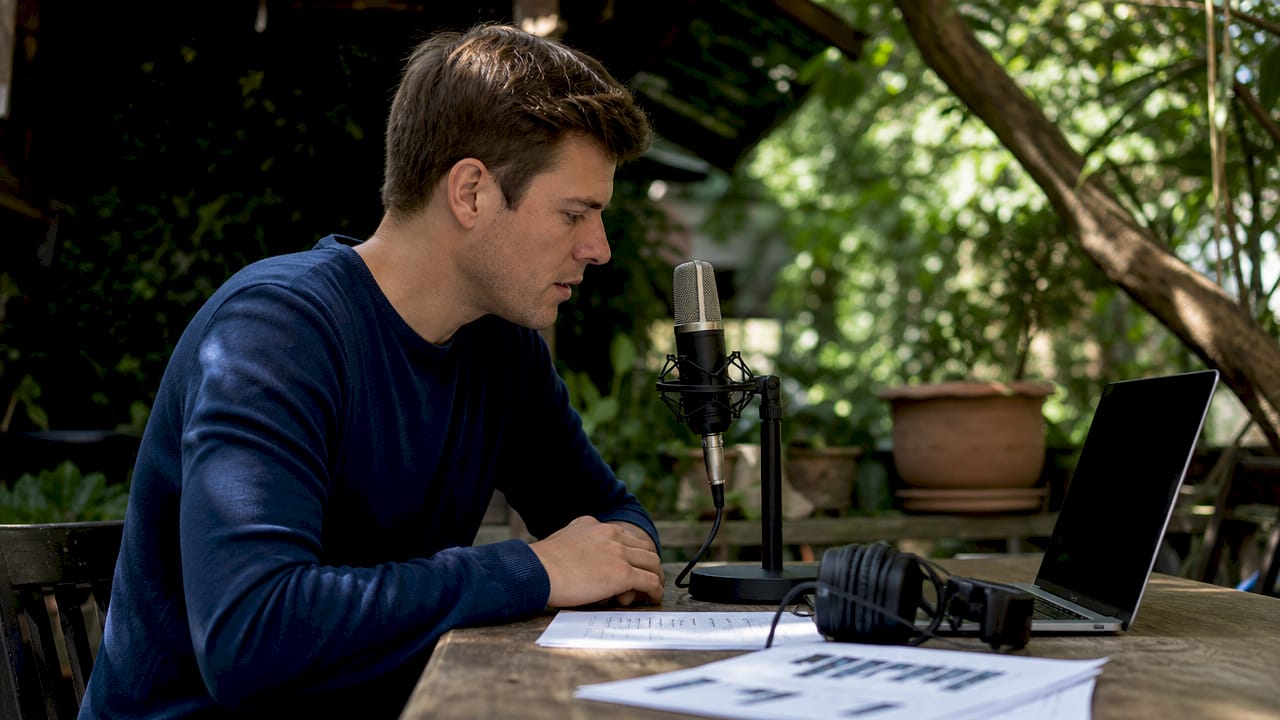
Vocal texture, meaning the grain and warmth of a voice, drives emotional contagion. When a narrator sounds genuinely moved, listeners mirror that state. This is why authentic voice over consistently outperforms technically polished but emotionally neutral delivery in audience retention.
Key vocal techniques that support immersion include:
- Pitch variation: Shift pitch to signal emotional transitions, not just emphasis.
- Pacing control: Slow down at emotionally loaded moments to let meaning land.
- Tonal warmth: Use chest resonance for trust-building; higher register for urgency.
- Intentional silence: Pauses create anticipation and give listeners time to feel.
Pro Tip: Test your vocal delivery at three intensity levels before recording. The middle level almost always produces the strongest audience connection, not the most energetic take.
Does spatial audio design strengthen voice-driven presence?
Spatial audio design is the practice of placing sound sources in three-dimensional space to match the listener’s environment and the narrative context. In cinematic VR, a systematic review of 18 studies found that world-locked diegetic audio produces measurable presence gains, while head-locked or sparse audio mixes do not. The difference comes down to coherence. When voice aligns with environmental sound cues, the brain accepts the experience as real.
Foley effects, the synchronized ambient sounds that accompany voice, add another layer of perceived humanity. CMU research from 2026 shows that spatialized speech plus Foley produces statistically clear increases in engagement and makes agents sound more humanlike. The key word is “synchronized.” Foley that does not match the narrative moment breaks immersion rather than building it.
Filmmakers and VR producers can apply these findings through a structured approach:
- Map your audio to narrative beats. Identify the emotional peak of each scene and design the spatial audio to support it.
- Use world-locked audio placement. Anchor voice and environmental sounds to fixed points in the scene, not to the listener’s head position.
- Synchronize Foley to vocal rhythm. Match ambient sound events to the cadence of the narrator’s speech.
- Validate with behavioral data. Track gaze direction and engagement metrics to confirm that audio is guiding attention where you intend.
- Avoid perceptual mismatches. CMU researchers warn that poorly timed Foley makes speakers seem distracted and actively harms engagement.
| Audio approach | Presence effect | Common mistake |
|---|---|---|
| World-locked diegetic audio | High presence gain | Treating all audio as head-locked |
| Synchronized Foley effects | Increased humanlike engagement | Misaligning Foley with speech rhythm |
| Sparse or head-locked audio | Minimal or no presence gain | Using spatial audio without narrative anchoring |
Pro Tip: Record a rough cut of your narration first, then build Foley and spatial audio around the voice track. Starting with environmental sound and fitting voice to it produces mismatches that are hard to fix in post-production.
What role do emotionality flips play in keeping audiences engaged?
Emotionality flips are directional changes in emotional valence across narrative units. A voice that moves from warmth to tension to relief creates more engagement than one that stays consistently upbeat or consistently serious. Research analyzing 33,598 podcasts and 3,381 TED talks confirms that emotionality flips drive engagement, with narrative transport and character identification serving as the key mediating mechanisms. Static emotional intensity, no matter how high, does not sustain audience attention over time.
This finding reframes how creators should think about voice performance. The goal is not to be consistently passionate or consistently calm. The goal is to move. Neuroscience supports this: angry versus happy speech changes the timing of the speech envelope and triggers different alpha-band brain responses, altering listener vigilance and attention states. Voice literally changes how the brain tracks a story.
Narrative voice perspective also shapes emotional response. A 2026 Frontiers study on climate change narratives found that first-person versus third-person narration produces different levels of emotional activation and attitude change. First-person voice creates stronger character identification. Third-person voice supports broader cognitive processing. Choosing the right perspective is a creative decision with measurable emotional consequences.
Practical ways to design emotionality flips into your content:
- Script emotional arcs before recording. Mark where the tone shifts from curious to tense, from tense to resolved.
- Use contrast deliberately. A quiet, intimate moment before a high-energy reveal amplifies both.
- Avoid emotional plateaus. If your narration stays at the same emotional level for more than two minutes, listeners disengage.
- Track audience response. Podcast analytics, video retention graphs, and listener surveys all reveal where emotional engagement drops.
How to apply voice techniques across film, marketing, and digital media
Voice selection and modulation must match the medium and the audience. A documentary narrator who works brilliantly for a 90-minute film may feel too slow for a 30-second ad. A high-energy podcast host who keeps listeners engaged for an hour may feel exhausting in a corporate training video. The importance of voice in storytelling shifts depending on context, and creators who ignore that pay for it in engagement metrics.
The research is clear that testing vocal ranges matters more than committing to a single style. Pitch, intensity, and texture should be treated as variables to experiment with, not defaults to set and forget. Gregeschmeyervoice applies this principle directly, offering grounded, conversational delivery that adapts to the specific emotional register each project requires, whether that is a political broadcast, a commercial, or a documentary.
| Medium | Optimal voice style | Key variable to test |
|---|---|---|
| Film and documentary | Measured, emotionally variable narration | Pacing and tonal warmth |
| Marketing and advertising | Conversational, trust-building tone | Pitch range and intensity |
| Podcast and long-form audio | Dynamic, emotionally volatile delivery | Emotionality flip frequency |
| Sales presentations | Authoritative but warm, clear pacing | Vocal intensity and pause length |
| VR and immersive media | Spatially anchored, diegetically coherent voice | Synchronization with environmental audio |
For sales presentations, voice-over that integrates warmth with authority consistently outperforms either quality alone. For VR, the spatial anchoring of voice to the environment matters as much as the performance itself. For podcasts and TED-style content, emotional volatility in the narration, not polish, is the primary driver of audience retention.
Visual presence amplifies voice. When a speaker’s face is visible, vocal tone and facial expression reinforce each other. When voice is the only channel, as in audio-only content, the performance must carry the full emotional load. Creators working in audio-only formats need to invest more in vocal range and emotionality than those working with video.
Key Takeaways
Voice drives audience immersion through a combination of emotional cues, spatial design, and dynamic vocal performance, not through volume or technical polish alone.
| Point | Details |
|---|---|
| Vocal cues trigger immersion stages | Listeners move from perception to emotional resonance when pitch, tone, and rhythm are modulated intentionally. |
| Spatial audio requires narrative coherence | World-locked diegetic audio and synchronized Foley produce presence gains; mismatched audio breaks immersion. |
| Emotionality flips sustain engagement | Dynamic shifts in emotional valence, not static intensity, keep audiences connected across long-form content. |
| Voice perspective shapes persuasion | First-person narration increases character identification; third-person supports broader cognitive processing. |
| Medium determines optimal voice style | Matching vocal delivery to the platform and audience is as important as the performance itself. |
Why most creators are thinking about voice the wrong way
The conventional advice is to sound confident and energetic. That advice is incomplete, and in many contexts it is actively wrong. Confidence without emotional variability produces the kind of narration that sounds professional but leaves audiences cold. Energy without pacing control overwhelms listeners rather than drawing them in.
What the 2026 research makes clear is that voice works as affect choreography. The best vocal performances are planned emotional journeys, not sustained performances of a single state. I have seen creators spend significant budget on studio quality and zero time on emotional arc design. The result is technically clean audio that audiences abandon halfway through.
The other common mistake is treating spatial audio as a technical checkbox rather than a narrative tool. Placing audio in three-dimensional space only works when it aligns with what the story is doing at that moment. A spatially rich mix that does not match the narrative creates confusion, not presence. The behavioral validation step, actually tracking where listeners look and when they disengage, is the step most creators skip.
My honest recommendation: record your next project with three emotional arc variations, not three takes of the same arc. Map the emotionality flips before you step into the booth. Then measure what your audience actually responds to. Voice is the most direct line to audience emotion you have. Use it with the same deliberate planning you give to visuals and script.
— kribi
Professional voice services that bring these techniques to life
The gap between knowing these techniques and executing them consistently is where professional voice talent earns its value. Gregeschmeyervoice specializes in the kind of grounded, emotionally variable delivery that the research identifies as most effective for audience immersion.
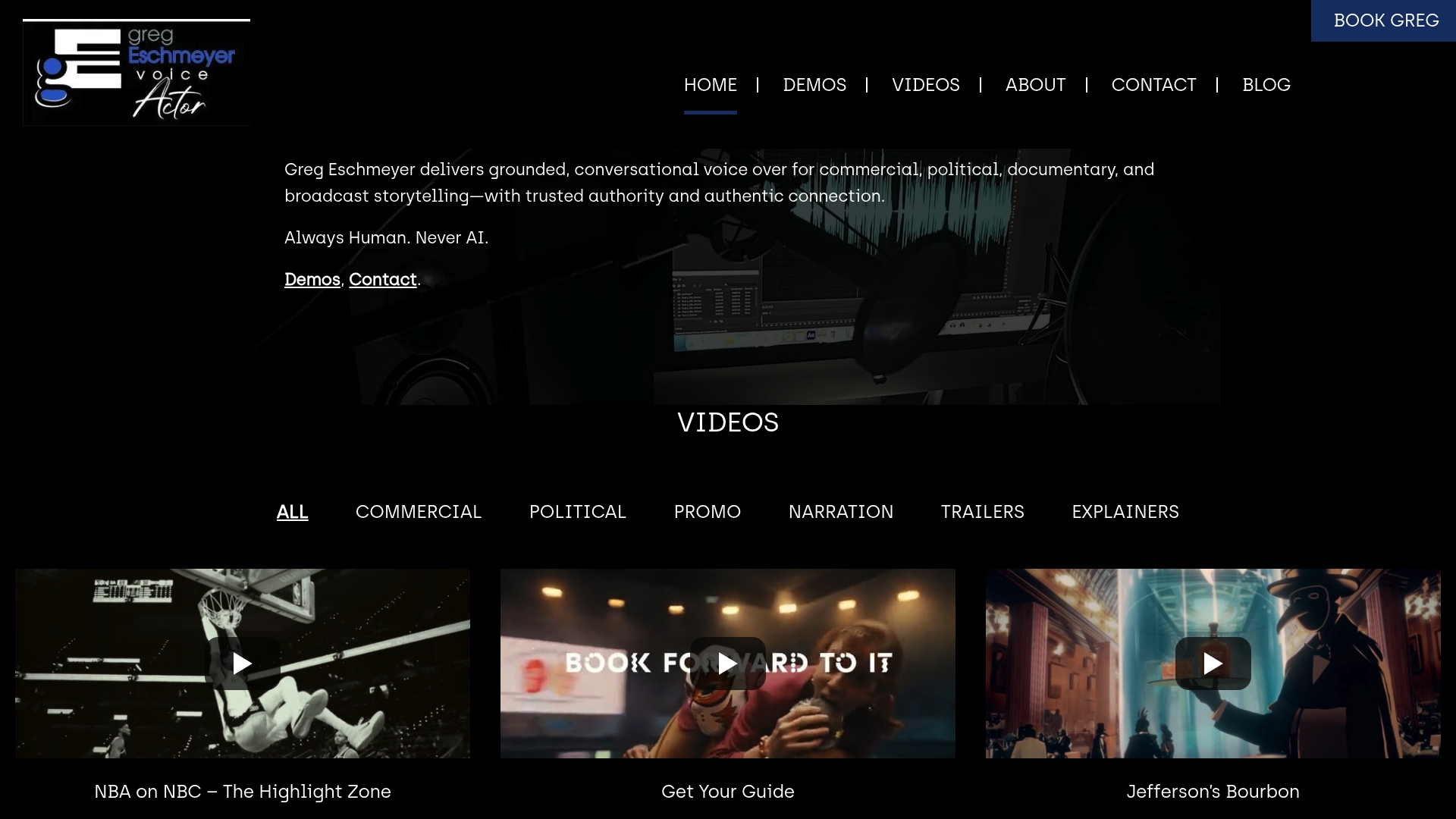
Whether you need narration for a documentary, a commercial, or a political broadcast, the right voice actor brings intentional emotional arc design to every take. Gregeschmeyervoice works across voice over scene types and adapts vocal style to the specific demands of each medium. Clients consistently highlight quick turnaround, professional delivery, and the ability to match the emotional register a project requires. For creators who want to put the research into practice, professional voice actor services from Gregeschmeyervoice are the direct next step.
FAQ
What is the role of voice in audience immersion?
Voice drives immersion by triggering a multi-stage process where listeners perceive vocal cues, infer emotional meaning, and experience deeper narrative involvement. Research confirms this cycle is mediated by social presence effects and emotional arousal.
How does vocal tone affect audience engagement?
Vocal tone influences engagement through pitch, intensity, and texture, each with curvilinear effects on listener response. A 2026 study of over 40,000 video observations found that moderated, variable vocal delivery outperforms extreme or flat tones.
What are emotionality flips and why do they matter?
Emotionality flips are directional changes in emotional valence across a narration. Analysis of 33,598 podcasts and 3,381 TED talks shows they drive stronger engagement than sustained emotional intensity by triggering narrative transport and character identification.
Does spatial audio improve voice-driven immersion in VR?
Yes. World-locked diegetic audio aligned with environmental cues produces measurable presence gains in cinematic VR. Synchronized Foley effects further increase perceived humanlike engagement, according to CMU research from 2026.
How does first-person versus third-person narration affect audiences?
First-person narration increases emotional activation and character identification, while third-person narration supports broader cognitive processing. Choosing the right perspective is a deliberate creative decision with measurable effects on persuasion and emotional response.