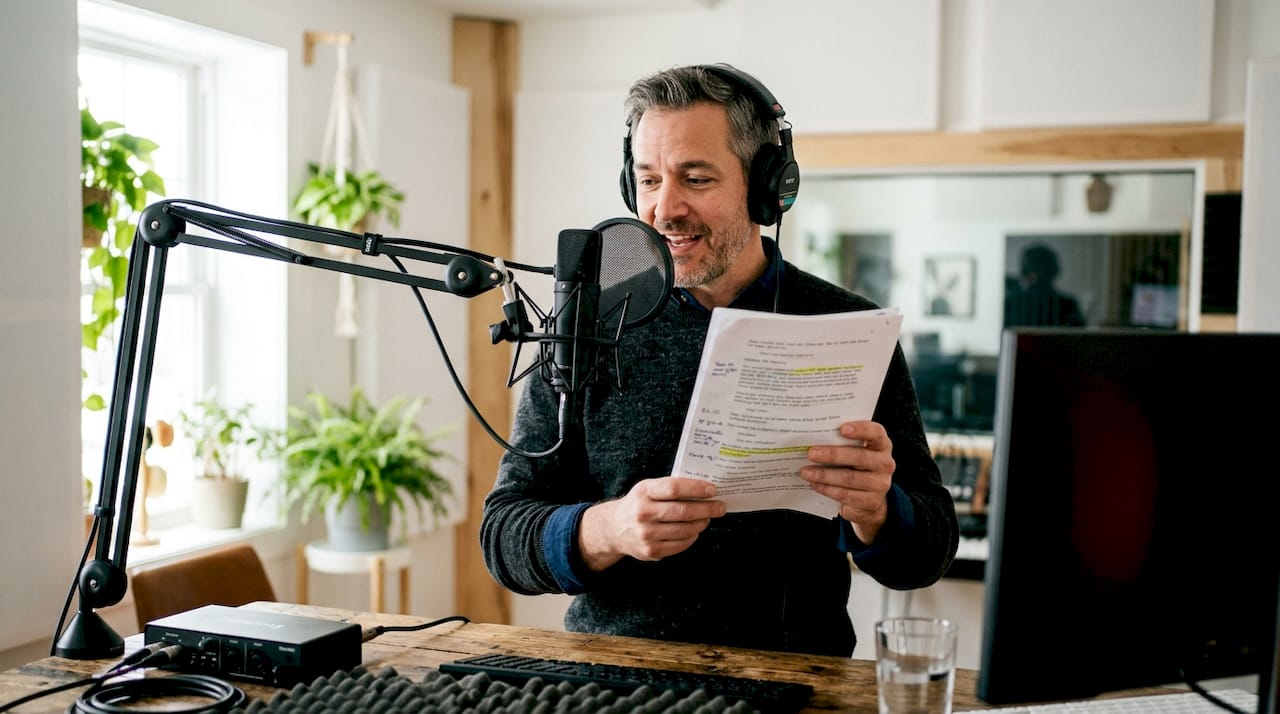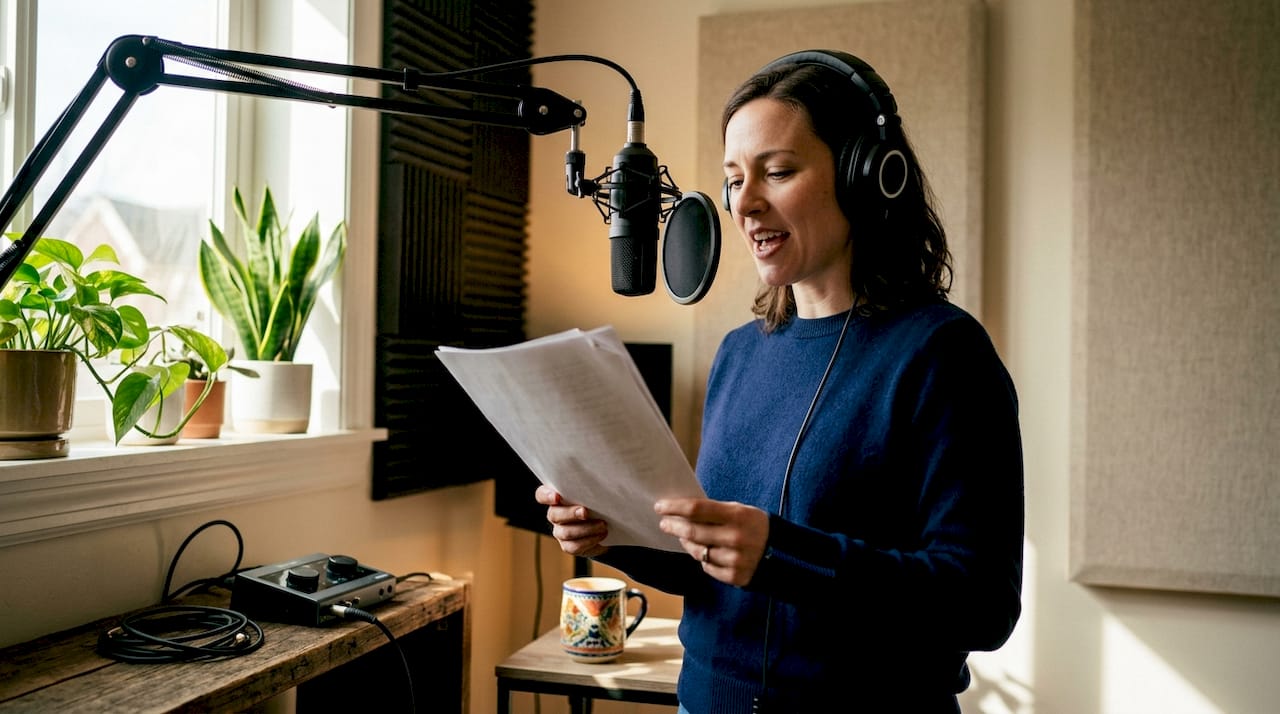
Directing voice talent is the hands-on process of guiding voice actors during recording sessions to deliver performances that match a project’s creative vision through controlled tone, pacing, and emotional nuance. This practice, formally called voice direction, sits at the center of every successful animation, video game, commercial, and broadcast production. Unlike casting directors who focus on selecting talent before a session begins, voice directors collaborate directly with performers in real time to interpret characters and scenes. The result is a vocal performance that feels intentional, not accidental. Understanding what does directing voice talent mean gives aspiring directors and producers the foundation to run sessions that produce work audiences actually remember.
What does directing voice talent mean in practice?
Voice direction involves guiding performers during recording to shape pace, tone, and emotional delivery so the final audio aligns with the project’s creative goals. The voice director is not a passive observer. They are the creative anchor of the session, translating a written script into a living performance. This role appears across animation studios like Pixar and Warner Bros., video game productions, political ad campaigns, corporate narration, and broadcast commercials. Every media type that uses recorded voice relies on someone making active decisions about how that voice should sound and feel.

Voice direction is distinct from voice acting coaching, though the two overlap. A coach builds long-term skills in a performer. A voice director shapes a specific performance for a specific project, often in a single session. Gregeschmeyervoice, for example, operates from this principle: every delivery must serve the project’s message, not just sound technically clean. That distinction matters when a client needs a commercial read that converts, not just one that sounds pleasant.
What are the primary responsibilities of a voice director?
A voice director carries several distinct responsibilities during a recording session. Each one directly affects the quality of the final product.
- Emotional and tonal guidance: The director sets the emotional target for each line. They tell the actor whether a line should carry urgency, warmth, skepticism, or authority, and they adjust that target take by take.
- Pacing and rhythm control: Directors monitor whether the actor’s delivery fits the timing requirements of the project. A 30-second commercial has no room for a read that runs 33 seconds.
- Character and script interpretation: In animation and games, directors help actors understand who the character is, what they want, and how they relate to other characters in the scene.
- Technical oversight: Voice directors work closely with sound engineers to confirm clarity, correct takes, and catch audio issues before they become expensive post-production problems.
- Creative collaboration: Directors balance their own vision with the actor’s professional instincts. The best sessions feel like a conversation, not a command.
Pro Tip: Never give feedback that describes a feeling without giving the actor something to do. “More energy” tells an actor nothing. “Pick up the pace on the second half of that line” gives them a target.
The voice director also serves as the bridge between the creative team and the talent. Producers, brand managers, and writers often sit in on sessions. The director translates their notes into language actors can use immediately.

Why does situational direction outperform vague tone words?
Situational direction produces better results than vague tone descriptors like “natural,” “warm,” or “friendly.” Those adjectives mean something different to every actor in every session. Situational direction removes that ambiguity by giving the actor a specific world to inhabit.
“Imagine you’re explaining this product to your neighbor over the back fence. You know they’ve been skeptical about it, but you genuinely believe it will help them.” That single sentence gives an actor audience, relationship, setting, and emotional stakes. No adjective achieves that.
The contrast is significant. Telling an actor to sound “conversational” leaves interpretation entirely to them. Describing the scenario, the listener, and the relationship hands the actor a performance framework they can execute immediately.
| Vague tone descriptor | Situational direction equivalent |
|---|---|
| “Sound warm” | “You’re talking to a close friend who needs reassurance” |
| “Be natural” | “You’re explaining this to a curious coworker over lunch” |
| “Sound authoritative” | “You’re a doctor briefing a patient before a procedure” |
| “Be energetic” | “You just heard great news and you’re sharing it with your team” |
| “Sound friendly” | “You’re welcoming a guest into your home for the first time” |
Situational direction also respects the actor’s craft. It gives them material to work with rather than a judgment to react to. Expert directors emphasize this method because it produces performances that feel lived-in rather than performed.
What preparation steps make voice directing sessions successful?
Preparation is the single biggest factor separating efficient sessions from expensive ones. Detailed script roadmaps with pronunciation guides and keyword emphasis prevent wasted session time on clarifications that should have been resolved before the mic went live.
Strong preparation includes these steps:
- Pronunciation glossaries: For technical scripts, medical narration, or brand-specific terminology, provide a phonetic guide. Do not assume the actor knows how to pronounce your product name or industry terms.
- Keyword emphasis markers: Identify which words in each sentence carry the most weight. Mark them in the script so the actor knows where to land.
- Pacing notes: If a section needs to run at a specific speed, note it. If a pause is required before a key phrase, mark it.
- Brand tone brief: A one-page summary of the brand’s voice, audience, and emotional target gives the actor context before they read a single line.
- Alternate takes list: Prepare a short list of lines you expect to need in multiple versions. This saves time at the end of the session.
Pro Tip: Send the script and brief to the voice actor at least 24 hours before the session. Actors who arrive prepared deliver better first takes, which cuts session time and retake costs significantly.
Thorough script preparation including glossaries for technical terms and clear keyword emphasis lets actors focus entirely on performance quality rather than logistics. That focus shows up directly in the final recording.
How do voice directors collaborate effectively during sessions?
Effective voice directors give short, specific feedback during sessions rather than lengthy explanations between takes. Long notes break an actor’s concentration and slow session momentum. The goal is to keep the actor in a performance state, not a note-taking state.
Practical collaboration techniques include:
- The “yes, and” approach: Acknowledge what worked in the last take before redirecting. “That energy was perfect. Now try pulling back slightly on the last sentence.”
- Offer alternate reads: Ask the actor to try a line a different way without explaining why. Sometimes the unexpected take is the best one.
- Use physical or emotional anchors: “Think of a time you were genuinely excited about something” works faster than a technical note about inflection.
- Limit notes per take: Give one or two adjustments per take, not five. Actors can only hold so much direction at once.
Remote directing sessions, now common through platforms like Source-Connect and Zoom, require even tighter communication. The director cannot use body language or physical presence to guide the actor. Every note must be verbal and precise. Collaboration instead of top-down control consistently produces more nuanced performances, whether the session is in-studio or remote. For more on voice and scene pacing, the techniques transfer directly to directing sessions.
How does directing voice talent impact the final production?
Voice direction drives the quality of the final product across every media type. Animated projects often record voice early so animators can sync visual action to authentic timing and performance. A flat or misdirected vocal performance forces animators to work around weak material, and the result shows on screen.
“The voice performance is the emotional skeleton of an animated scene. Everything the animator draws is built on top of what the actor gave in the booth.” This is why studios like DreamWorks and Disney treat voice direction as a production priority, not an afterthought.
The impact extends beyond animation. In commercials, a well-directed read can increase audience recall and emotional connection to a brand. In video games, consistent character direction across hundreds of lines keeps players immersed in the story. In corporate narration and e-learning, clear direction produces audio that holds attention rather than losing it.
| Media type | Primary impact of voice direction |
|---|---|
| Animation | Drives timing, emotional beats, and character authenticity |
| Video games | Maintains character consistency across large script volumes |
| Commercials | Shapes brand tone and audience emotional response |
| Corporate narration | Controls clarity, pacing, and listener engagement |
| Documentaries | Establishes credibility and narrative authority |
Understanding why voice talent selection matters is the first step. Knowing how to direct that talent once selected is what determines whether the project succeeds.
Key Takeaways
Directing voice talent is an active, collaborative craft that shapes every element of a recorded performance, from emotional tone to technical precision.
| Point | Details |
|---|---|
| Voice direction defined | It is the real-time guidance of voice actors during recording to align performance with project vision. |
| Situational direction wins | Replace vague adjectives like “warm” with specific scenarios, audiences, and relationships. |
| Preparation prevents waste | Script roadmaps, pronunciation guides, and briefs sent in advance reduce retakes and session costs. |
| Feedback must be specific | Short, targeted notes between takes keep actors in performance mode and sessions on schedule. |
| Direction shapes final quality | From animation timing to commercial recall, voice direction directly determines production effectiveness. |
What I’ve learned directing voice talent that most guides won’t tell you
The biggest mistake new directors make is confusing control with direction. Control means telling an actor exactly what to do on every syllable. Direction means giving an actor the tools to find the performance themselves. The first approach produces robotic reads. The second produces performances that surprise you in the best way.
I’ve watched producers walk into sessions with a very specific sound in their head and leave frustrated because the actor “didn’t get it.” In almost every case, the problem was the direction, not the actor. The producer described a feeling instead of a situation. They said “sound excited” instead of “you just found out you won something you’ve been working toward for years.” One of those is a note. The other is a performance trigger.
The other thing nobody tells aspiring directors: trust is the most productive tool in the room. When a voice actor knows you respect their craft and you’re genuinely open to their instincts, they take risks. Those risks produce the takes that end up in the final cut. The takes that play it safe rarely do.
Gregeschmeyervoice operates from this philosophy on every project. The goal is never to impose a performance. The goal is to create the conditions where the right performance becomes inevitable.
— kribi
Work with a voice professional who understands direction

Great voice direction starts with great voice talent. Gregeschmeyervoice delivers grounded, conversational performances built for commercials, political messaging, documentaries, and broadcast work. Every session comes with the kind of professional responsiveness that makes direction easy and efficient. If you’re producing a project that needs a voice that connects with real audiences, explore the professional voice acting services at Gregeschmeyervoice. For campaign-specific needs, the ad campaign voice-over guide covers best practices that apply directly to your next production.
FAQ
What does a voice director do during a session?
A voice director guides voice actors in real time, shaping tone, pacing, and emotional delivery to match the project’s creative vision. They also oversee technical quality alongside sound engineers to confirm the final recording meets professional standards.
How is a voice director different from a casting director?
Casting directors focus on selecting talent before recording begins, while voice directors work directly with performers during sessions to shape performance. Both roles collaborate but carry distinct responsibilities in the production process.
What is situational direction in voice acting?
Situational direction means describing the audience, context, and relationship behind a line rather than using subjective tone words like “warm” or “natural.” This method gives voice actors a specific performance world to inhabit, producing more authentic and targeted reads.
How much does a voice director earn?
The average annual salary for a voice director in Los Angeles is approximately $92,224, or $44.34 per hour as of 2026. Earnings vary based on experience, project type, and market.
How do you prepare for directing a complex voice-over script?
Send the actor a script with pronunciation guides, keyword emphasis markers, and a brand tone brief at least 24 hours before the session. Thorough preparation prevents costly delays and lets actors focus entirely on delivering quality performances.