Human voiceovers are the single most effective tool for building emotional trust between a brand and its audience. Synthetic voices have improved technically, but the gap in emotional impact remains wide. Research confirms that human voices activate emotional and social brain circuits that influence preferences and decisions in ways AI-generated audio simply cannot match. Understanding why ad voiceovers need human touch is not a matter of preference. It is a matter of measurable performance, audience psychology, and the kind of storytelling that makes people remember and act.
Why ad voiceovers need human touch: the psychology behind it
The human brain processes a real voice differently than a synthetic one. Human voices activate areas linked to empathy and social bonding, triggering the same neural pathways that fire during face-to-face conversation. That neurological response is what makes a well-delivered voiceover feel personal rather than transactional.
One of the most underappreciated factors in voiceover performance is what researchers call emotionality flips. These are dynamic emotional shifts within a narration that sustain listener interest by varying tone, pace, and intensity. Human voice actors deliver these shifts intuitively. AI models tend to flatten them, producing audio that sounds consistent but feels lifeless.
Vocal imperfections play a surprising role as well. Removing natural texture from a voice actually reduces trust. Human vocal flaws signal authenticity to the brain, while synthetic perfection creates a subtle but real sense of unease. Audiences may not consciously identify the source of that unease, but they respond to it by disengaging.
Cognitive load is the final piece of the psychology puzzle. Listeners expend more mental effort decoding AI-generated speech, which leads to faster drop-off and lower comprehension. That extra processing cost comes directly out of the mental bandwidth your audience would otherwise spend engaging with your message.
- Empathy activation: Human voices trigger social bonding circuits that synthetic voices do not reach.
- Emotionality flips: Natural shifts in tone and pacing hold attention across long-form content.
- Authentic imperfection: Small vocal variations signal trustworthiness to the listener’s brain.
- Reduced cognitive load: Human narration is easier to decode, freeing mental space for message retention.
Pro Tip: When auditioning voice talent, listen for natural breath patterns and micro-pauses. Those small human moments are exactly what the brain uses to gauge authenticity.
What evidence shows human voiceovers improve ad effectiveness?
The performance data on human voiceovers is consistent and compelling. Professional human narration in crowdfunding videos increased pledged amounts by 39% and backers by 38%. That is not a marginal improvement. It is the difference between a campaign that funds and one that stalls.
Trusted human hosts in audio ads increase ad recall by 22 percentage points and lift purchase intent by 5 points over standard ads. Long-form host-read ads produce twice the recall of shorter formats. Those numbers reflect a consistent pattern: when a real person delivers a message with genuine investment, audiences remember it and act on it.
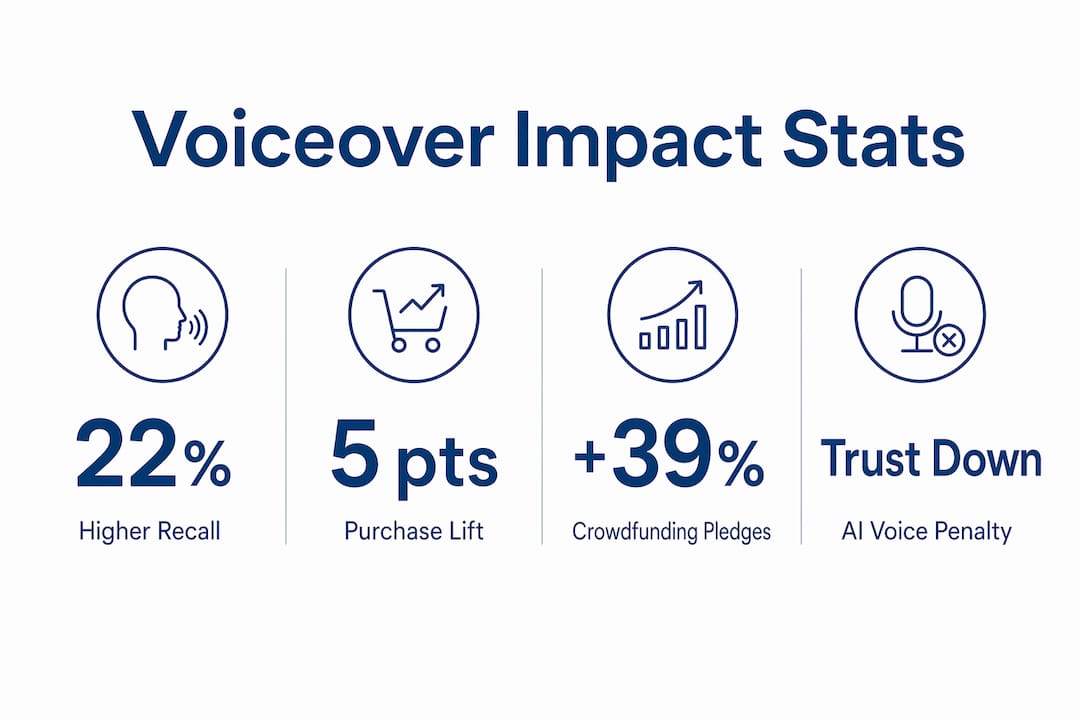
The penalty for using AI voices is equally well documented. Consumers lower favorability and trust for ads they identify as AI-generated, even when audio quality is technically high. The issue is not fidelity. It is intentionality. Audiences sense when a voice is performing versus when it is reading.
| Metric | Human voiceover result |
|---|---|
| Crowdfunding pledges | +39% with professional human narration |
| Crowdfunding backers | +38% with professional human narration |
| Ad recall lift | +22 percentage points with trusted human hosts |
| Purchase intent lift | +5 points over standard ads |
| Long-form recall | 2x higher for host-read vs. shorter formats |
The pattern across all these data points is the same. Human voices encode memory more effectively, sustain attention longer, and generate stronger behavioral responses. For advertisers measuring cost per acquisition or return on ad spend, those differences are not abstract. They show up in campaign results.
How do human voiceovers shape creative storytelling in ads?
The creative advantages of human narration go well beyond technical delivery. A skilled voice actor brings timing, breath, emphasis, and warmth to a script in ways that AI cannot authentically replicate. These elements carry the emotional payload of a story. They tell the audience how to feel before the words themselves do.
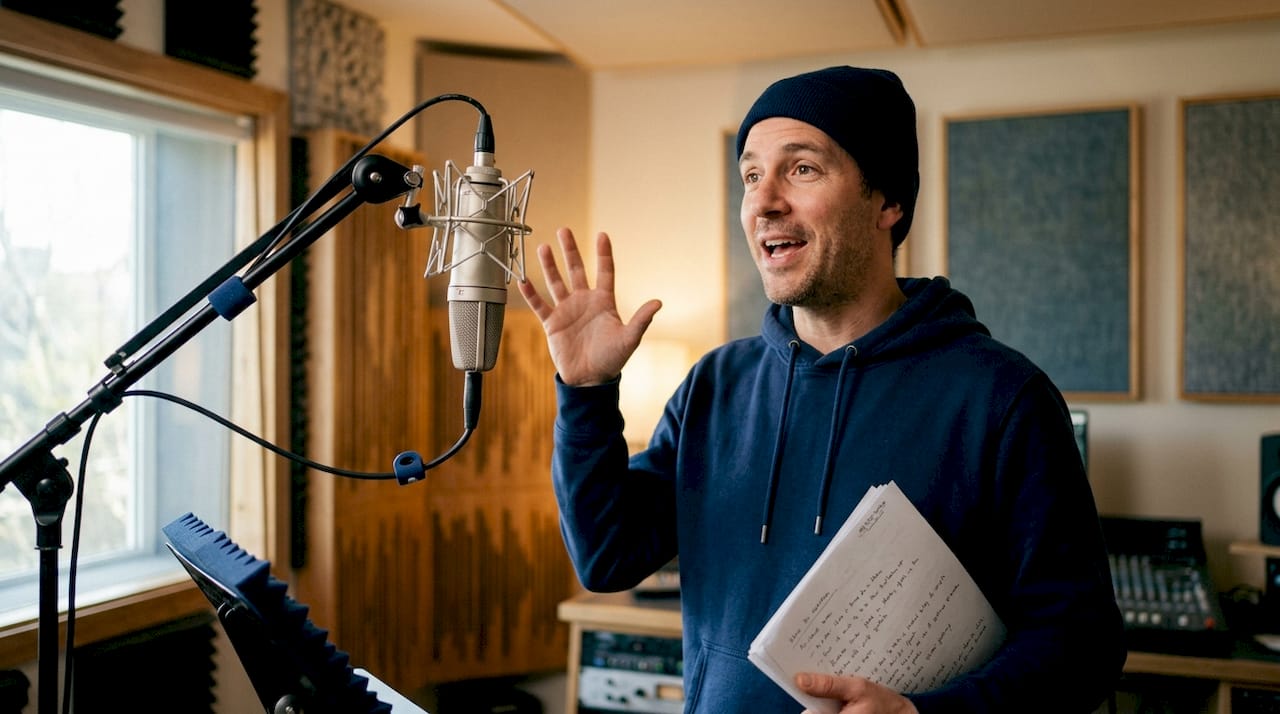
Emotional shifts are the storytelling mechanism that separates memorable ads from forgettable ones. A human narrator can drop to a near-whisper to create intimacy, then build to a confident close that drives action. That arc mirrors how humans naturally tell stories to each other. It is the structure the brain expects, and when it arrives, engagement deepens.
Human hosts remain the trusted centerpiece in audio advertising precisely because they bring consistent personality across a campaign. A voice that listeners recognize and trust becomes an asset over time. That accumulated trust transfers to the brand itself. AI can assist with production efficiency, but it cannot build that kind of relationship.
Filmmakers working with voice and scene pacing understand this instinctively. The right narrator does not just read the script. The narrator interprets it, finding the emotional center of each scene and delivering it in a way that pulls the audience forward.
- Subtext delivery: Human actors convey meaning between the lines through tone and timing.
- Emotional arc: Natural builds and drops in intensity mirror the structure of compelling stories.
- Personality consistency: A recognizable human voice builds cumulative trust across a campaign.
- Interpretive depth: Human narrators find the emotional core of a script, not just its words.
Pro Tip: Give your voice talent a brief on the emotional intent of each section, not just the copy. The best performances come from actors who understand what the audience should feel, not just what they should hear.
What should advertisers consider when choosing voiceover talent?
Selecting the right voice for an ad campaign is a creative and strategic decision. The voice talent qualities that matter most are not the ones that sound impressive in isolation. They are the ones that hold up across a full campaign and connect with a specific audience.
-
Prioritize emotional range over technical polish. A voice that can shift from warmth to urgency to reassurance within a single spot is worth more than one that sounds consistently smooth. Emotional range is what creates the audience immersion that drives recall.
-
Align vocal personality with brand values. A financial services brand needs a different vocal quality than a consumer packaged goods brand. Define the emotional territory your brand occupies before you audition talent.
-
Avoid over-relying on synthetic voices. Consumers penalize AI-voiced ads with lower trust and favorability. Using synthetic audio to cut costs can cost more in lost engagement than it saves in production.
-
Use AI tools for efficiency, not performance. AI can assist with script editing, timing analysis, and production workflows. The actual vocal performance should remain human. The most successful campaigns blend AI-assisted production with authentic human-read audio.
-
Audition for emotional engagement, not just clarity. Ask talent to read a section with two different emotional intentions. The actor who can shift convincingly between them is the one who will serve your campaign across multiple spots and formats.
Following voice over best practices for ad campaigns means treating the voice selection process with the same rigor you apply to visual creative. The voice is not a finishing touch. It is a core creative element.
Key Takeaways
Human voiceovers outperform synthetic alternatives in recall, trust, purchase intent, and emotional engagement because the human brain is wired to respond to authentic vocal performance.
| Point | Details |
|---|---|
| Neuroscience advantage | Human voices activate empathy and social bonding circuits that AI voices do not trigger. |
| Proven ad performance | Trusted human narrators lift ad recall by 22 points and purchase intent by 5 points. |
| Emotional storytelling | Emotionality flips and vocal subtext create memorable moments that synthetic voices flatten. |
| AI penalty is real | Audiences lower trust and favorability for ads they identify as AI-voiced, regardless of audio quality. |
| Talent selection matters | Audition for emotional range and brand alignment, not just technical clarity or vocal smoothness. |
The case for human voice will only get stronger
I have watched the AI voice debate play out across advertising and documentary production for several years now. The pattern is always the same. A brand switches to synthetic audio to save money, engagement drops, and they quietly bring a human voice actor back in. The cost savings evaporate. The time lost does not.
What surprises me most is how often creative teams underestimate the interpretive role of a voice actor. They treat the voiceover as a delivery mechanism for copy. The best voice actors are not delivery mechanisms. They are co-authors of the emotional experience. They find things in a script that the writer did not consciously put there, and they make the audience feel those things.
The technology will keep improving. AI voices will get better at mimicking the surface features of human speech. But mimicry is not performance. The brain knows the difference, even when the conscious mind does not. Advertisers who understand that distinction will keep investing in authentic human narration. The ones who do not will keep wondering why their metrics are flat.
Gregeschmeyervoice is built on exactly this principle. Every project starts with the question of what the audience should feel, not just what they should hear. That is the standard worth holding.
— kribi
Gregeschmeyervoice: professional human voiceovers for real results
Gregeschmeyervoice delivers the grounded, conversational narration that advertisers and filmmakers need to build genuine audience connection.
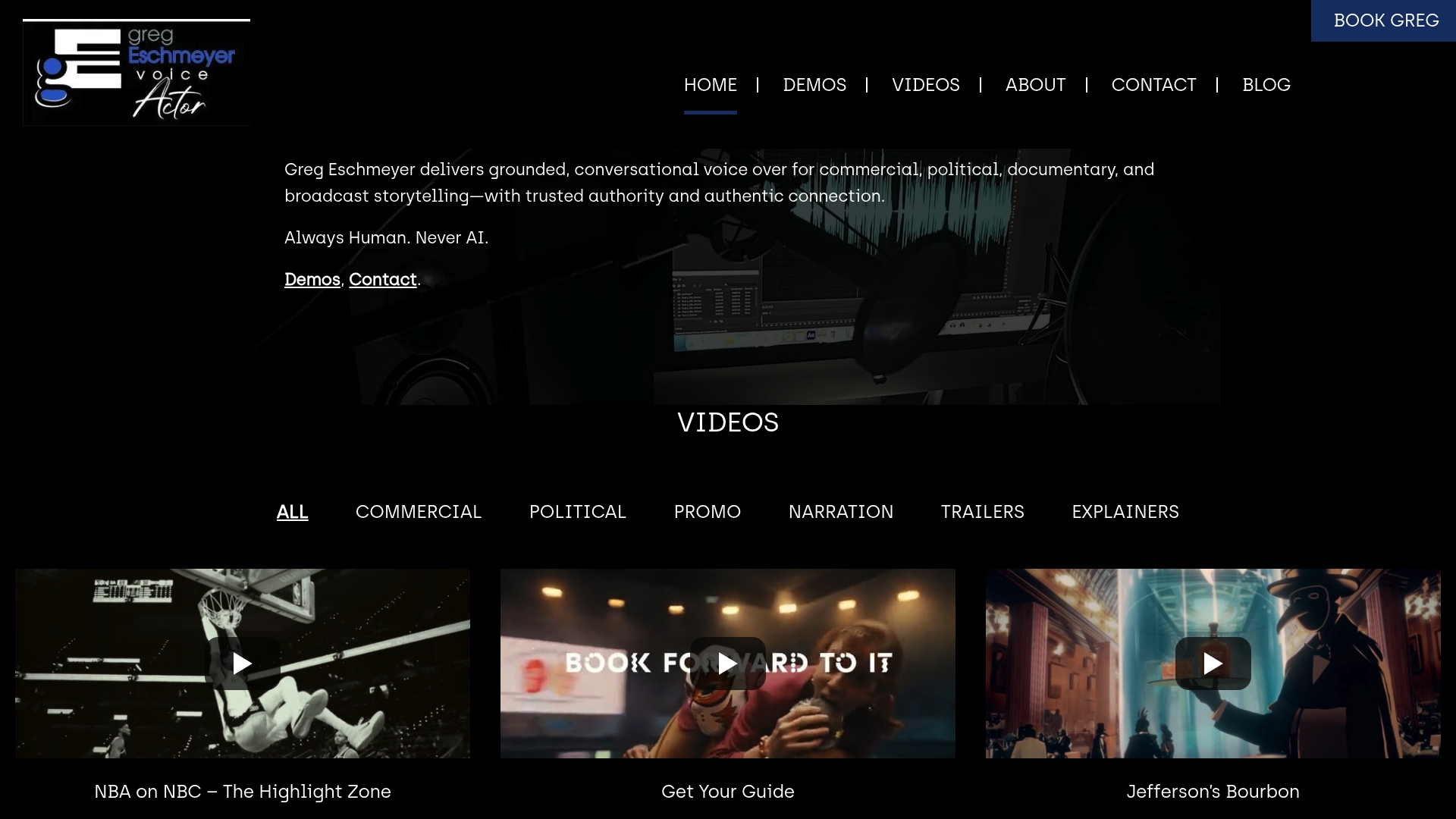
Greg Eschmeyer’s work spans commercials, political messaging, documentaries, and broadcast, with a consistent focus on authentic delivery and fast turnaround. Clients return because the performances match the emotional intent of the project, not just the words on the page. Whether you need a single spot or a full campaign, professional voiceover services from Gregeschmeyervoice give your message the human credibility that drives recall, trust, and action. Explore the full range of voice over scene types to find the right format for your next project.
FAQ
Why do human voiceovers outperform AI in advertising?
Human voices activate emotional and social brain circuits that synthetic voices do not reach. That neurological response drives higher recall, stronger trust, and better purchase intent.
How much does a human voiceover improve ad recall?
Trusted human hosts increase ad recall by 22 percentage points and lift purchase intent by 5 points compared to standard ads.
Do audiences actually notice when a voiceover is AI-generated?
Consumers lower favorability and trust for ads they identify as AI-voiced, even when the audio quality is technically high. The issue is perceived intentionality, not fidelity.
What makes a human voice actor effective for ad campaigns?
Emotional range, vocal personality aligned with brand values, and the ability to deliver emotionality flips are the qualities that separate effective voice talent from average performers.
Can AI and human voiceovers work together in production?
AI tools can assist with production efficiency, script timing, and workflow. The vocal performance itself should remain human to preserve the emotional authenticity that drives audience engagement.