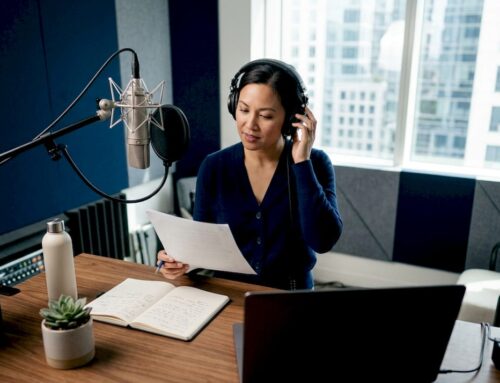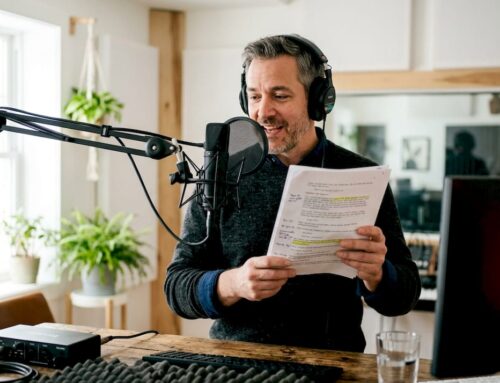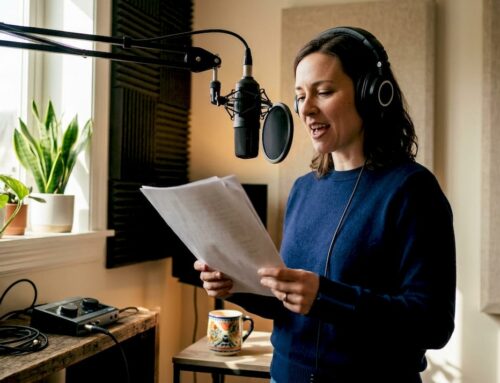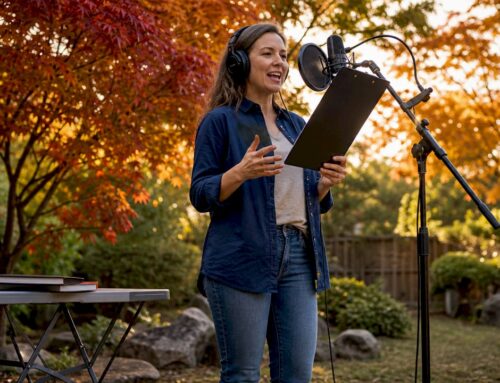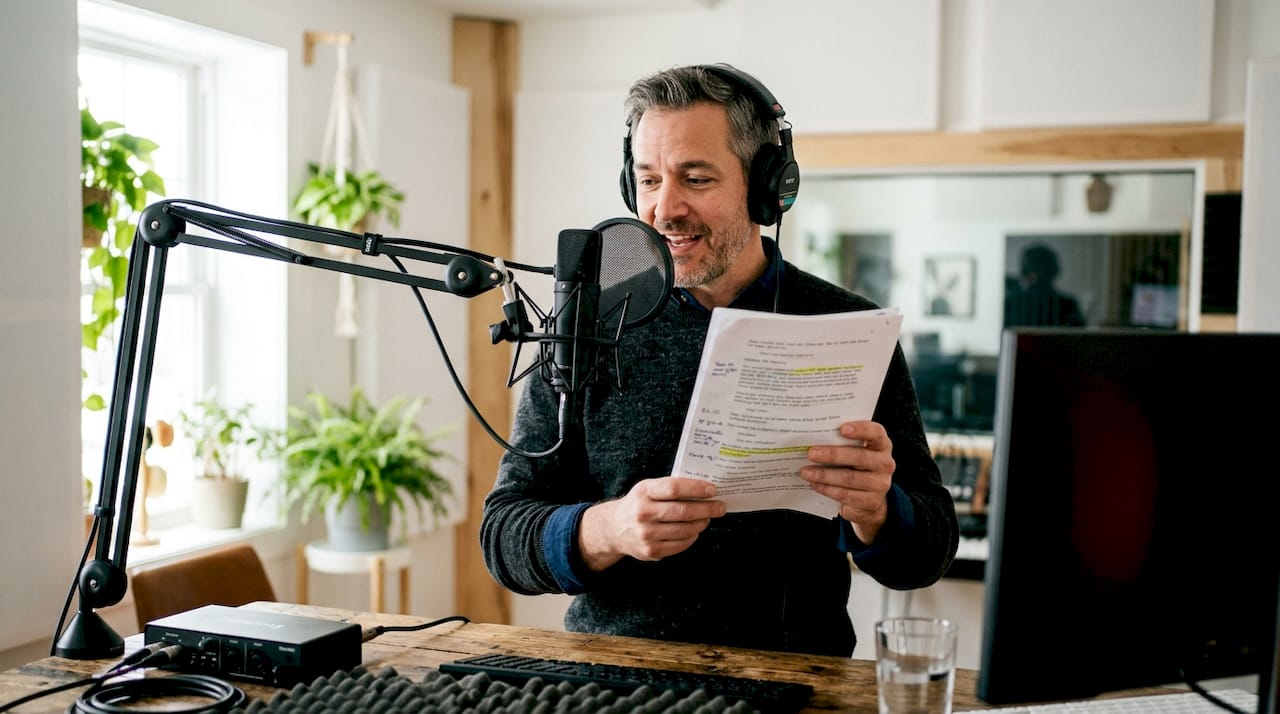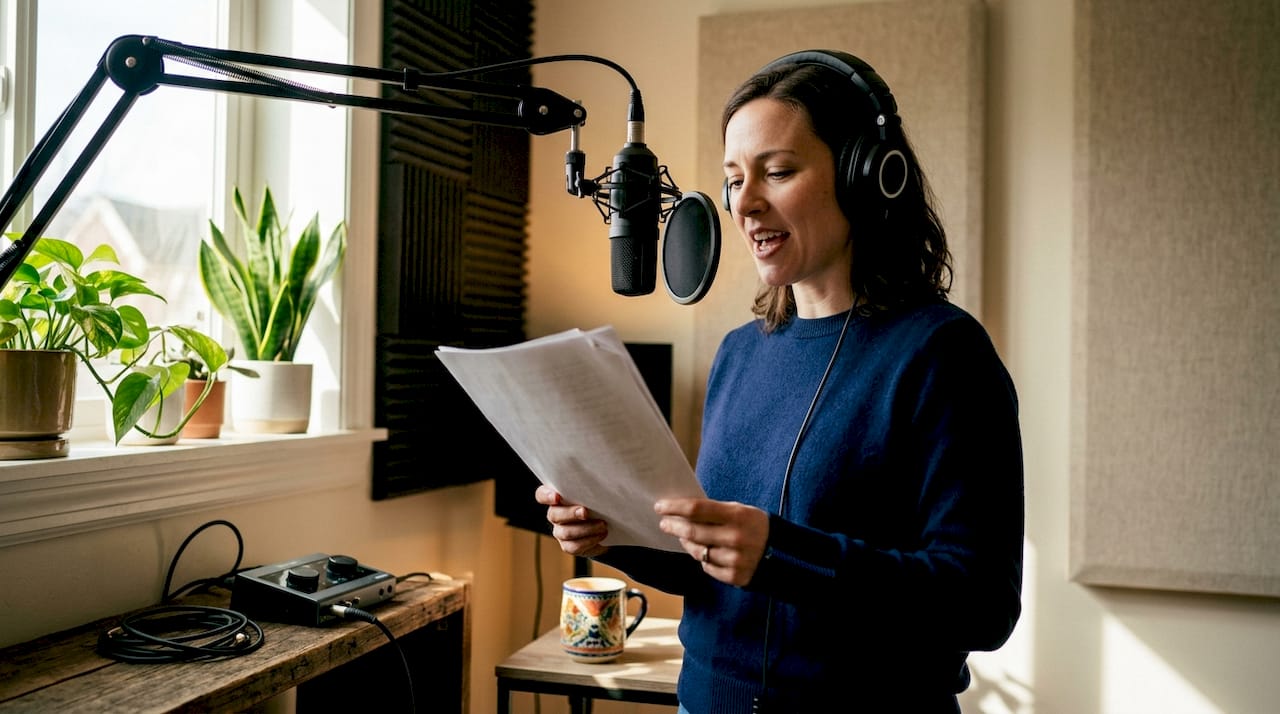

A natural voice-over script is defined as copy written specifically for the ear, not the eye. It sounds like genuine conversation, uses short sentences, and moves at a pace listeners can follow without effort. The industry term for this craft is “writing for the ear,” and it separates scripts that connect from scripts that confuse. To write voice over script naturally, you need to think less like a writer and more like a speaker. Gregeschmeyervoice builds every project on this principle, and the results show up in client work across commercials, documentaries, and broadcasts.
What makes a voice-over script sound natural?
A natural voice-over script shares three qualities: conversational tone, short sentences, and everyday word choices. Miss any one of these and the script will feel stiff the moment a voice actor reads it aloud.
Conversational tone starts with contractions and active voice. Contractions and active voice transform formal prose into approachable speech. “We are proud to announce” becomes “We’re excited to share.” That single swap removes distance between the speaker and the listener. Active voice keeps the subject doing the action, which is how people actually talk.

Sentence length is the most overlooked factor in voice-over writing. Industry experts recommend averaging 15–20 words per sentence to maintain clarity and avoid listener fatigue. Long, compound sentences force the voice actor to hold breath and force the listener to hold attention. Both break the natural flow.
Word choice matters just as much as structure. Everyday vocabulary keeps the listener focused on the message, not on decoding meaning. Jargon creates a wall. If a technical term is unavoidable, define it in the next sentence using plain language.
Pacing and natural pauses are the final piece. Listeners process information sequentially. They cannot re-scan the way a reader can scroll back up a page. Short sentences create natural pause points. Those pauses give the listener time to absorb what was just said before the next idea arrives.
Here is a quick checklist for writing engaging voice scripts:
- Use contractions (“you’re” not “you are”) to sound human
- Keep sentences to 15–20 words on average
- Choose one-syllable words over multi-syllable alternatives when possible
- Write in active voice: subject, verb, object
- Mark pause points with periods, not commas
- Read every line out loud before finalizing it
How do you test and time a voice-over script?
Testing a script before recording saves time and money. The most reliable test costs nothing: read the script aloud yourself.
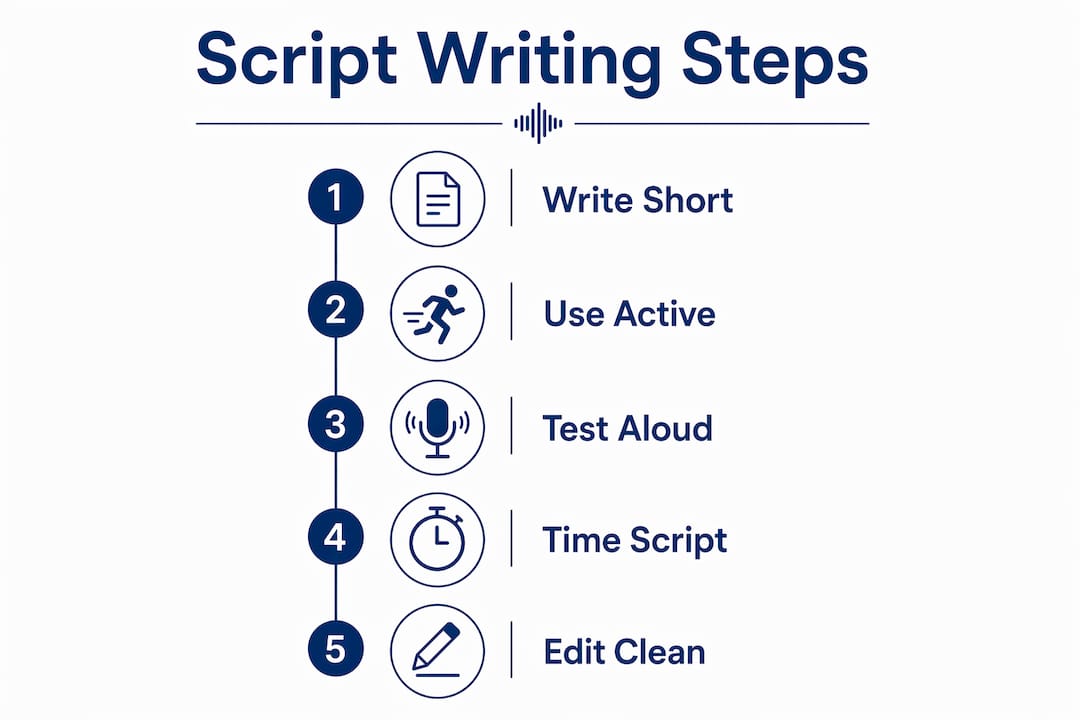
Reading scripts aloud identifies awkward phrasing and pacing issues that are invisible on paper. Tongue twisters, unintentional rhymes, and breath-breaking sentence lengths only reveal themselves when spoken. Read the script twice. The first pass catches the obvious problems. The second pass catches the subtle ones.
Timing is the next test. Standard narration rates run 130–160 words per minute. A 60-second video needs roughly 140 words. If your script runs 200 words for a 60-second slot, the voice actor will either rush or the editor will cut content. Count your words and match them to your time slot before you record anything.
AI voiceover tools serve a specific and useful role in this process. AI voiceover generators catch rhythmic issues and unnatural pacing quickly, enabling faster refinement before a human actor ever sees the script. Think of them as diagnostic tools, not final recording solutions. They surface problems you missed on paper and in your own read-through.
Here is a step-by-step testing process for any script:
- Write the full draft without editing yourself mid-sentence.
- Read the draft aloud at a normal speaking pace.
- Mark every sentence where you stumble or run out of breath.
- Count the total words and divide by your target duration in minutes.
- Run the script through an AI voiceover tool to catch pacing and pronunciation issues.
- Rewrite flagged sections and repeat the aloud test.
- Check all abbreviations and acronyms by reading them as a voice actor would.
Pro Tip: Time your script using the 130–160 WPM standard before you book a voice actor. A script that runs 20 seconds long in testing will run 20 seconds long in the studio, and studio time is not free.
How should you structure a voice-over script for impact?
Structure determines whether a script lands or loses the listener halfway through. A clear structure also makes editing faster and reuse easier.
The most effective structure follows three blocks: an opening that states the core message, a middle that supports it with one or two key points, and a close that tells the listener what to do or feel next. Each block should stand alone. Breaking scripts into modular blocks makes editing and testing more efficient and allows quick adjustments to pacing without rewriting the entire script.
Storytelling and rhetorical questions add engagement without adding length. A question like “Have you ever wished your message actually landed?” pulls the listener in immediately. It creates a micro-moment of personal connection before the answer arrives. Use one rhetorical question per script, not three.
Visual and audio cues require direct alignment with the script. If a graphic appears at the 10-second mark, the script line that references it must land at the 10-second mark. Misalignment between voice and visual breaks the viewer’s trust in the production.
| Script block | Purpose | Key technique |
|---|---|---|
| Opening (0–15 sec) | State the core message clearly | Lead with the listener’s need, not your brand |
| Middle (15–45 sec) | Support with one or two key points | Use short sentences and active voice |
| Close (45–60 sec) | Direct the listener to act or feel | End with a clear, simple call to action |
| Transition lines | Connect blocks without jarring shifts | Use bridging phrases like “Here’s why that matters” |
For longer scripts, such as documentary narration or e-learning modules, add a fourth block for context or background. Keep each block under 100 words. That limit forces clarity and prevents the script from drifting into reading-mode writing. You can find more guidance on scene-specific script structure for different production formats.
What mistakes kill a natural voice-over script?
The most common mistake is writing for the eye instead of the ear. Content written for listening requires shorter sentences, active voice, and no nested clauses. A sentence like “The product, which was developed over three years by a team of engineers who specialize in thermal dynamics, is now available” is readable on a page. It is undeliverable in a voice-over.
Nested clauses are the single biggest structural problem in voice-over scripts. They force the listener to hold multiple ideas in memory while waiting for the sentence to resolve. Split every nested clause into two sentences. The script will be longer by two words and clearer by a factor of ten.
Abbreviations and acronyms are a hidden trap. Common abbreviations like “CEO” or “HR” can be misread or mispronounced by both AI tools and human voice actors if not tested. Spell out any acronym on first use. Write “Chief Executive Officer” once, then “CEO” after that. Better yet, just use the title if the acronym adds nothing.
Monotony kills listener engagement faster than any single error. Varying sentence length and structure keeps the ear interested. A short sentence. Then a slightly longer one that adds context. Then another short one for punch. That rhythm is not accidental. It is a technique, and it works.
- Avoid sentences with more than two clauses
- Never use passive voice when active voice is available
- Spell out all acronyms on first use
- Vary sentence length deliberately to create rhythm
- Do not use industry jargon unless the audience requires it
Pro Tip: After writing your script, highlight every sentence longer than 20 words in red. Rewrite each one as two sentences. Your voice actor will thank you, and your listener will stay engaged longer.
Key takeaways
Writing a natural voice-over script requires short sentences, conversational language, and a modular structure tested aloud before any recording begins.
| Point | Details |
|---|---|
| Write for the ear | Keep sentences to 15–20 words and use active voice throughout. |
| Test aloud and time it | Read every script aloud and target 130–160 words per minute for standard narration. |
| Use modular blocks | Break scripts into opening, middle, and close blocks for easier editing and reuse. |
| Avoid nested clauses | Split complex sentences into two to protect listener comprehension. |
| Check all acronyms | Spell out abbreviations on first use to prevent mispronunciation by voice actors and AI tools. |
Why conversational phrasing is the real skill
Most scriptwriters I work with arrive thinking the challenge is creativity. They want to write something memorable and original. That instinct is good, but it leads them to write sentences that look great on screen and fall apart the moment someone reads them aloud.
The real skill in writing for voice acting is restraint. Short sentences feel wrong when you type them. They feel abrupt. They feel too simple. But the moment a voice actor delivers them with natural pacing, they land with authority. The listener does not notice the sentence was short. They notice they understood every word.
I have seen scripts with brilliant ideas buried inside 40-word sentences. The idea never reaches the listener because the sentence collapses under its own weight. Rewriting those sentences into two or three short ones does not dilute the idea. It delivers it.
The modular block approach changed how I think about script structure entirely. When each block stands alone, you can test it, adjust it, and move it without touching the rest. That flexibility is not just convenient. It is the difference between a script that gets refined and one that gets abandoned because revision feels too costly.
My honest recommendation: write your first draft fast, then read it aloud before you touch a single word of it. The places where you stumble are the places your listener will lose the thread. Fix those first. Everything else is polish. For a deeper look at authentic voice over principles, the Gregeschmeyervoice resource library is worth your time.
— kribi
Gregeschmeyervoice: where natural scripts meet professional delivery
Writing a natural script is only half the equation. The other half is a voice actor who can deliver it with the warmth and authenticity the script deserves.
Gregeschmeyervoice specializes in grounded, conversational delivery for commercials, political messaging, documentaries, and broadcasts. Greg Eschmeyer’s clients consistently highlight his quick turnaround, professionalism, and ability to match the specific tone each project needs. If you have a script ready or need guidance on shaping one, professional voice-over services at Gregeschmeyervoice connect your words to the right voice. You can also explore voice-over best practices for ad campaigns to sharpen your scripts before recording.
FAQ
What does “writing for the ear” mean in voice-over?
Writing for the ear means structuring copy so it sounds natural when spoken aloud, using short sentences, active voice, and no nested clauses. Listeners process information sequentially and cannot re-read, so clarity and forward momentum are the top priorities.
How long should a voice-over script be for a 60-second video?
A 60-second voice-over script should contain roughly 140 words, based on the standard narration rate of 130–160 words per minute. Exceeding that count forces the voice actor to rush, which breaks the natural delivery.
Should I use contractions in a voice-over script?
Yes. Contractions make scripts sound like genuine conversation rather than formal text. “We’re” instead of “we are” and “you’ll” instead of “you will” both increase warmth and listener engagement.
How do I test a voice-over script before recording?
Read the script aloud twice at a normal speaking pace, then run it through an AI voiceover tool to catch pacing and pronunciation issues. Mark every sentence where you stumble and rewrite it as two shorter sentences.
Why are acronyms a problem in voice-over scripts?
Acronyms like “CEO” or “HR” can be mispronounced by both AI tools and human voice actors if they are not tested or spelled out first. Always write out the full term on first use to prevent delivery errors.