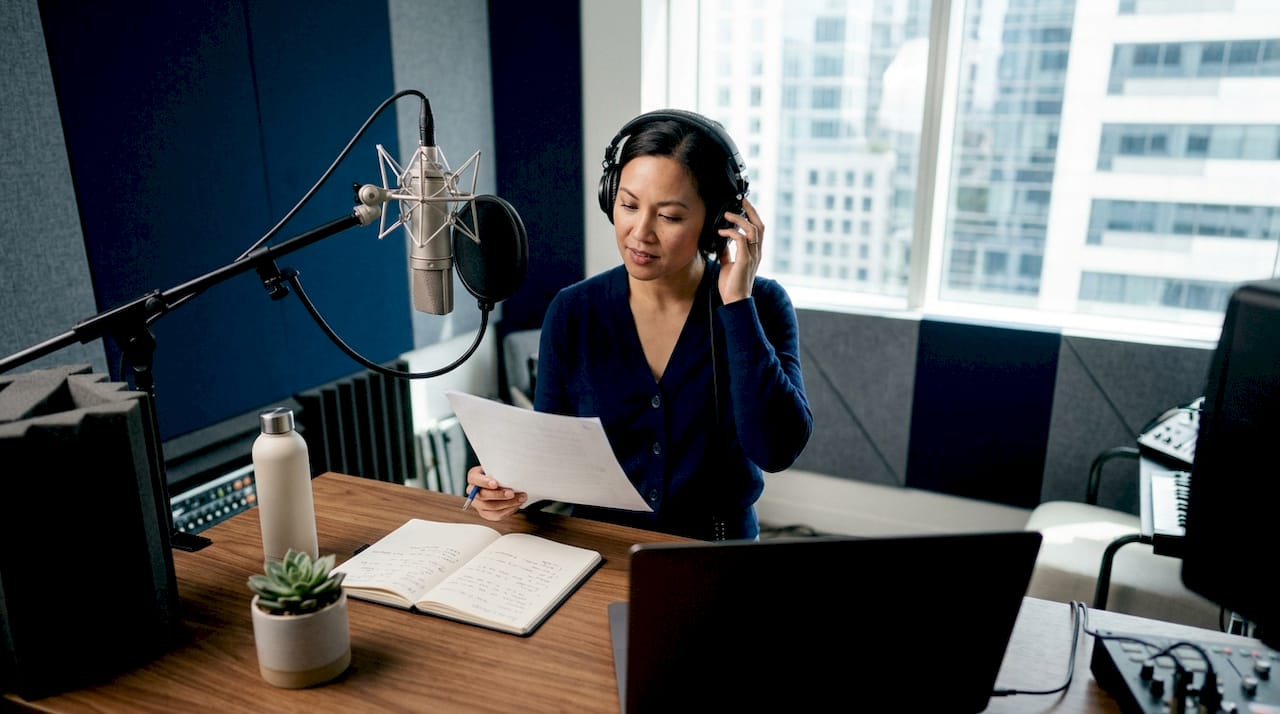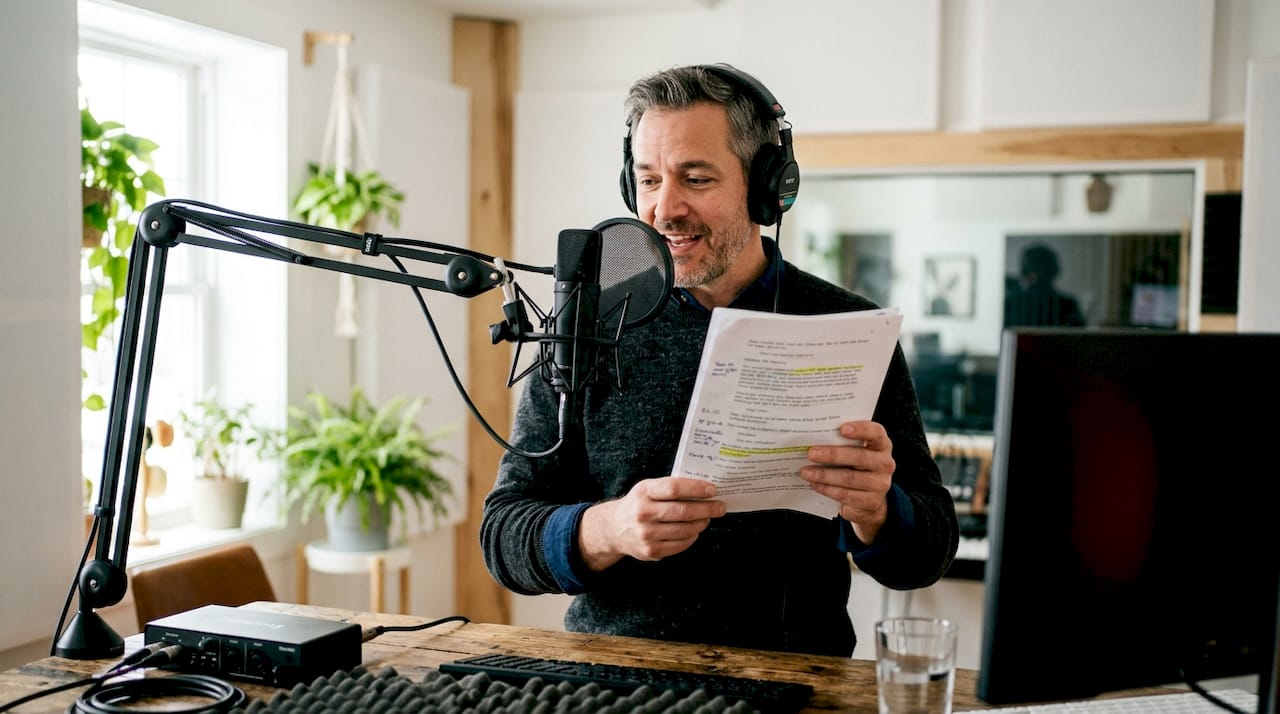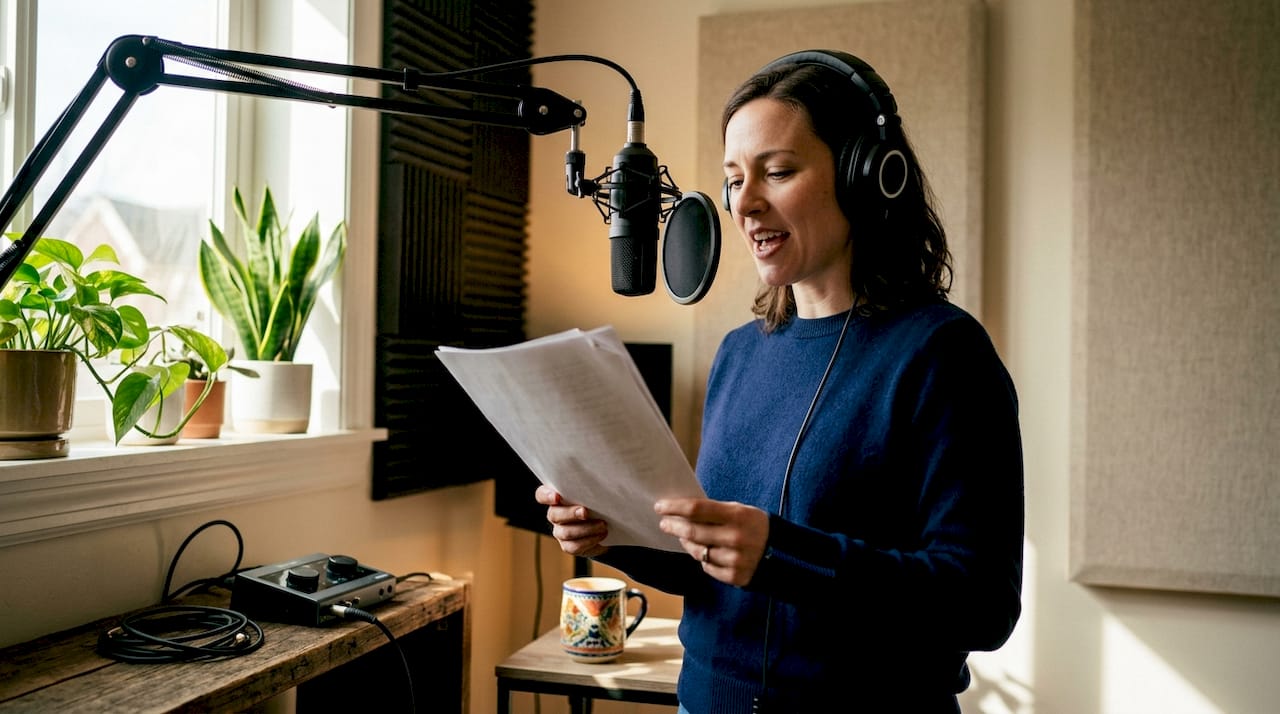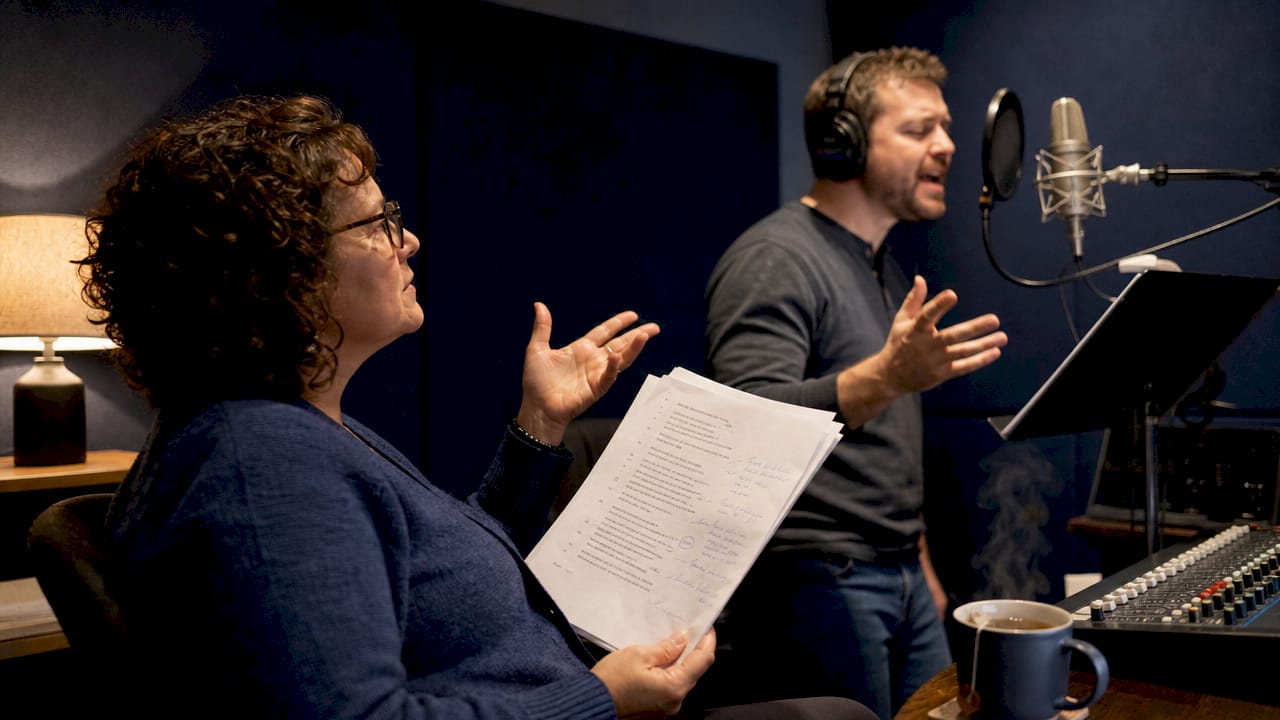

A commercial voice demo is a brief, professionally produced audio sample that showcases a voice actor’s ability to perform advertising scripts with authentic emotion and range. Known in the industry as a voiceover demo reel, this recording serves as the primary marketing tool voice actors use to win casting consideration from advertising agencies, film producers, and political campaign teams. Understanding what separates a strong demo from a forgettable one gives media professionals a real edge when evaluating talent for any project.
What is a commercial voice demo and why does it matter?
A commercial voice demo is a curated audio recording, typically 60 to 90 seconds long and built from 4 to 7 short advertisement-style spots. That compact format forces every second to count. Casting directors and media buyers use the demo to judge fit within seconds, not minutes.
The demo functions as both an audition and a business card. It tells a producer whether a voice actor can deliver warmth for a healthcare brand, authority for a financial service, or playful energy for a consumer product. Without a polished demo, even a genuinely talented performer has no credible way to enter the room.
The industry term “demo reel” applies across all voiceover categories, but the commercial demo is the most widely requested format. Advertising agencies, political media consultants, and film promotion teams all rely on it as a first filter. A well-built commercial demo signals professionalism before a single conversation takes place.
What defines an effective commercial voice demo?
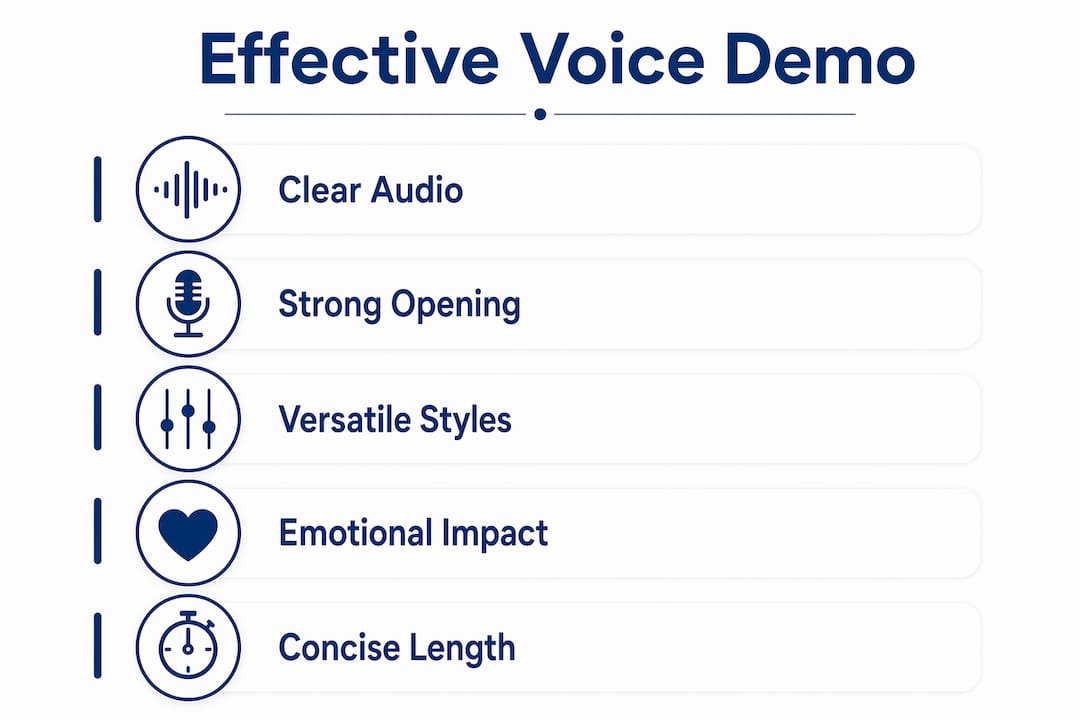
Audio quality is the baseline requirement. A demo with echo, background noise, or muddy mixing signals amateur production before the performance even registers. Professional sound clarity, proper mixing with music or effects, and clean editing are non-negotiable for any demo intended to book real work.
Beyond technical quality, content curation separates good demos from great ones. Effective demos use carefully curated samples focused on 10 to 15 target characters showing contrast in age, energy, and emotional register, rather than exhaustive vocal impressions. The goal is contrast, not volume.
The most effective commercial demos showcase these core performance qualities:
- Sincerity: The ability to sound genuinely invested in the message, not just reading copy
- Warmth: A tone that builds trust quickly, critical for healthcare, nonprofit, and community-focused brands
- Authority: Confident delivery without sounding stiff or corporate
- Energy: Controlled enthusiasm that matches the pace of fast-moving consumer spots
- Conversational ease: The natural, relaxed quality that clients consistently prefer over formal announcer styles
The shift away from the classic “announcer voice” is the most significant change in commercial voiceover over the past decade. Producers want voices that sound like real people talking, not performers projecting to the back row. A demo that leads with conversational authenticity immediately reads as current.
Pro Tip: Place your strongest, most versatile spot first. Casting directors often make a decision within the first 10 seconds, so your opening clip must demonstrate both quality and range immediately.
How are commercial voice demos produced?
Producing a professional commercial voice demo costs between $1,000 and $3,000 or more, covering studio time, direction, script development, and music licensing. That investment buys more than a clean recording. It buys experienced direction, which is the element most self-produced demos lack entirely.
DIY recording is a viable starting point for early-career talent, but it carries real risks. Poor audio quality, such as echoes or background noise, is the main reason beginner demos fail to book jobs. Acoustic treatment matters far more than microphone price. A $200 microphone in a properly treated room outperforms a $2,000 microphone in a live, reflective space every time.
Self-producing a demo also means managing multiple roles simultaneously: performer, director, sound engineer, and critic. That split focus often results in performances that are technically clean but emotionally flat. A professional producer keeps the actor in the performance zone while handling everything else.
| Approach | Best for | Key advantage | Main risk |
|---|---|---|---|
| Professional studio | Established or serious talent | Expert direction, broadcast-ready quality | Higher upfront cost |
| DIY home studio | Early-career exploration | Low cost, flexible schedule | Audio quality and self-direction challenges |
Pro Tip: When recording at home, use the AAA-BBB pattern: record three big takes, then three smaller, more intimate takes. This technique, used by seasoned professionals, captures varied performance sizes and prevents you from locking into one delivery too early.
What vocal styles and scripts belong in a commercial demo?
A commercial demo should cover the full range of styles that advertising, film promotion, and political media actually buy. Limiting a demo to one tone, no matter how polished, signals limited range to casting professionals. The strongest demos move through emotional contrasts that feel natural, not forced.
Common script categories that belong in a well-rounded commercial demo include:
- Playful and upbeat: Consumer products, food and beverage, family brands
- Warm storytelling: Healthcare, insurance, nonprofit, and public service campaigns
- Authoritative and direct: Financial services, legal, technology, and corporate communications
- Blue-collar authenticity: Automotive, hardware, and trade-focused brands that need grounded, no-nonsense delivery
- Sincere and personal: Political campaign spots, community messaging, and cause-driven advertising
- Energetic and promotional: Retail, entertainment, and event-driven advertising
Voice actors have creative license to rewrite and improvise demo scripts to highlight their natural voice strengths. This is a critical distinction from a live audition. The demo is not a test of script compliance. It is a showcase of what the voice does best. A skilled talent will reshape generic copy to fit their natural cadence, making the performance sound lived-in rather than performed.
For media professionals evaluating demos, the goal is to find commercial voice performances that align with specific campaign demographics. A political spot targeting working-class voters needs a different vocal quality than a luxury brand campaign. The demo reveals whether a voice actor can make that distinction instinctively.
How do commercial voice demos shape storytelling and audience engagement?
Voice is a primary storytelling device that shapes audience trust, empathy, and brand recall before a single visual registers. A commercial demo helps media buyers and producers identify which voices can carry that weight across different formats and audiences. The demo is the proof of concept before the project begins.
Authentic emotional connection is the quality that separates voices that book from voices that get passed over. Producers are not just listening for a pleasant sound. They are listening for a voice that makes them believe the message. That belief transfers directly to the audience.
The most consistently booked voice actors are those who shift convincingly between varied emotional states while remaining authentic. That quality shows up clearly in a well-constructed demo. A casting director can hear within seconds whether a voice actor has that range or is performing a single note.
Four ways a strong demo directly supports storytelling goals:
- Establishes brand voice alignment: The demo reveals whether a voice fits the brand’s personality before any script is written.
- Reduces casting risk: A polished demo gives producers confidence that the performance quality will hold under real production conditions.
- Signals demographic fit: Vocal tone, cadence, and energy communicate age, background, and cultural fluency to producers targeting specific audiences.
- Demonstrates narrative instinct: The best demos show that a voice actor understands pacing, emphasis, and emotional arc, not just pronunciation.
“The voice that books the most work is not the most impressive voice in the room. It is the most believable one. A commercial demo’s job is to prove that believability across multiple contexts, quickly and without explanation.”
For political media professionals, this matters especially. A campaign spot needs a voice that sounds like a neighbor, not a broadcaster. The demo is where that quality either shows up or it does not.
Key Takeaways
A commercial voice demo is the single most important tool a voice actor uses to communicate casting fit, and media professionals who know how to read one make faster, more confident hiring decisions.
| Point | Details |
|---|---|
| Standard demo format | Demos run 60–90 seconds and include 4–7 short spots showing varied styles. |
| Audio quality is non-negotiable | Poor acoustics disqualify a demo before the performance is even evaluated. |
| Conversational tone wins | Clients prefer natural, relatable delivery over formal announcer styles. |
| Creative license applies | Voice actors can rewrite scripts to showcase their natural strengths, not just read copy. |
| Emotional range books work | The most hired voices shift authentically between emotional states across a single demo. |
Why most demos miss the point entirely
The biggest misconception I see from media professionals evaluating demos is treating them like a technical audition. They listen for a “good voice” and stop there. That misses everything that actually matters.
A commercial demo is a storytelling document. The question is not “Does this voice sound pleasant?” The question is “Does this voice make me believe something?” Those are completely different evaluations, and only the second one predicts whether a voice will move an audience.
I have also noticed that the demos that impress the most are rarely the most produced. Over-engineered demos with wall-to-wall music and dramatic effects often mask a performer who cannot hold attention without the scaffolding. The demos worth hiring from are the ones where the voice carries the spot, and the production simply supports it.
For media professionals, the most useful thing you can do when reviewing demos is mute the music mentally and ask: does the voice still work? If the answer is yes, you have found someone worth calling. If the answer is no, the production is doing the heavy lifting, and that is a problem you will discover on the first real session.
Updating a commercial demo every year or so keeps it aligned with current industry preferences and a performer’s evolving range. A demo that was strong three years ago may now signal dated style choices. Freshness in a demo is not vanity. It is market awareness.
— kribi
Gregeschmeyervoice: professional voice demos built for real campaigns
Gregeschmeyervoice brings a grounded, conversational style to every commercial project, from national advertising campaigns to political media and documentary narration. The focus is always on genuine human connection, not performance for its own sake.
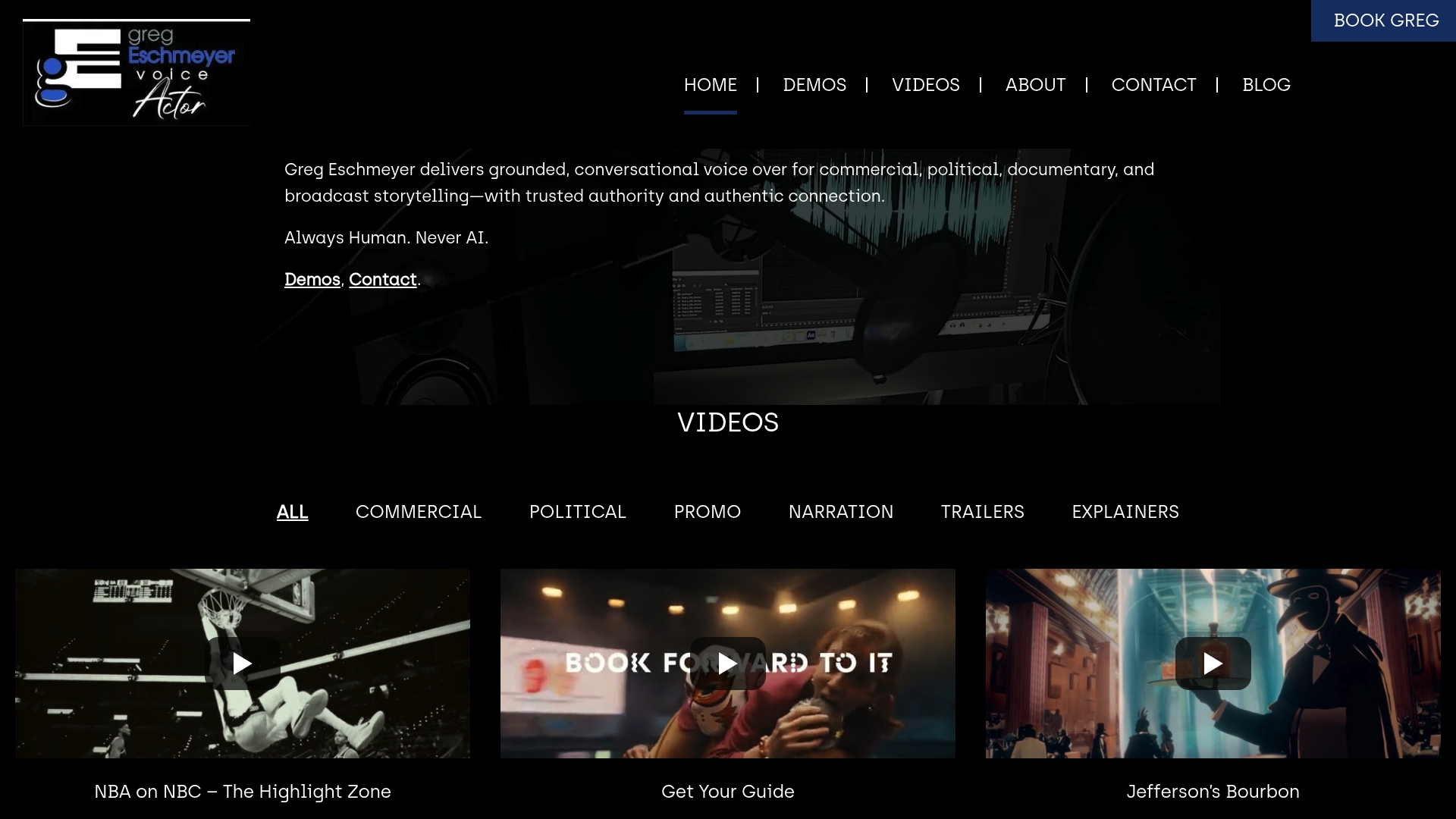
If you are evaluating voice talent for advertising or need a voice that can carry a political message with credibility and warmth, Gregeschmeyervoice offers fast turnaround, professional production, and a track record of satisfied clients across multiple media formats. Explore the full range of commercial voiceover services and see how the right voice transforms a campaign from competent to memorable.
FAQ
What is a commercial voice demo in simple terms?
A commercial voice demo is a short audio recording, typically 60 to 90 seconds, that showcases a voice actor’s ability to perform advertising scripts across multiple styles and emotional tones.
How long should a commercial voice demo be?
Industry standard puts commercial demos at 60 to 90 seconds, containing 4 to 7 short spots. Longer demos lose a casting director’s attention before the best material lands.
What does a commercial voice demo cost to produce professionally?
Professional commercial demo production costs between $1,000 and $3,000 or more, covering studio time, direction, script development, and music licensing.
What vocal styles should a commercial demo include?
A strong demo covers playful, warm, authoritative, conversational, and sincere delivery styles. Emotional contrast across spots signals the versatility that casting directors and media buyers actively look for.
How often should a voice actor update their commercial demo?
Updating a commercial demo every year or so keeps the reel current with industry trends and reflects the performer’s growing range. An outdated demo can signal stale style choices even when the talent has improved significantly.