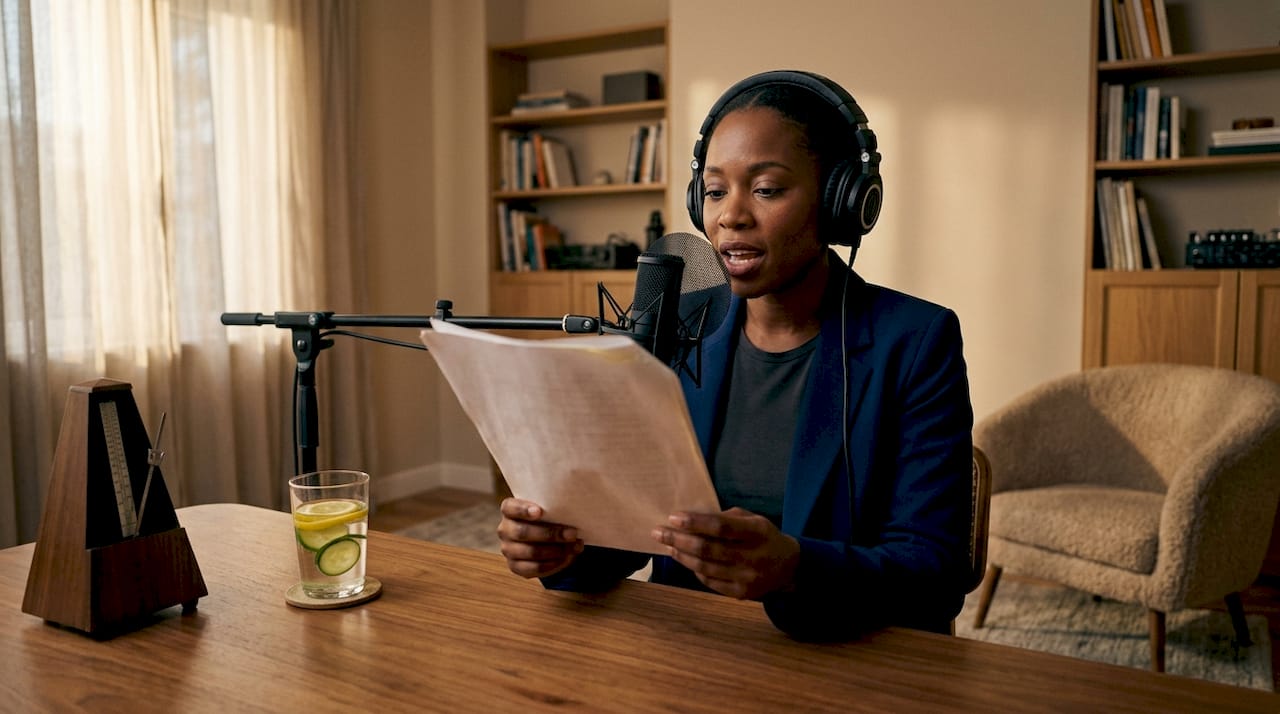
Authentic voice talent is defined as professional voice actors who deliver genuine, emotionally credible performances that connect with audiences on a human level. When you hire authentic voice talent, you are not just filling a script with sound. You are choosing the voice that shapes how your audience feels about your brand, your story, or your message. Generic or synthesized voices can fill airtime, but authentic human voices create the emotional engagement that drives real audience response. This guide gives advertisers, producers, and content creators a clear, practical path to finding and hiring the right voice actor for any project.
What criteria identify authentic voice talent for hire?
Authentic voice talent is not simply a pleasant voice reading copy. The industry term for this discipline is “voice acting,” and the best voice actors combine technical skill with genuine emotional range. Knowing what to look for saves you time and protects your project budget.
The core qualities that separate professional voice actors from amateurs are clarity, emotional range, versatility, and naturalness. A voice that sounds coached or stiff will undercut even the best script. Naturalness means the delivery sounds like a real person speaking, not a performance. You can hear this immediately in a well-produced demo.

Cultural and linguistic authenticity matter just as much as vocal quality. Matching language, accent, and cultural tone to your audience is a key casting criterion. A regional accent can build instant trust with a local audience. A mismatched accent can create subtle distance that erodes credibility.
Technical readiness is the third pillar. Professional voice actors often maintain home studios capable of delivering broadcast-quality WAV or MP3 recordings. That means you can hire remotely without sacrificing audio quality. Always confirm the actor’s recording setup before finalizing any hire.
Use this checklist when evaluating candidates:
- Vocal clarity: Is every word intelligible at normal listening volume?
- Emotional range: Can the actor shift tone from warm to urgent without sounding forced?
- Versatility: Does the demo show more than one style or character type?
- Cultural fit: Does the accent and phrasing match your audience’s expectations?
- Technical quality: Is the audio free of noise, reverb, and compression artifacts?
- Commercial credits: Has the actor worked on projects similar in scope to yours?
Pro Tip: Ask for a custom audition clip using 30 seconds of your actual script. A generic demo tells you what the actor can do. A custom read tells you how they interpret your specific material.
Check the full voice talent qualities checklist before you start evaluating candidates to build a consistent scoring system across your team.
Where do you find trusted authentic voice artists?
Sourcing the right voice actor starts with knowing where to look and how to structure your search. The best professional voice actors are found through vetted marketplaces, casting platforms, and direct outreach to talent with relevant credits.
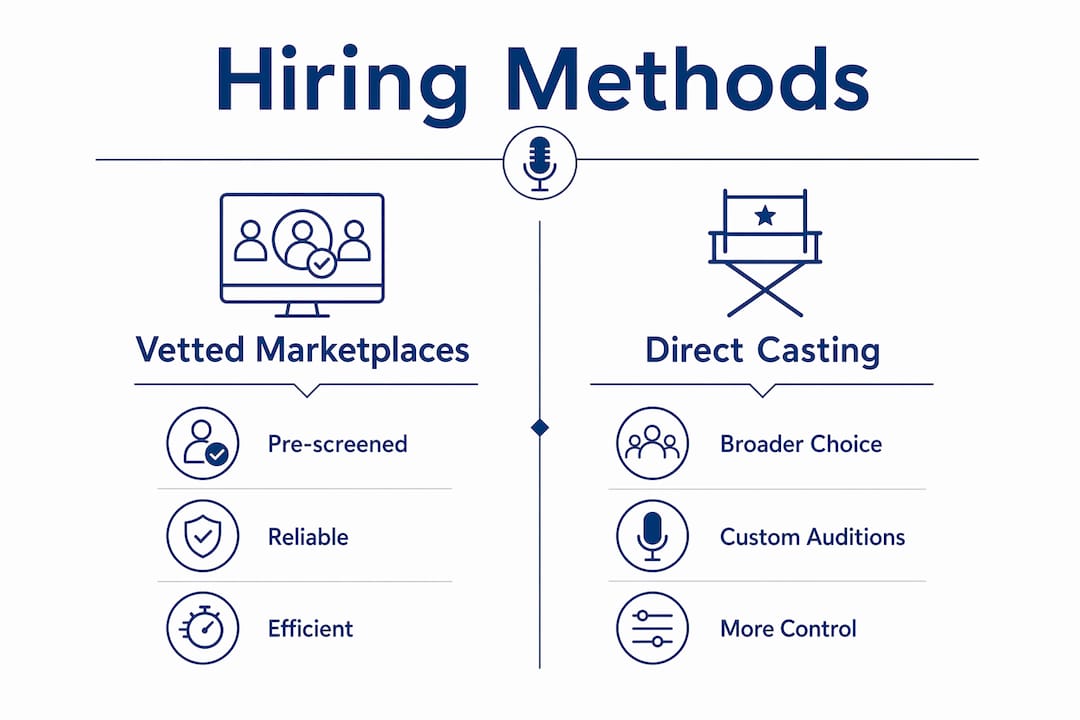
Vetted marketplaces screen talent before listing them, which means marketplace vetting filters out unreliable performers before you spend time reviewing auditions. That screening step alone saves hours of evaluation. Direct platforms also allow you to post a project brief that voice actors respond to with custom auditions, which gives you real performance data instead of generic samples.
Industry best practices in 2026 recommend inviting 10–15 voice actors to quote on any project. That range gives you enough variety to compare styles, accents, and price points without creating an unmanageable review process. Fewer than five auditions limits your options. More than twenty creates decision fatigue.
Diversity in casting improves project resonance. Inclusive casting across age, gender identity, and cultural background increases audience relevance across demographics. If your campaign targets multiple regions or communities, build that diversity into your audition pool from the start.
Here is a structured approach to sourcing:
- Define your voice profile. Write down the age range, gender, accent, tone, and energy level that fits your project before you post.
- Post a detailed project brief. Include script samples, usage rights needed, deadline, and budget range. Clear briefing reduces irrelevant auditions and saves everyone time.
- Use a vetted marketplace. Post to a platform that screens talent for quality and reliability.
- Request custom auditions. Ask each candidate to record a short clip from your actual script, not a generic demo.
- Evaluate demos systematically. Use a scoring sheet with your criteria checklist to compare candidates objectively.
| Sourcing method | Best for | Key advantage |
|---|---|---|
| Vetted marketplace | Most commercial projects | Pre-screened talent, fast turnaround |
| Casting platform | Large or complex productions | Wide audition pool, competitive pricing |
| Direct outreach | Repeat or specialized hires | Established relationship, known quality |
| Agency representation | High-budget campaigns | Full-service support, contract handling |
Pro Tip: When evaluating voice over demos for media projects, listen on the same speakers or headphones your audience will use. A voice that sounds great on studio monitors may feel thin on a phone speaker.
How do you hire voiceover professionals step by step?
A clear hiring workflow prevents the most common project delays. Voice over casting follows a defined sequence from brief to delivery, and skipping any step creates problems downstream.
- Write a detailed project brief. Specify the script, tone, intended audience, usage rights, file format, deadline, and budget. The more specific your brief, the more relevant the auditions you receive.
- Post and collect auditions. Give candidates 48–72 hours to submit. Collect at least 10 auditions before making any decisions.
- Score auditions with a checklist. Rate each submission on clarity, emotional fit, pacing, and technical quality. Avoid making decisions based on a single listen.
- Request revisions from your top two or three candidates. Ask each to adjust pacing or tone on one section. This tests their responsiveness and directability before you commit.
- Negotiate quote and usage rights. Confirm the fee covers the specific usage you need, whether that is broadcast, digital, regional, or national. Vague usage agreements create legal and budget problems later.
- Finalize the contract. Include delivery format, revision rounds, payment schedule, and ownership of the final file.
- Provide directed feedback during production. Direct client-to-actor communication produces better results than feedback relayed through intermediaries. Clear, specific notes reduce revision rounds.
- Approve and archive the final file. Store the original WAV file and the contract together for future reference.
Pro Tip: Give feedback using emotional language rather than technical direction. “Sound more like you’re telling a friend” lands better than “reduce your pitch by 10%.” Voice actors respond to intention, not engineering notes.
What mistakes should you avoid when hiring voice talent?
Rushing the hiring process is the single most expensive mistake producers make. Neglecting contract details and limiting the audition pool are the two most common causes of project delays and budget overruns.
Reviewing too few auditions is a structural problem. When you evaluate only two or three candidates, you are making a high-stakes decision with low-quality data. You may hire the best of a small group rather than the best fit for your project. Expanding your audition pool to 10–15 candidates costs nothing extra on most platforms and significantly improves your odds of finding the right voice.
Authentic human voices create stronger emotional engagement and brand connection than synthesized or AI voices. Audience trust and immersion depend heavily on the authenticity of the voiceover performance. When a campaign requires genuine emotional resonance, no amount of post-processing can replicate what a skilled human voice actor delivers in a single take.
Mismatching voice style and brand tone is a subtler but equally damaging error. A high-energy, fast-paced delivery works for a retail promotion. It sounds wrong on a healthcare narrative. Before you post your brief, write one sentence describing the emotional feeling you want the audience to have after hearing the spot. Use that sentence as your casting filter.
Ignoring the actor’s recording setup creates technical problems at the worst possible time. Confirm that your hire can deliver broadcast-quality audio before the session, not after. Ask for a technical spec sheet or a short test recording in the exact format your project requires.
Relying on AI-generated voices when your project requires genuine human connection is a false economy. AI voices have improved, but audience trust still depends on the authenticity of human performance. For commercials, political messaging, and documentary narration, a real voice actor is not optional. It is the product.
Key Takeaways
Hiring authentic voice talent requires a clear brief, a large enough audition pool, and a systematic evaluation process to find the voice that genuinely fits your project.
| Point | Details |
|---|---|
| Define your voice profile first | Write down tone, accent, age range, and energy level before posting any brief. |
| Invite 10–15 auditions | Reviewing enough candidates gives you real options and prevents settling for less than the best fit. |
| Verify technical setup early | Confirm broadcast-quality recording capability before finalizing any hire. |
| Use emotional language in feedback | Voice actors respond to intention-based direction, which reduces revision rounds. |
| Secure usage rights in writing | Vague contracts create legal and budget problems after delivery. |
Why authentic voice casting is worth the extra time
The market has moved fast toward AI-generated audio, and I understand the appeal. It is cheap, it is fast, and it never asks for a revision round. But after watching dozens of campaigns roll out with synthetic voices, I keep seeing the same pattern. The spots that land, the ones that get shared and remembered, almost always have a real human voice at the center.
Authenticity is not a soft concept. It is a measurable quality that audiences detect within the first few seconds of listening. A real voice carries micro-variations in pace, breath, and emphasis that no current synthesis engine replicates convincingly. Those variations are what make a performance feel like a person rather than a product.
The producers I respect most treat voice talent selection as a creative decision, not a procurement task. They spend real time on the brief, they listen to every audition twice, and they give specific feedback. That investment pays off in fewer revisions, stronger performances, and campaigns that actually move people.
The hiring process I have outlined here is not complicated. It is just disciplined. The discipline is what most teams skip when deadlines tighten. Do not skip it.
— kribi
Gregeschmeyervoice.com makes finding authentic voice actors straightforward
Gregeschmeyervoice offers a grounded, conversational voice acting service built specifically for advertisers, producers, and content creators who need genuine human connection in their audio. Greg Eschmeyer’s work spans commercials, political messaging, documentary narration, and broadcast, with a track record of fast turnaround and high-quality delivery that clients consistently highlight in testimonials.
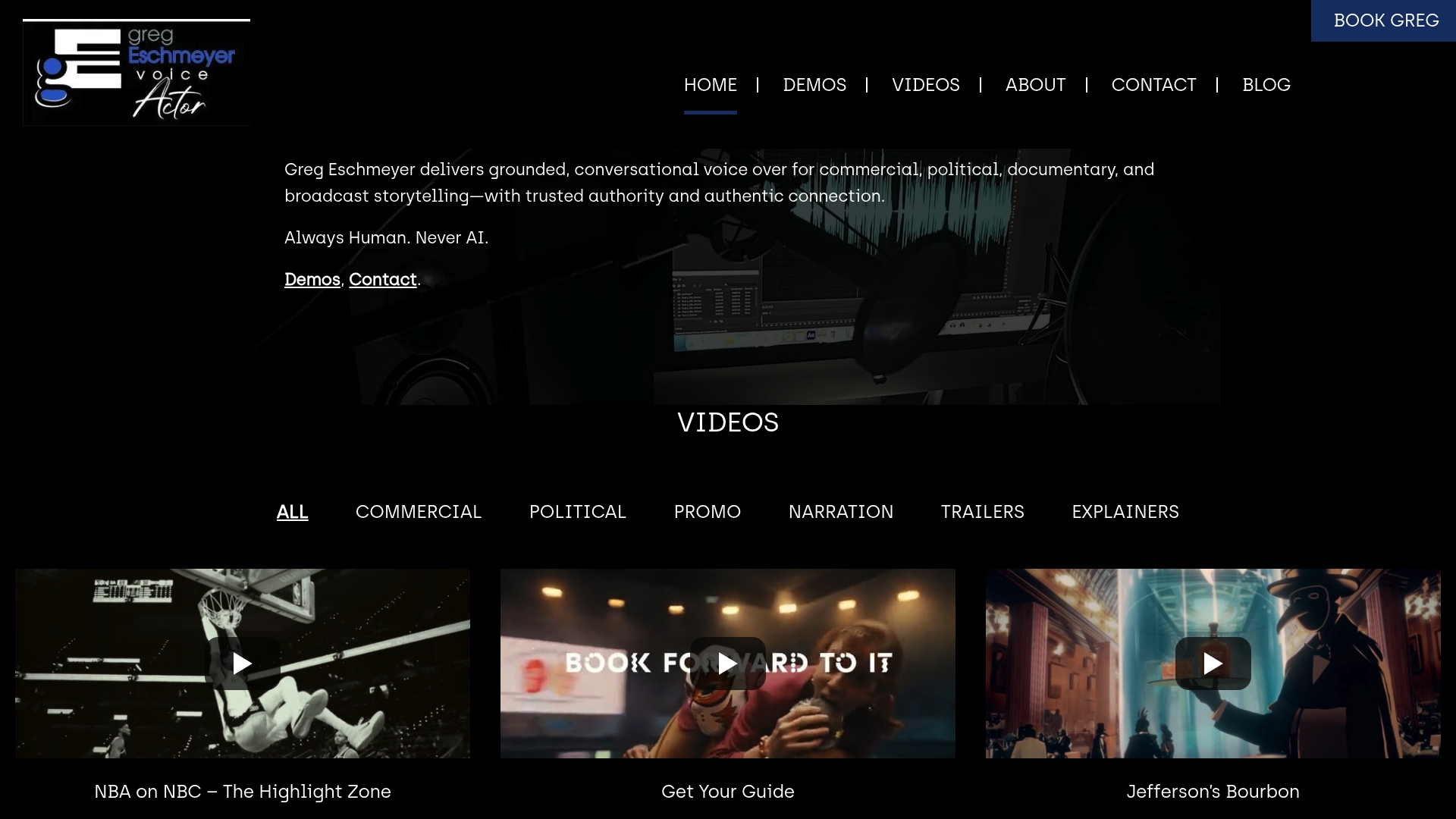
If your next project demands a voice that sounds real because it is, Gregeschmeyervoice delivers broadcast-ready performances without the guesswork of large marketplace searches. Explore the full range of professional voice actor services and see how a direct, authentic approach to voice casting changes the quality of your final product. For producers working across multiple formats, the guide to commercial voice performances is a strong next step.
FAQ
What does “authentic voice talent” mean in casting?
Authentic voice talent refers to professional voice actors who deliver genuine, emotionally credible performances rather than generic or artificially processed reads. The key markers are naturalness, cultural fit, and the ability to connect with a specific audience.
How many auditions should I collect before hiring?
Industry best practices in 2026 recommend collecting auditions from 10–15 voice actors before making a hiring decision. That range provides enough variety to compare styles and fit without creating an unmanageable review process.
Can I hire voice talent remotely without losing audio quality?
Yes. Professional voice actors routinely maintain home studios capable of delivering broadcast-quality WAV or MP3 files. Confirm the actor’s technical setup and request a test recording before finalizing the hire.
What should a voice over project brief include?
A strong brief includes the script or script sample, intended audience, tone description, usage rights needed, file format, deadline, and budget range. Clear briefs produce more relevant auditions and reduce back-and-forth during production.
When should I choose a human voice actor over an AI voice?
Choose a human voice actor whenever your project requires genuine emotional engagement, audience trust, or brand credibility. Authentic human voices consistently outperform synthesized audio in commercials, political messaging, and narrative content where connection matters.