
Voice over narration is the connective tissue between interview clips, giving viewers the context they need to follow a story from one speaker moment to the next. In broadcast journalism, this technique is called the VO/SOT structure, where VO stands for voice over and SOT stands for sound on tape. Understanding how voice over bridges interview segments is the difference between a story that flows and one that feels like a pile of disconnected clips. Content creators who master this structure produce work that holds attention, builds trust, and delivers ideas with real clarity.
How voice over bridges interview segments in broadcast journalism
Broadcast journalism follows a standard rhythm of alternating voice over and sound on tape to balance factual context with emotional insight. That pattern, VO then SOT then VO then SOT, is not arbitrary. It gives the narrator’s voice the job of setting up each interview clip, and it gives the interview clip the job of delivering the human moment. The two elements work together because they do different things.
The voice over carries facts, context, and forward momentum. The interview clip carries emotion, credibility, and specificity. When you alternate them correctly, the viewer never has to work hard to follow the story. The narration tells them where they are going, and the interview clip confirms it with a real person’s words.
- Set the scene with VO. Write your opening voice over to establish the story’s stakes before the first interview clip appears.
- Let the SOT deliver the human element. The interview clip should say something the narrator cannot say as effectively, such as a personal reaction or a direct quote.
- Return to VO to advance the story. After the clip ends, the next voice over line should push the narrative forward, not recap what was just said.
- Repeat the rhythm. Each VO/SOT cycle should move the story one step further toward its conclusion.
Pro Tip: Write your voice over lines after you have selected your interview clips, not before. Knowing exactly what each clip says lets you write narration that sets it up perfectly without repeating it.
The narrator’s role in this structure is analogous to a guide who keeps the audience on the logical path through shifting ideas and emotional moments. Without that guide, viewers get lost between clips.
How does well-written voice over narration keep viewers engaged?
Effective voice over narration advances the story rather than summarizing it. VO lines act as narrative guideposts that move the audience from problem to solution, or from theory to example. The moment a narrator starts repeating what the interview subject just said, the story stalls and the viewer’s attention drops.
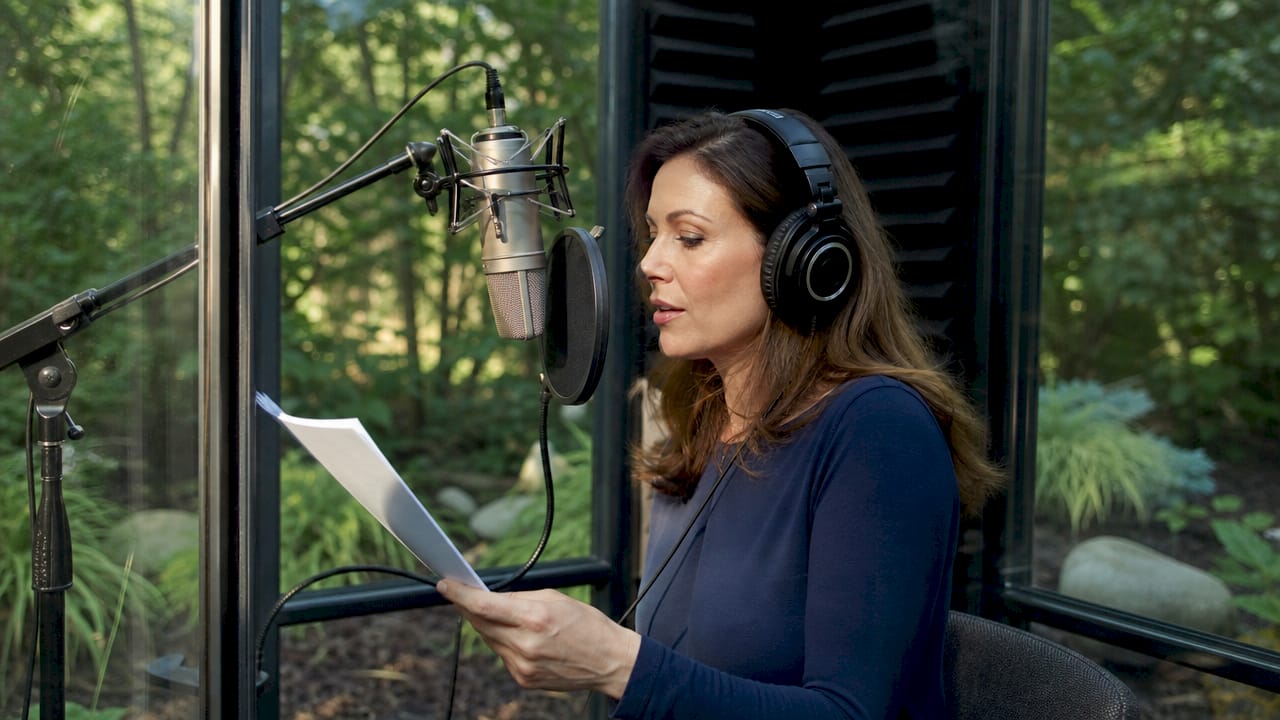
The key editorial discipline here is avoiding redundancy. If your interview clip ends with a subject saying, “We lost everything in the fire,” your next voice over line should not begin with “She described losing everything.” That paraphrase wastes time and insults the viewer’s memory. Instead, the follow-up narration should move to the next idea: what happened after the fire, who responded, or what changed.
Here is what effective voice over narration does between interview clips:
- Sets expectations. The VO line before a clip tells the viewer what kind of information or emotion is coming, so the clip lands with full impact.
- Provides factual context. Dates, locations, statistics, and background details belong in the narration, not in the interview clip.
- Advances the narrative arc. Each VO line should represent one logical step forward in the story’s progression.
- Avoids formal introductions. Phrases like “Here is what she had to say” add nothing. They delay the story and signal weak writing.
There is also an important distinction between voice over narration in editing and bridging statements in media interviews. In media training, bridging is a technique where a speaker acknowledges a question and then steers back to their key message, using phrases like “What’s important to remember is…” That is a performance skill for interview subjects. Voice over narration in editing is a writing and production skill for content creators. Both serve audience clarity, but they operate in completely different contexts.
Pro Tip: Read your voice over script aloud against your selected interview clips before you record anything. If the narration and the clip cover the same ground, cut the narration down until each element is doing its own job.
Scripting voice over narration requires understanding the emotional subtext of each interview bite so you can write narration that sets up the right expectation without giving away the payoff.
What are common editing pitfalls and how does narration fix them?
The most common editing mistake with interview clips is cutting on silence rather than on meaning. Editors who cut when the subject stops talking often slice off the emotional tail of a sentence, the pause before a key word, or the beat that makes a punchline land. Editing interview clips based on meaning units rather than silence or sentence endings preserves emotional weight and story rhythm.
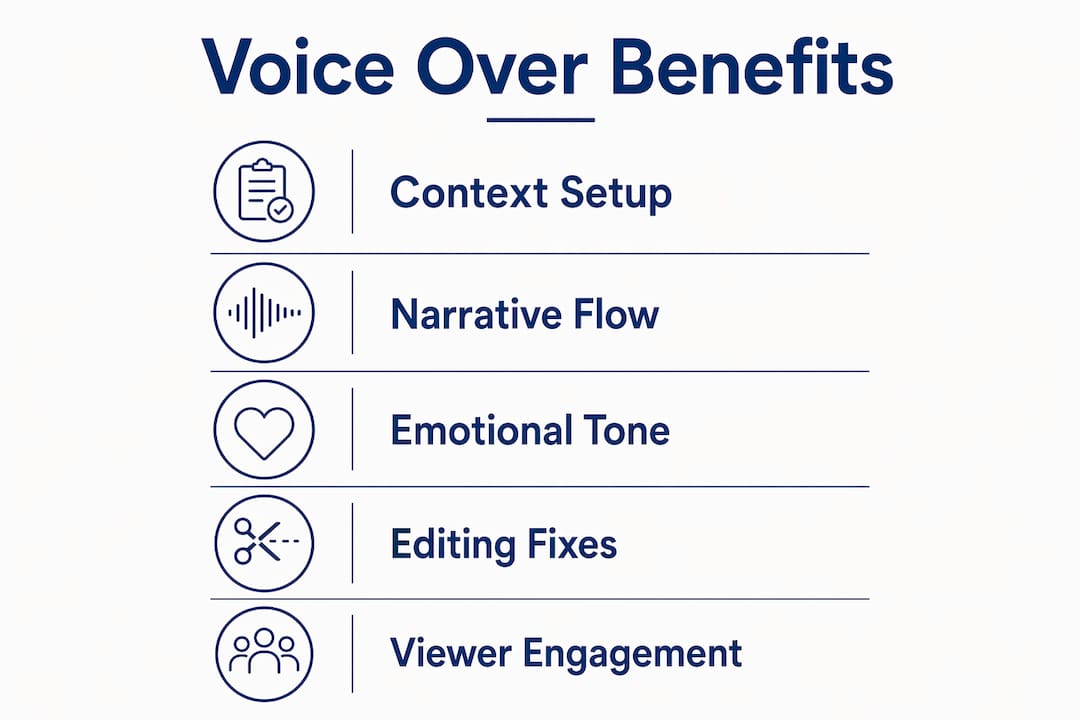
Voice over narration fixes several of the most common structural problems in interview editing. The table below shows the problem and the narration solution.
| Editing problem | Voice over solution |
|---|---|
| Two clips cover the same topic with no context shift | Insert a VO line that reframes the topic before the second clip |
| Jump cut between unrelated interview moments | Use VO over B-roll to establish the new subject before the clip begins |
| Clip starts mid-thought and confuses viewers | Write a VO setup line that provides the missing context |
| Pacing drags between long interview clips | Shorten clips to their core idea and use VO to carry the connective detail |
| Emotional moment arrives without preparation | Use the preceding VO line to signal the emotional weight coming |
A clip with clear beats and supportive editing feels composed and premium to viewers. That quality comes from the editor’s decision about where to cut, and from the narrator’s voice landing at exactly the right moment to carry the story forward.
Timing is everything in this structure. Voice over that arrives too early, before the viewer has absorbed the previous clip, feels rushed. Voice over that arrives too late, after a long silence or an awkward pause, breaks the story’s momentum. The goal is a rhythm where narration and interview clips feel like one continuous thought, not two separate tracks.
How can content creators implement voice over narration in interview videos?
The practical starting point is to treat every voice over line as a launchpad, not an introduction. Final VO lines before an interview clip should foreshadow the content and emotion of that clip, not introduce the speaker by name and title. The speaker’s name and title belong in a lower third graphic. The narration’s job is to make the viewer lean forward.
Follow this production sequence to build strong voice over narration for interview videos:
- Select your interview clips first. Choose the moments where the subject says something only they can say. These are your SOT anchors.
- Identify the idea each clip delivers. Write one sentence describing what each clip communicates emotionally and factually.
- Write the VO line that sets up each clip. The line should end on a note that makes the clip feel like the natural answer or continuation.
- Write the VO line that follows each clip. This line should push the story one step forward, not summarize what was just said.
- Plan your B-roll to match the narration. Voice over that describes a location, an action, or a process needs visuals that support it. Mismatched B-roll breaks the viewer’s trust.
- Record with the right tone. Narration that sounds flat or over-produced undercuts the emotional work the interview clips are doing. The voice needs to match the story’s register.
Effective voice over narration is more about advancing ideas logically than about strict timing or arbitrary cut points. That means the script drives the edit, not the other way around.
Content creators who work in documentary, news, branded content, or long-form social video all benefit from this approach. The VO/SOT rhythm is not a broadcast television rule. It is a storytelling principle that works across formats because it matches how people naturally process information: context first, then the human moment that makes it real.
Selecting the right voice talent for narration matters as much as writing strong copy. A narrator who sounds detached or performative breaks the emotional contract the interview clips are building. The voice needs to feel like a trusted guide, not a commercial announcer.
Pro Tip: When you write a VO line that ends with a question or an open idea, the following interview clip feels like a direct answer. That structure is one of the most reliable ways to create forward momentum in any interview-based video.
Rehearsed bridging in media interview performance and scripted narration in editing share one goal: keeping the audience focused on the core message without losing their trust.
Key takeaways
Voice over narration works in interview videos because it carries the facts and context that interview clips cannot, while the clips deliver the human moments that narration cannot replicate.
| Point | Details |
|---|---|
| Use the VO/SOT rhythm | Alternate narration and interview clips to balance context with emotional impact. |
| Write VO as a launchpad | End each narration line on an open idea that the interview clip resolves or continues. |
| Avoid paraphrasing clips | The follow-up narration should advance the story, not repeat what the subject just said. |
| Cut on meaning, not silence | Preserve the emotional beat of each clip by ending cuts at idea completion, not pauses. |
| Match voice tone to story register | The narrator’s delivery must match the emotional weight of the interview content. |
What I have learned from years of working with interview narration
The single biggest mistake I see content creators make is writing voice over after the edit is locked. They cut the interview clips together, feel the gaps, and then try to patch them with narration. That approach produces narration that sounds reactive and thin, because it is. The narration was written to fix a problem rather than to tell a story.
The creators who produce the strongest interview content write their narration before they finalize the edit. They know what each clip needs to set up, and they write toward that. The edit then follows the script’s logic, not the other way around. That shift in workflow changes everything about the final product.
The other thing I have noticed is that most creators underestimate how much the narrator’s voice quality affects the interview clips around it. A flat or unconvincing narration makes the interview clips feel less credible by association. A warm, grounded narrator makes the interview subject sound more authoritative. The voice over and the interview clips are not separate tracks. They are one continuous experience for the viewer.
Off-camera narration technique is worth studying if you want to understand how the best documentary makers use narration to carry emotional weight without stepping on the interview subject’s moment. The goal is always the same: the narrator guides, the interview subject delivers.
— kribi
How Gregeschmeyervoice serves content creators who need professional narration
Professional narration is not just a production upgrade. It is a storytelling decision that affects how every interview clip in your video lands with your audience.
Gregeschmeyervoice delivers grounded, conversational narration built for content creators and media professionals who need voice over that connects interview segments with clarity and genuine human warmth. Greg Eschmeyer’s approach avoids the detached, over-produced tone that undercuts interview content. His work is used in documentaries, branded content, broadcasts, and long-form video. If your interview videos need narration that holds the story together from the first line to the last, explore professional voice over at Gregeschmeyervoice. You can also review voice over scene types to find the right narration approach for your specific format.
FAQ
What does voice over do between interview clips?
Voice over provides the factual context, narrative direction, and emotional setup that interview clips cannot deliver on their own. It moves the story forward so each clip lands with full impact.
What is the VO/SOT structure in broadcast journalism?
The VO/SOT pattern alternates narrator voice over with sound-on-tape interview clips to balance factual information with human insight. This rhythm is the standard structure in broadcast news packages.
How do you avoid redundancy in voice over narration?
Write the follow-up narration line after each interview clip to advance the story, not to paraphrase what the subject just said. If the clip and the narration cover the same ground, cut the narration until each element does its own job.
What is the difference between bridging in editing and bridging in media interviews?
Bridging in media interviews is a performance technique where a speaker redirects a question back to their key message. Bridging in editing is a writing technique where narration connects interview clips to maintain story flow. Both serve audience clarity but require completely different skills.
How does voice talent quality affect interview video performance?
A narrator who sounds flat or detached weakens the credibility of the interview clips around them. A grounded, conversational voice reinforces the emotional weight of each clip and keeps viewers engaged through the full story.