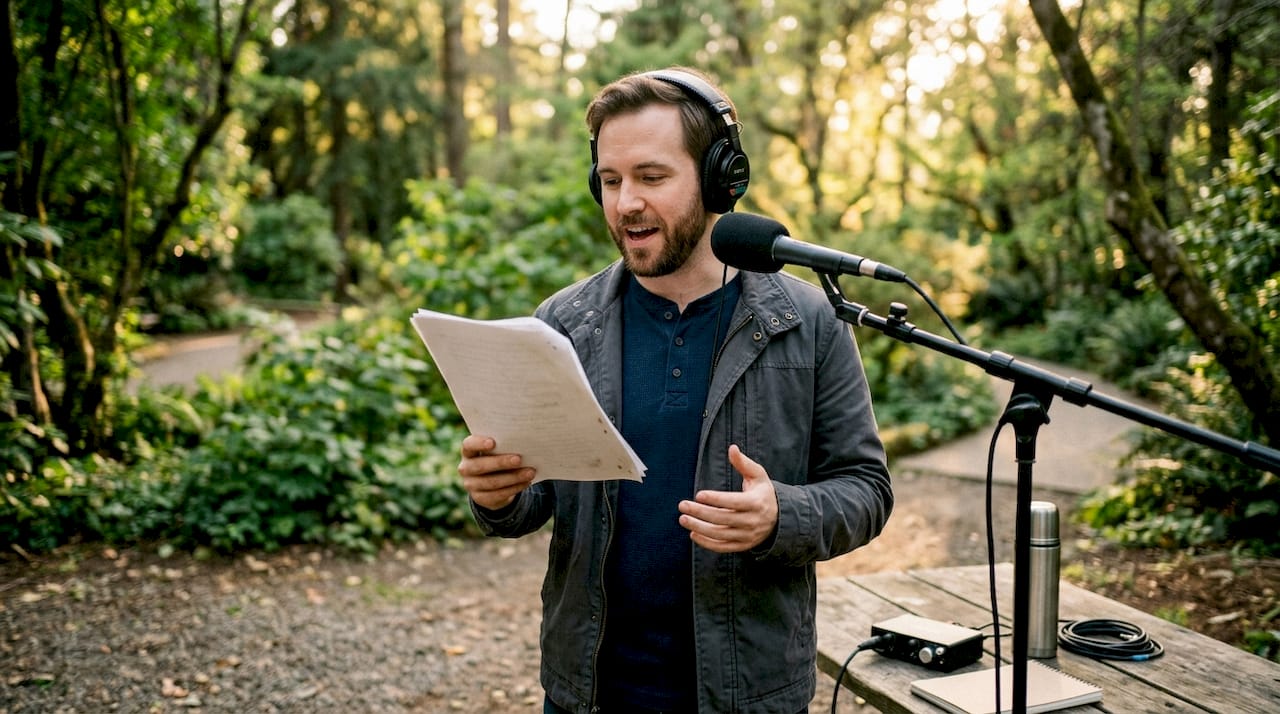
Voice over best practices for ad campaigns are defined by three non-negotiable elements: a clear brand introduction, a direct benefit statement, and a strong call to action. Advertisers who treat audio as an afterthought consistently underperform against those who engineer every second of their voice delivery. The standard industry term for this discipline is commercial voice over production, and it covers everything from script architecture to casting decisions to pacing control. Gregeschmeyervoice works with brands across commercials, political messaging, and broadcast to demonstrate how much a grounded, conversational delivery changes campaign results.
1. Voice over best practices ad campaigns: start with a three-part script structure
The single most effective structural technique in ad voice over is the three-part framework: brand introduction, benefit argument, and call to action. Ads using this structure score five points higher on recall in audio-only environments. That five-point gap compounds across thousands of impressions, making structural discipline one of the highest-return decisions in audio advertising.
Every element of the script must earn its place. The brand intro anchors the listener immediately. The benefit statement answers the only question the listener is asking: “Why does this matter to me?” The CTA closes the loop with a specific, frictionless instruction. Remove any sentence that does not serve one of these three functions.

Pro Tip: Write your script backward. Start with the CTA, then write the benefit that justifies it, then write the brand intro that sets the stage. This forces every word to serve conversion.
2. How to match word count and pacing to ad length
Script length is not a creative preference. It is a performance constraint. 30-second audio ads perform best at 65 to 100 words, and exceeding 100 words reduces completion rate by up to 25%. That data point means a single overwritten sentence can cost you a quarter of your audience before the CTA lands.
For 15-second formats, target 35 to 50 words. For six-second bumper ads on YouTube, you have room for one sentence and one brand name. Pacing is not just about speed. It is about giving each word the space it needs to register. A rushed read at 110 words in 30 seconds sounds panicked, not confident.
Spotify’s internal analytics confirm that word count discipline directly affects completion rates. This means your script editor and your voice director need to be in the same conversation before the session begins, not after.
3. How to select voice talent that fits your brand
Defining your brand voice personality before you open a casting call is not optional. It is the filter that eliminates 80% of mismatched auditions before they waste your time. Write a one-paragraph brand voice brief that describes the emotional register, the audience relationship, and one or two reference points from culture or media.
When reviewing auditions, listen for these qualities:
- Authenticity over performance. Does the read feel like a real person or a voice actor doing a voice?
- Tonal range. Can the talent shift energy between the benefit statement and the CTA without sounding mechanical?
- Pacing instinct. Does the talent naturally find the right tempo, or does the read feel forced into the time constraint?
- Brand fit. Does the voice match the emotional world your brand lives in?
Request variation reads during auditions. Ask for the same 15-second script delivered at two different energy levels. This reveals range and coachability, both of which matter more than a single perfect take.
“Cast and direct voice reads against the final ad cut length; never reuse a long-form read without recalibrating pacing and energy for shorter formats.” — RealVOTalent
Pro Tip: Ask candidates to read a line as if they are explaining something to a friend over coffee. This single instruction reveals more about natural delivery than any technical note you can give.
4. Why emotional direction outperforms technical instruction
The most common mistake in voice direction is telling a talent to “sound natural” or “be warm.” Vague direction like this produces inconsistent results and wastes session time. It forces the talent to guess at your intent instead of executing a clear emotional brief.
Replace adjectives with situations. Instead of “sound friendly,” say “you are explaining this to your neighbor who just asked for a recommendation.” Instead of “sound authoritative,” say “you are a doctor telling a patient something they need to hear but do not want to.” Situational and emotional direction yields faster, more accurate first-take performances than any technical instruction.
This approach also protects your budget. Fewer re-records mean shorter sessions. Shorter sessions mean lower costs and faster delivery. The brief you write before the session is the most cost-effective investment in the entire production.
5. Pacing and pause techniques that drive CTA conversions
Strategic pacing is the difference between a voice over that informs and one that converts. The delivery techniques that move listeners from passive to active are specific and learnable.
- Set the tempo in the benefit section. Slightly slower delivery in the benefit statement gives the listener time to connect the product to their own life.
- Insert a 500 to 700 millisecond pause before the CTA. Pauses at this length improve listener attention shift from passive to active and boost conversion effectiveness. This is what audio professionals call conversion architecture.
- Use a lead-in phrase before the scripted opening. A casual, unscripted phrase before the first scripted word creates a conversational headspace. Lead-ins improve natural delivery by establishing the emotional context before the performance begins.
- Match energy to urgency. A limited-time offer reads differently than a brand awareness spot. The voice energy should reflect the stakes of the message.
- End with confidence, not a question. CTAs delivered with a slight downward inflection signal certainty. Upward inflection sounds like a request, not a direction.
Pro Tip: Record a scratch track of yourself reading the script before the session. Play it back at 1.25x speed. If it still sounds clear, your pacing is right. If it sounds rushed, cut words.
6. Comparison of voice over styles by ad platform
Not every platform calls for the same voice approach. Matching your style to the medium is one of the most overlooked ad campaign voice strategies in practice.
Commercial voice over styles divide primarily into narration style and dialogue style. Narration style suits TV spots, radio, and streaming pre-roll where one voice carries the full message. Dialogue style works for social media and podcast ads where a conversational exchange feels more native to the format.
| Platform | Style | Pacing | Energy | Execution focus |
|---|---|---|---|---|
| TV (30s) | Narration | Measured | Medium to high | Brand clarity and emotional pull |
| Radio (15s) | Narration or dialogue | Fast | High | CTA prominence |
| Podcast (60s) | Dialogue or conversational | Relaxed | Low to medium | Trust and authenticity |
| Social media (6s) | Single statement | Very fast | High | Immediate brand recognition |
| YouTube pre-roll | Narration | Moderate | Medium | Hook in first three seconds |
AI-generated voices have improved significantly, but they still underperform human talent on emotional nuance and trust signals. Use AI voices for high-volume, low-stakes placements like retargeting ads. Reserve human talent for brand campaigns where authentic emotional connection is the primary goal.
7. Common voice over mistakes that kill ad performance
The most damaging errors in ad voice over are not technical. They are directional and strategic.
- Overacting. Pushing too hard reduces authenticity and listener engagement. The listener hears effort instead of message.
- Skipping the brand voice brief. Casting without a defined voice personality produces a read that fits no one’s expectations.
- Reusing long-form reads in short formats. A 60-second read cut to 15 seconds sounds rushed and loses the structural integrity of the original script.
- Relying on AI voices for emotional campaigns. AI voices lack the micro-variations in tone that signal genuine human feeling. Listeners notice, even when they cannot name what feels off.
- Poor briefing before the session. Vague direction costs money. Every re-record adds time and reduces the talent’s confidence in the material.
Each of these mistakes shares a root cause: treating voice over as a production checkbox rather than a strategic communication decision. Ad voice over scripts must be engineered for conversion with clear structure, not assembled for storytelling fullness.
Key takeaways
Effective ad voice over production requires structural discipline, precise direction, and platform-matched delivery to convert listeners into customers.
| Point | Details |
|---|---|
| Use the three-part structure | Every ad script needs a brand intro, benefit statement, and CTA to maximize recall. |
| Control word count by format | Keep 30-second ads at 65 to 100 words to protect completion rates. |
| Direct with situations, not adjectives | Replace “sound warm” with a specific emotional scenario for faster, better takes. |
| Pause before the CTA | A 500 to 700 millisecond pause shifts listener attention from passive to active. |
| Match style to platform | Narration works for TV and radio; conversational dialogue fits podcasts and social media. |
What I’ve learned from watching great voice direction work in real time
Most marketing teams spend weeks on visual creative and 20 minutes on voice direction. That imbalance shows up in the final product every time. The voice is the emotional carrier of the ad. The visuals confirm what the voice already made the listener feel.
The most effective campaigns I have seen share one trait: the creative brief for the voice talent is as detailed as the brief for the visual designer. It names the audience, describes the emotional situation, and specifies what the listener should feel at the end of the ad. Not what they should know. What they should feel.
Small pacing adjustments produce outsized results. Slowing the benefit statement by half a beat, adding a genuine pause before the CTA, using a lead-in to warm up the delivery. These are not production tricks. They are communication decisions that respect the listener’s attention. Gregeschmeyervoice consistently demonstrates that a grounded, conversational read built on this kind of intentional direction outperforms a technically perfect but emotionally flat performance.
Iterate based on listener response. Run two versions of the same ad with different pacing or energy levels. The data will tell you more about your audience’s emotional preferences than any focus group. Voice over is not a one-time decision. It is a testable, refinable asset.
— kribi
Work with a voice actor who makes your ad campaigns convert
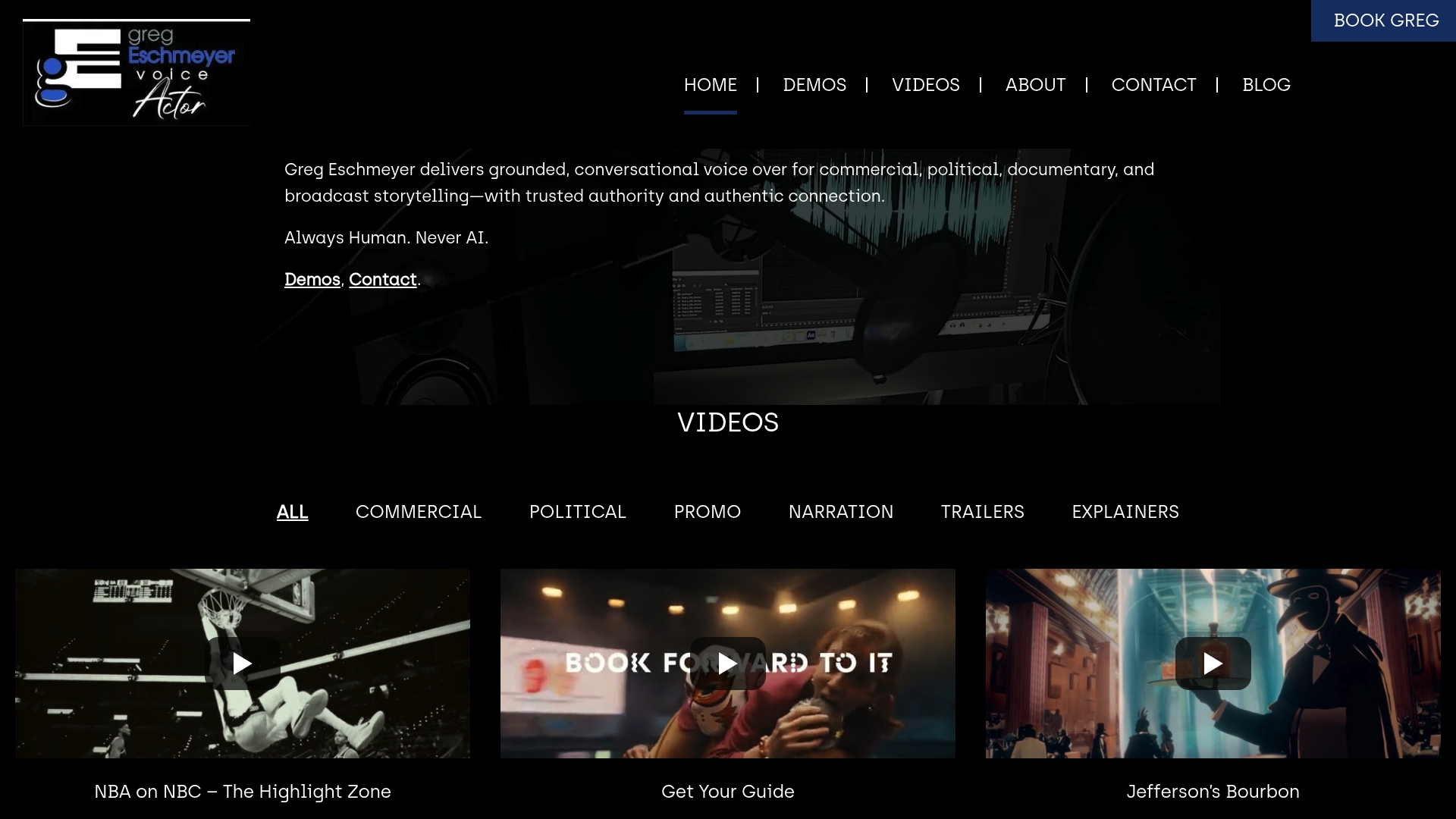
The techniques in this article only produce results when the voice talent can execute them with precision and authenticity. Gregeschmeyervoice specializes in the grounded, conversational delivery that modern ad campaigns require, from 30-second TV spots to six-second social bumpers. Clients consistently highlight fast turnaround, professional direction, and performances that match the emotional brief on the first take. If you are ready to put these best practices into production, Gregeschmeyervoice is the place to start. For teams building their own production workflow, the DIY voice over guide covers everything you need to get a quality read without a studio.
FAQ
What is the ideal word count for a 30-second voice over ad?
A 30-second audio ad performs best at 65 to 100 words. Exceeding 100 words reduces completion rate by up to 25%, according to Spotify’s 2026 audio ad analytics.
How do you direct a voice actor to sound natural?
Replace vague instructions like “sound natural” with specific emotional situations, such as “explain this to a friend who just asked for advice.” Situational direction produces faster, more consistent first-take performances than adjective-based notes.
When should you use AI voices instead of human talent?
AI voices work well for high-volume, low-stakes placements like retargeting ads. Human talent is the better choice for brand campaigns where emotional authenticity and listener trust are the primary objectives.
What is the best voice over format for podcast ads?
Podcast ads perform best with a conversational or dialogue style delivered at a relaxed pace with low to medium energy. The format rewards authenticity and trust over high-energy sales delivery.
How long should the pause before a CTA be?
A pause of 500 to 700 milliseconds before the CTA shifts listener attention from passive to active and improves conversion effectiveness, according to Murf AI’s 2026 marketing voice over workflow research.