
Voice talent selection is the strategic process of matching the right vocal personality and skill set to your brand’s message, and it directly determines whether your audience connects, trusts, or tunes out. The human voice carries tone, subtext, and emotional weight that no script alone can deliver. For advertising, film, and media professionals, the role of voice talent reaches far beyond reading copy. It shapes perception, builds credibility, and drives the emotional response your project depends on. Getting this decision right is not a detail. It is the foundation of effective storytelling.
Why voice talent selection matters most in media
The biggest misconception in casting is that you are looking for a pleasant tone. You are not. You are looking for a voice that embodies your brand’s psychology and forges a genuine connection with your audience. That distinction changes everything about how you evaluate candidates. A voice that sounds technically clean but emotionally flat will underperform a less polished read that feels authentic and alive.
Voice-over casting, the formal industry term for this process, requires you to think about fit the same way a film director thinks about casting a lead actor. The voice is the character. In commercials, documentaries, and broadcast media, the narrator or spokesperson becomes the audience’s guide. When that guide feels wrong, the entire message loses credibility.

Platforms like Voice123 have built entire ecosystems around this challenge, giving producers access to large pools of professional talent with searchable demos. That access is valuable. But access alone does not solve the selection problem. Knowing what to listen for does.
What vocal skills define successful voice talent?
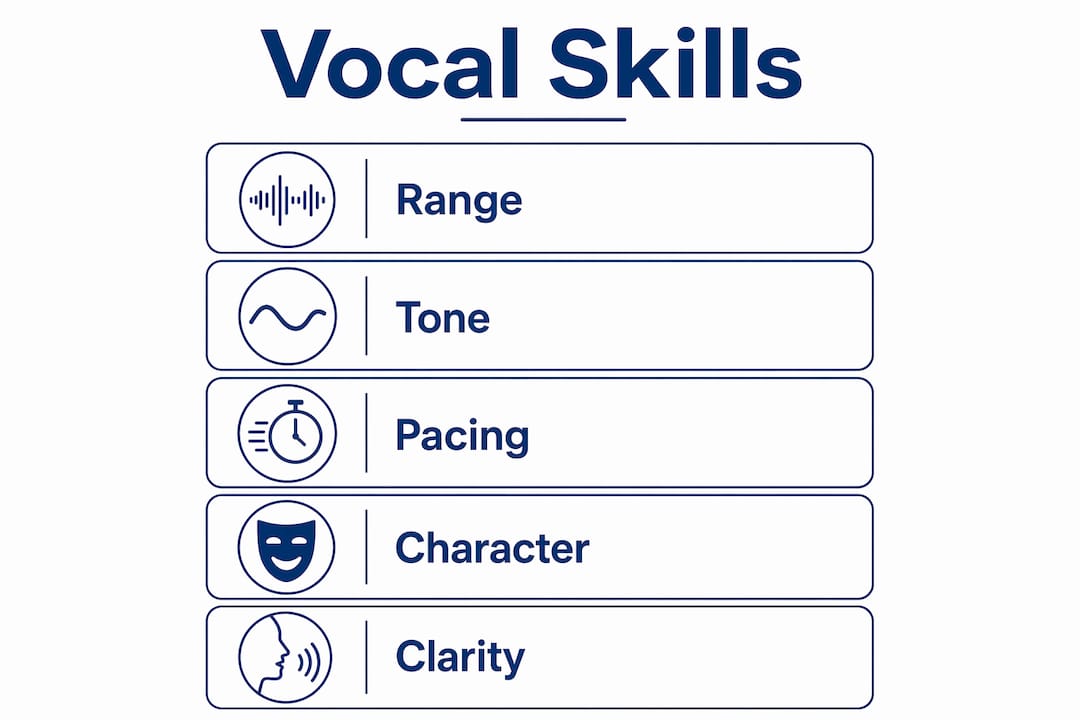
Enunciation, pacing, tone, and inflection are the four core technical skills that separate professional voice talent from capable amateurs. Each one affects how your audience receives and retains information.
- Tone sets the emotional register of the entire piece. A warm, grounded tone builds intimacy. A clipped, authoritative tone signals expertise.
- Pacing controls how much time the listener has to absorb each idea. Rushed delivery loses nuance. Overly slow delivery loses attention.
- Inflection is where meaning lives. The same sentence read with different inflection patterns can communicate confidence, doubt, warmth, or urgency.
- Enunciation determines clarity. In broadcast and advertising, poor enunciation forces the listener to work harder, and most will not bother.
Beyond these fundamentals, specialized projects require additional skills. Character work demands vocal range and the ability to sustain distinct voices across long sessions. Political and corporate narration requires gravitas and precise emotional control. Documentary narration calls for a conversational authority that sounds informed without sounding scripted.
The best way to evaluate these qualities is through a demo reel. A strong reel shows range across project types, not just one polished sample. Listen for consistency across the full reel, not just the opening ten seconds.
Pro Tip: When reviewing demo reels, skip to the middle of each sample. Producers typically place their strongest work first. The middle of the reel reveals how the talent performs under sustained pressure.
How does voice talent impact brand perception and trust?
A mismatched voice tone causes cognitive dissonance in your audience. That dissonance does not just feel off. It actively erodes trust in your brand. The listener may not consciously identify the problem, but they will feel that something is wrong, and that feeling transfers to your product.
Consider a luxury automotive brand that uses a casual, upbeat voice for its flagship campaign. The tone signals accessibility, not aspiration. The audience receives a mixed message, and the brand’s premium positioning weakens. The reverse is equally damaging. A community health organization that uses a cold, authoritative voice signals distance rather than care.
Human voice actors interpret brand personality and communicate subtext that goes beyond the written script. That interpretive layer is what builds emotional bonds with audiences over time. It is the difference between a message that informs and one that resonates.
The table below maps common brand archetypes to the vocal characteristics that align with each one.
| Brand Archetype | Ideal Vocal Tone | Pacing | Example Context |
|---|---|---|---|
| Luxury / Premium | Measured, sophisticated, warm | Slow to moderate | High-end automotive, fashion |
| Everyman / Friendly | Conversational, approachable | Moderate | Consumer packaged goods, retail |
| Authority / Expert | Confident, clear, direct | Moderate to brisk | Financial services, healthcare |
| Inspirational / Hero | Energetic, passionate, grounded | Dynamic | Nonprofit, sports, political |
| Caregiver / Community | Gentle, empathetic, sincere | Slow | Health services, education |
Matching your voice talent to the correct archetype is not a creative preference. It is a brand strategy decision with measurable consequences for audience trust and recall.
What practical factors should guide your selection process?
The single most effective change you can make to your casting process is rewriting your brief. Briefs targeting emotional response outperform generic descriptors every time. “We want the audience to feel inspired and ready to act” produces far better auditions than “We want a friendly, professional voice.” The first brief gives talent a performance goal. The second gives them nothing to work with.
Beyond the brief, consider these practical factors when building your selection criteria.
| Selection Factor | Agency | Marketplace (e.g., Voice123) | Direct Freelancer |
|---|---|---|---|
| Talent pool size | Curated, smaller | Large, searchable | Single talent |
| Cost | Higher | Moderate | Variable |
| Turnaround | Managed | Fast | Depends on talent |
| Brand relationship | Transactional | Transactional | Long-term possible |
| Creative control | Shared | High | High |
Session type also matters. Live-directed sessions allow real-time feedback and performance adjustments, which is critical for commercials and character work where nuance is everything. Self-directed recordings work well for straightforward projects like e-learning modules where the copy drives the performance. Know which format your project requires before you start auditioning.
Responsiveness and professionalism are non-negotiable criteria. A voice talent who delivers on time, communicates clearly, and takes direction without friction is worth more than a technically superior performer who creates production delays.
Pro Tip: Treat your best voice talent as a brand communication partner, not a vendor. Brief them on your brand values, not just the script. Talent who understand the brand consistently deliver more aligned performances from the first take.
Do human voice actors outperform ai-generated voices?
Listeners expend more mental effort decoding synthetic speech than human speech. That extra cognitive load reduces attention span and lowers retention. For advertising and branded content, where every second of attention is earned, this is a significant performance gap.
The advantages of human voice talent over AI and synthetic alternatives are concrete and well-documented.
- Comprehension: Human voices use natural rhythm and micro-variations in tone that help listeners process meaning faster and more accurately.
- Emotional resonance: Synthetic voices can approximate warmth, but they cannot replicate the genuine emotional investment a skilled actor brings to a read.
- Brand trust: Audiences increasingly recognize AI-generated audio. When they do, it signals that the brand chose efficiency over authenticity.
- Nuance and subtext: A human actor can communicate hesitation, confidence, or irony through subtle vocal choices. Current AI voices flatten these distinctions.
Voice cloning technology can replicate voices quickly, but it introduces legal and ethical risks alongside its performance limitations. For commercial and branded content, hiring real human talent is both legally safer and emotionally more effective. The impact on audience engagement is not marginal. Clients who prioritize engagement, comprehension, trust, and retention will consistently find that synthetic voices underperform human actors across all four dimensions.
Key takeaways
Selecting the right voice talent is a brand strategy decision that directly determines audience trust, emotional connection, and message retention across every media format.
| Point | Details |
|---|---|
| Voice selection is brand strategy | Mismatched tone causes cognitive dissonance and erodes audience trust in your brand. |
| Brief for emotion, not description | Telling talent the feeling you want produces better auditions than generic descriptors like “friendly.” |
| Human voices outperform AI | Listeners retain more and trust more when a skilled human actor delivers the message. |
| Match voice to brand archetype | Luxury, authority, caregiver, and other archetypes each require distinct vocal characteristics. |
| Treat talent as brand partners | Long-term voice relationships produce more consistent, aligned performances across campaigns. |
The casting decision nobody talks about
I have sat through enough casting sessions to know where most projects go wrong. It is not the audition pool. It is the brief. Creative directors spend weeks on visual direction and thirty minutes on the voice brief, then wonder why the auditions feel generic. The voice carries half the emotional weight of any media project. It deserves the same strategic attention as the visual concept.
The most effective campaigns I have seen treat voice casting as an extension of brand identity work. They do not just ask “who sounds right?” They ask “who sounds like us?” That question requires knowing your brand’s emotional core, not just its tone guidelines. When you find a voice that answers that question, you hold onto it. Consistent voice talent across campaigns builds recognition the same way a visual identity does. Audiences start to associate that voice with your brand before they even process the message.
The other mistake I see constantly is treating the audition as the final performance. Live-directed sessions exist for a reason. The gap between a self-directed audition and a directed final session can be significant, especially for complex emotional reads. If your project requires precision, budget for the directed session. The difference in output quality justifies the cost every time.
For off-camera narration in particular, the casting decision shapes the entire film. Get it wrong and the most beautiful cinematography feels disconnected. Get it right and the voice becomes invisible in the best possible way. It stops being a voice and starts being the story.
— kribi
Work with a voice that fits your brand
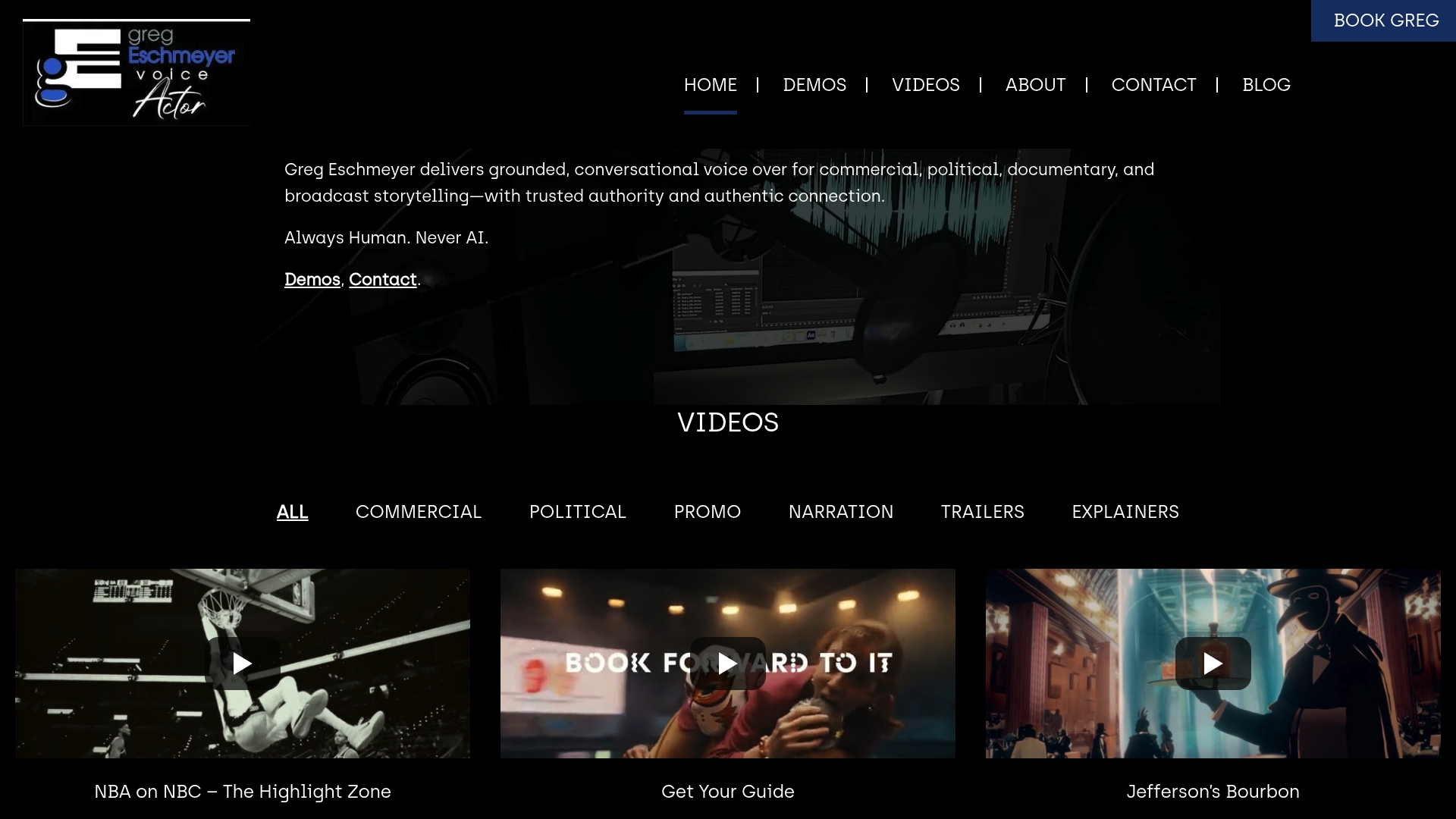
Gregeschmeyervoice delivers the kind of grounded, conversational performance that advertising, film, and broadcast professionals rely on when the message has to land. Greg Eschmeyer brings a natural, human quality to every project, from national commercials to political messaging to documentary narration, with the professionalism and fast turnaround that production schedules demand. If you are ready to match your brand with a voice that communicates more than words, explore professional voice talent services at Gregeschmeyervoice. You can also review the voice-over casting guide to sharpen your selection process before your next project.
FAQ
What is voice-over casting and why does it matter?
Voice-over casting is the process of selecting the right voice actor to match a project’s emotional and brand goals. The right casting decision directly affects audience trust, message retention, and brand perception.
How do i write a better brief for voice talent auditions?
Focus your brief on the emotional response you want from your audience rather than generic descriptors. A brief like “we want listeners to feel confident and reassured” produces more relevant auditions than “we need a warm, professional voice.”
When should i use a live-directed session vs. self-directed recording?
Live-directed sessions are best for commercials, character work, and any project requiring precise emotional nuance. Self-directed recordings work well for straightforward narration projects like e-learning where the copy drives the performance.
Why do human voice actors outperform AI voices in advertising?
Human voices reduce the cognitive effort required for listeners to process speech, which improves comprehension and retention. AI-generated voices also raise brand trust concerns as audiences become more skilled at recognizing synthetic audio.
What factors matter most when selecting voice talent for a brand campaign?
The most critical factors are vocal alignment with your brand archetype, the talent’s ability to take direction, professionalism, and turnaround reliability. Technical vocal quality matters, but brand fit and working relationship determine long-term campaign consistency.