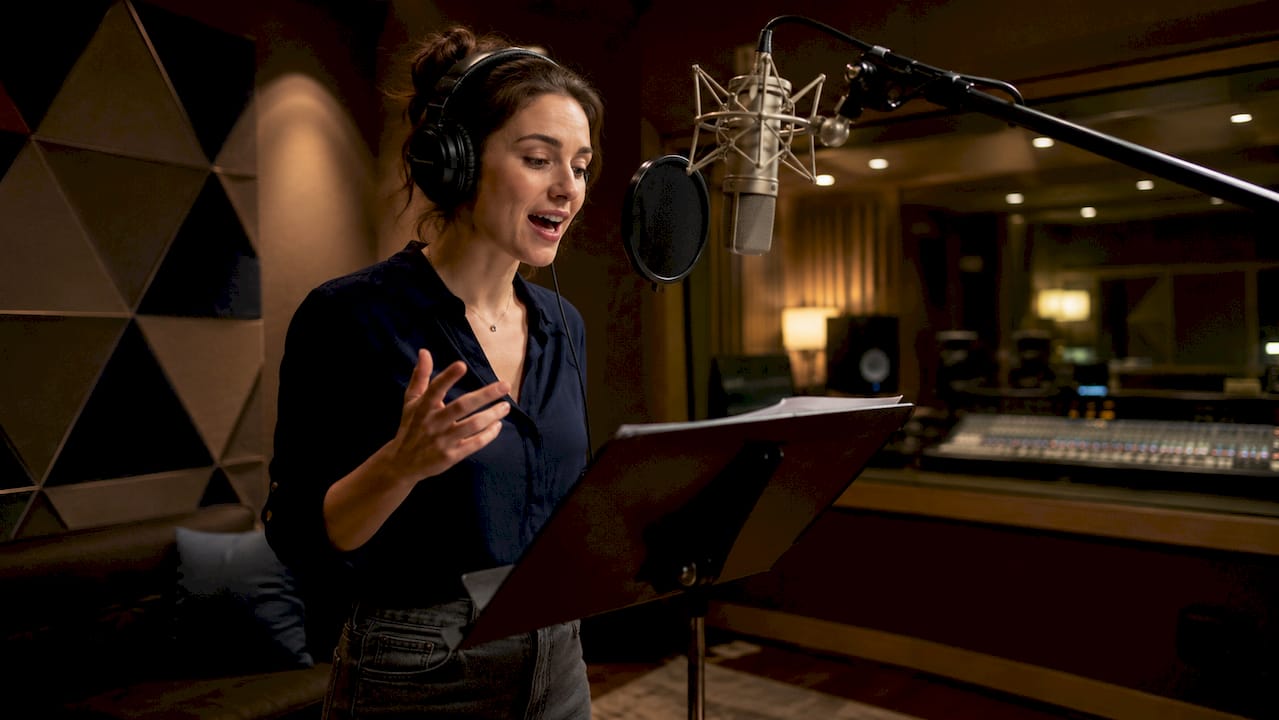
Vocal performance is the primary driver of emotional tone in film, operating through pitch, pace, volume, and non-verbal vocalizations to shape how audiences feel before a single word registers consciously. The role of vocal performance in film tone goes far beyond dialogue delivery. Speech prosody, micro-acoustic cues like breath and swallows, and the timing of voice within a sound mix all determine whether a scene lands as tense, tender, or comedic. Sound editor Walter Murch’s Law of 2½ establishes that audiences track roughly 2.5 sound layers at once, which means every vocal choice competes for emotional bandwidth. Get it right, and the voice carries the story. Get it wrong, and even brilliant visuals fall flat.
How does vocal performance shape film tone?
Vocal performance shapes film tone through two distinct channels: speech prosody and non-verbal vocalizations. Prosody covers the musical qualities of spoken language, specifically pitch variation, pacing, stress patterns, and volume. Non-verbal vocalizations include sighs, laughs, gasps, and the barely audible sounds actors produce between words.
Research confirms that these two channels are not equal in speed or impact. A 2026 PLOS ONE study found that listeners recognize emotions from vocalizations in a mean time of 417 ms, compared to 765 ms for native speech prosody. That gap matters enormously in film, where a single cut lasts two to four seconds and emotional tone must transfer instantly.
The practical implication is this: a character’s sharp intake of breath or a low, controlled exhale communicates fear or relief faster than any line of dialogue. Filmmakers who treat these micro-acoustic events as afterthoughts are leaving their most efficient emotional tools unused.
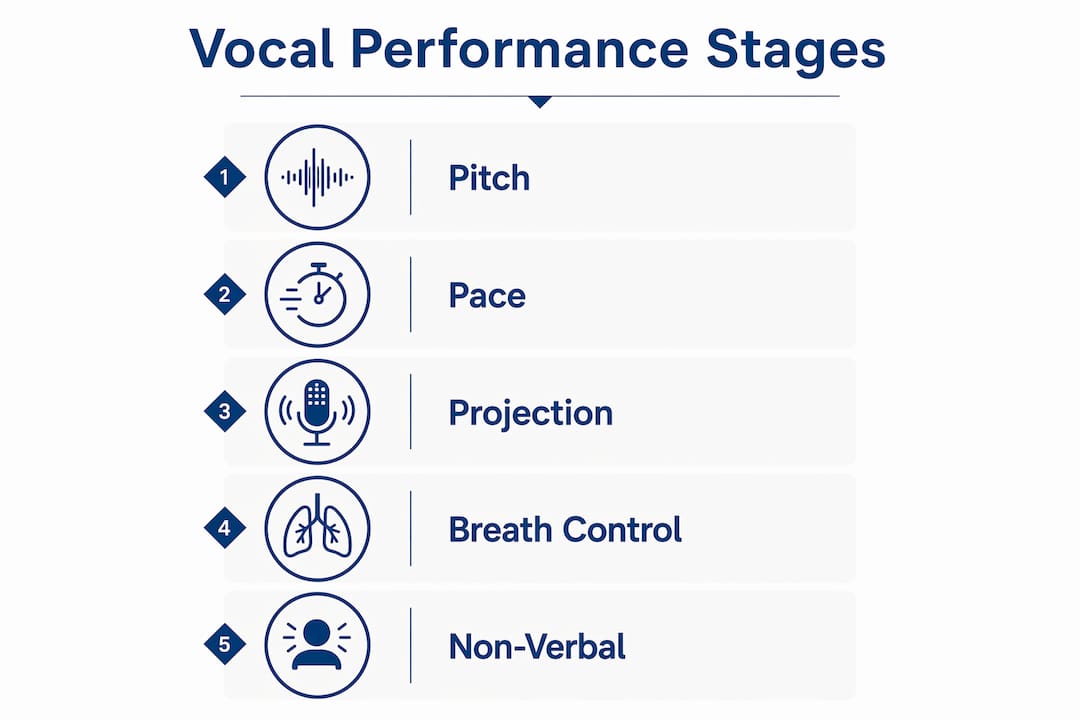
- Pitch: Rising pitch signals uncertainty or excitement; falling pitch signals authority or resignation.
- Pace: Slowed delivery creates weight and gravity; accelerated delivery creates urgency or panic.
- Volume: Quiet, controlled speech reads as intimacy or threat; raised volume signals emotional escalation.
- Non-verbal cues: Sighs, laughs, and breath patterns carry emotional nuance that prosody alone cannot replicate.
Pro Tip: Record a scene’s audio track in isolation and play it without picture. If the emotional arc is unclear from voice alone, the performance needs work before you lock picture.
Does vocal tone actually drive narrative coherence?
Vocal performance is a narrative engineering tool, not an aesthetic add-on. The timing and quality of a voice within the sound mix directly determines whether a scene’s story logic holds together. Sound design principles confirm that wrong layering makes scenes noisy, while correct layering produces audience engagement and emotional clarity.
Walter Murch’s Law of 2½ is the governing constraint here. When a scene stacks dialogue, score, and sound effects at equal volume, the audience cannot prioritize any single emotional signal. The voice gets buried. Directors and sound designers must make deliberate choices about which sound layer carries the scene’s emotional weight at any given moment.
Vocal timing relative to scene cuts is equally critical. A line delivered a half-second before a cut lands differently than the same line delivered across the cut. The former closes the scene emotionally; the latter opens the next one. This is why voice and scene pacing deserves the same attention as shot selection.
| Sound Layer | Function in Scene | Vocal Priority |
|---|---|---|
| Dialogue | Carries narrative information and character emotion | Highest in most scenes |
| Score | Reinforces or counterpoints emotional tone | Secondary to dialogue |
| Sound effects | Grounds scene in physical reality | Tertiary unless used for shock |
| Silence | Creates tension or intimacy | Amplifies vocal impact when used deliberately |
Pro Tip: Mix your dialogue track first, at the level it needs to be heard clearly. Then build music and effects underneath it. Never start with score and try to fit dialogue on top.
What happens to vocal tone during film dubbing?
Dubbing is where vocal tone most often breaks down, and the damage is more specific than most filmmakers realize. A 2025 acoustic study of the Ukrainian-dubbed version of Friends analyzed 1,050 non-verbal vocalizations and found that frequent alteration or deletion of these sounds directly degraded emotional resonance and comedic timing. The words were translated correctly. The tone was not.
The core problem is that dubbing workflows traditionally prioritize lip-sync and lexical accuracy. Micro-acoustic events like breath patterns, swallows, and wheezes are treated as incidental noise rather than performance data. When those sounds are removed or replaced with generic equivalents, the dubbed performance loses the texture that made the original feel authentic.
Effective dubbing requires a different approach at the director level. A 2026 AAAI conference paper proposes a director-actor interaction scheme in which actors internalize emotional context before recording, rather than simply matching syllables to picture. The result is dubbed performances that carry genuine emotional expressiveness instead of mechanical synchronization.
For filmmakers working in automated dialogue replacement (ADR), the same principle applies. Here are the practices that preserve tonal coherence:
- Preserve non-verbal vocalizations: Catalog every breath, laugh, and sigh in the original performance and require the ADR session to match them acoustically, not just rhythmically.
- Brief actors on emotional context: Before each ADR pass, remind the actor what the character is feeling in that moment, not just what they are saying.
- Use acoustic phonetic analysis: Compare pitch, duration, stress, and amplitude between original and replacement recordings before approving a take.
- Protect comedic timing: Non-verbal sounds carry comedic rhythm. A laugh replaced with a generic chuckle can kill a joke that worked perfectly in the original.
For teams recording outside a professional facility, the DIY voice-over guide from Gregeschmeyervoice covers how to maintain emotional nuance in non-studio ADR conditions.
Which vocal techniques create the strongest film performances?
The most effective framework for cinematic vocal performance is Topher Keene’s Three-P Framework: Pitch, Pace, and Projection. Each element functions as a distinct control for emotional output, and the three work together to create what Keene describes as dynamic vocal shape, the rise and fall pattern that keeps audiences emotionally engaged across a scene.
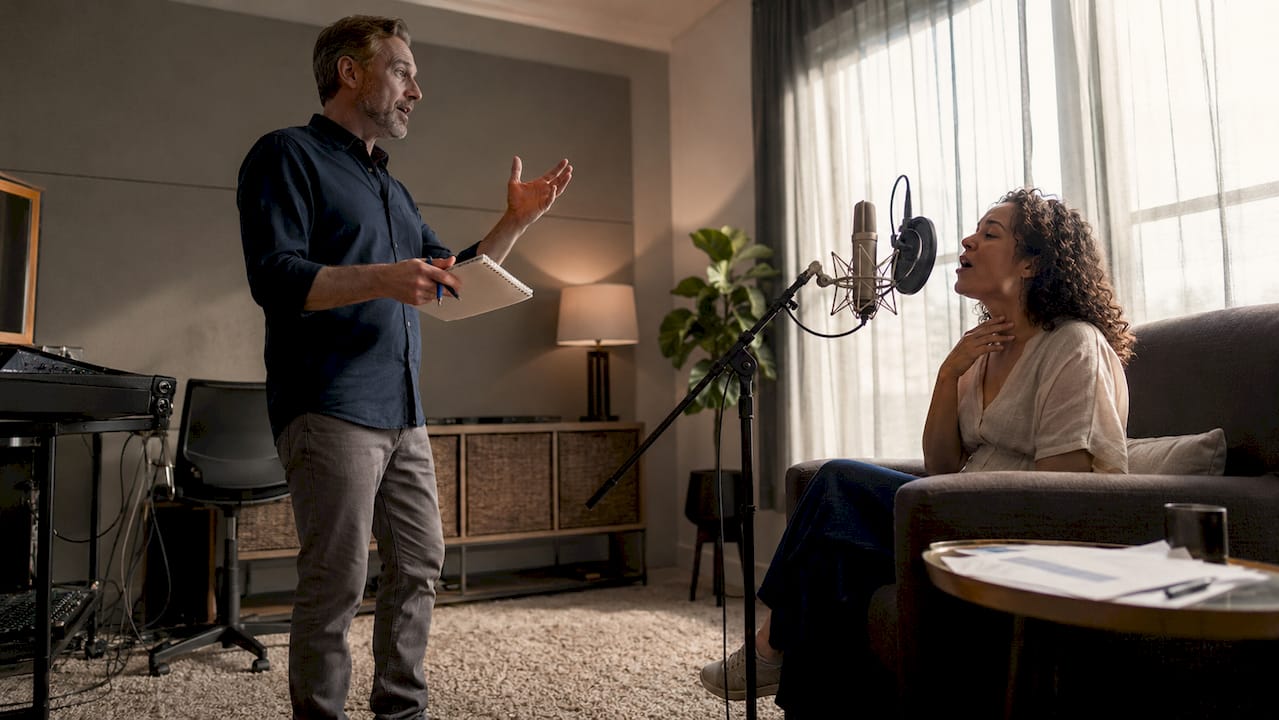
A flat, constant-tone delivery is the single most common failure in voice performance for film. When pitch, pace, and projection stay at the same level throughout a scene, the audience’s nervous system stops registering the voice as emotionally significant. The brain habituates to the signal and stops listening.
Dynamic vocal shape works against that habituation. The pattern that Keene’s framework recommends moves from a quiet, conversational opening through an escalating peak and then pulls back to an intimate close. That arc mirrors the emotional structure of most well-written scenes and gives the audience a ride rather than a lecture.
Here is how to apply the Three-P Framework in practice:
- Map the scene’s emotional arc before recording. Identify the low point, the peak, and the resolution. Assign pitch, pace, and projection targets to each.
- Start quieter than feels natural. Most actors open at their peak and have nowhere to go. Beginning at 60–70% of your full vocal range leaves room to build.
- Use pace as a tension tool. Slow down at moments of high emotional weight. Speed up when the character is losing control or urgency is rising.
- Pull back at the end. The intimate pullback after a peak is where audiences feel the emotional payoff. Sustaining peak volume through the close kills the landing.
- Record multiple dynamic shapes for the same line. Give the director options. A line delivered with a rising arc reads differently than the same line with a falling arc, and the edit may need either.
Breath control underpins all three elements. Breath control in acting directly affects vocal stamina and the ability to sustain dynamic performance across long recording sessions without losing tonal consistency.
Pro Tip: After a long recording session, your pitch tends to drop and your pace tends to slow. Record a reference line at the start of the session and compare it to the same line recorded two hours later. Adjust before the fatigue becomes audible in the final cut.
Key takeaways
Vocal performance is the most direct and fastest-acting tool filmmakers have for establishing emotional tone, and it operates through prosody, non-verbal vocalizations, and deliberate sound design choices.
| Point | Details |
|---|---|
| Vocalizations beat prosody for speed | Non-verbal sounds convey emotion in 417 ms vs. 765 ms for speech prosody, making them the fastest emotional signal in film. |
| Murch’s Law of 2½ governs vocal priority | Audiences track 2.5 sound layers at once, so vocal tone must be deliberately foregrounded in the mix. |
| Dubbing destroys micro-acoustic cues | Altering or deleting non-verbal vocalizations in dubbing degrades emotional resonance and comedic timing. |
| The Three-P Framework builds performance arcs | Pitch, Pace, and Projection applied dynamically prevent flat delivery and sustain audience engagement. |
| Director-actor context briefings improve ADR | Actors who internalize emotional context before recording produce more authentic tonal performances than those matching syllables alone. |
Why i think filmmakers undervalue the voice until it’s too late
Most filmmakers I’ve observed treat vocal performance as a casting problem. Hire the right actor, and the voice takes care of itself. That assumption costs productions more in post-production than almost any other single decision.
The voice is a narrative instrument with as many variables as a camera lens. Focal length, aperture, and distance all change what a lens communicates. Pitch, pace, projection, and non-verbal texture all change what a voice communicates. You wouldn’t hand a cinematographer a camera and say “figure it out.” You shouldn’t hand an actor a script and assume the vocal tone will land correctly without direction.
The research on non-verbal vocalizations makes this concrete. The sounds between the words, the breath before a confession, the swallow before a lie, the laugh that doesn’t quite reach the eyes, these are the moments audiences remember. They are also the moments most likely to get cut, replaced, or ignored in post-production.
My practical advice: bring vocal performance into your pre-production conversations alongside shot lists and production design. Work with your actors on the emotional arc of each scene before you discuss blocking. And if you’re doing ADR or dubbing, treat every non-verbal sound in the original performance as a piece of narrative data that must be preserved or deliberately replaced with something equally specific.
The voice is not decoration. It is structure.
— kribi
Work with a voice that carries your film’s tone
Gregeschmeyervoice delivers the kind of grounded, conversational performance that holds a scene’s emotional tone without artificial enhancement. Whether you need a narrator for a documentary, a character voice for a broadcast, or a professional ADR session that preserves every nuance of the original performance, Greg Eschmeyer brings the authenticity your project requires. His clients consistently highlight fast turnaround, precise tonal matching, and the ability to internalize emotional context before the mic opens. If you’re building a film that depends on voice to carry its story, start with a professional voice actor who treats vocal performance as narrative craft, not just delivery.
FAQ
What is speech prosody in film performance?
Speech prosody refers to the pitch, pace, stress, and rhythm patterns in spoken dialogue. In film, prosody shapes how audiences interpret a character’s emotional state and the scene’s overall tone.
How do non-verbal vocalizations affect film tone?
Non-verbal vocalizations like sighs, laughs, and breath patterns convey emotions faster than spoken words. They are the fastest emotional signal available to a performer and the most commonly lost in post-production.
What is walter murch’s law of 2½?
Walter Murch’s Law of 2½ states that audiences can consciously track approximately 2.5 sound layers simultaneously. Sound designers use this principle to decide which layer, usually dialogue, carries the scene’s primary emotional information.
Why does dubbing weaken vocal performance?
Dubbing typically prioritizes lip-sync and word accuracy over micro-acoustic vocal cues. When non-verbal sounds are altered or deleted, the emotional texture and comedic timing of the original performance degrade significantly.
What is the three-p framework for voice acting?
The Three-P Framework, developed by Topher Keene, organizes vocal performance around Pitch, Pace, and Projection. Applied dynamically across a scene, these three elements create the emotional arc that keeps audiences engaged and prevents flat delivery.